• 300926

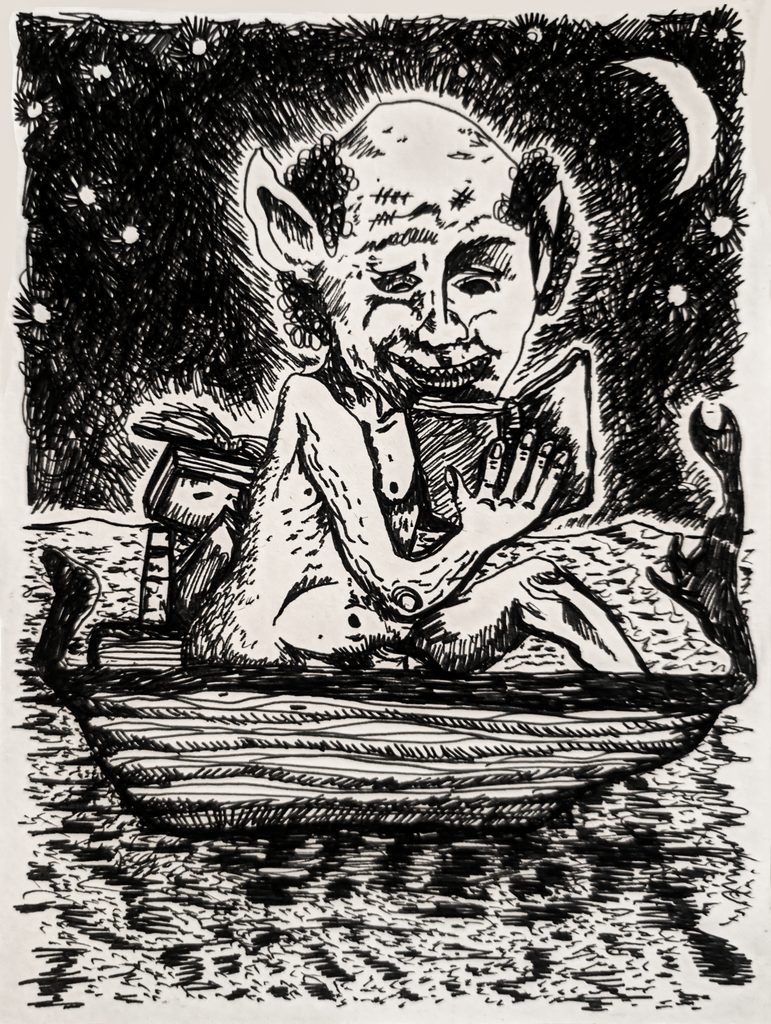
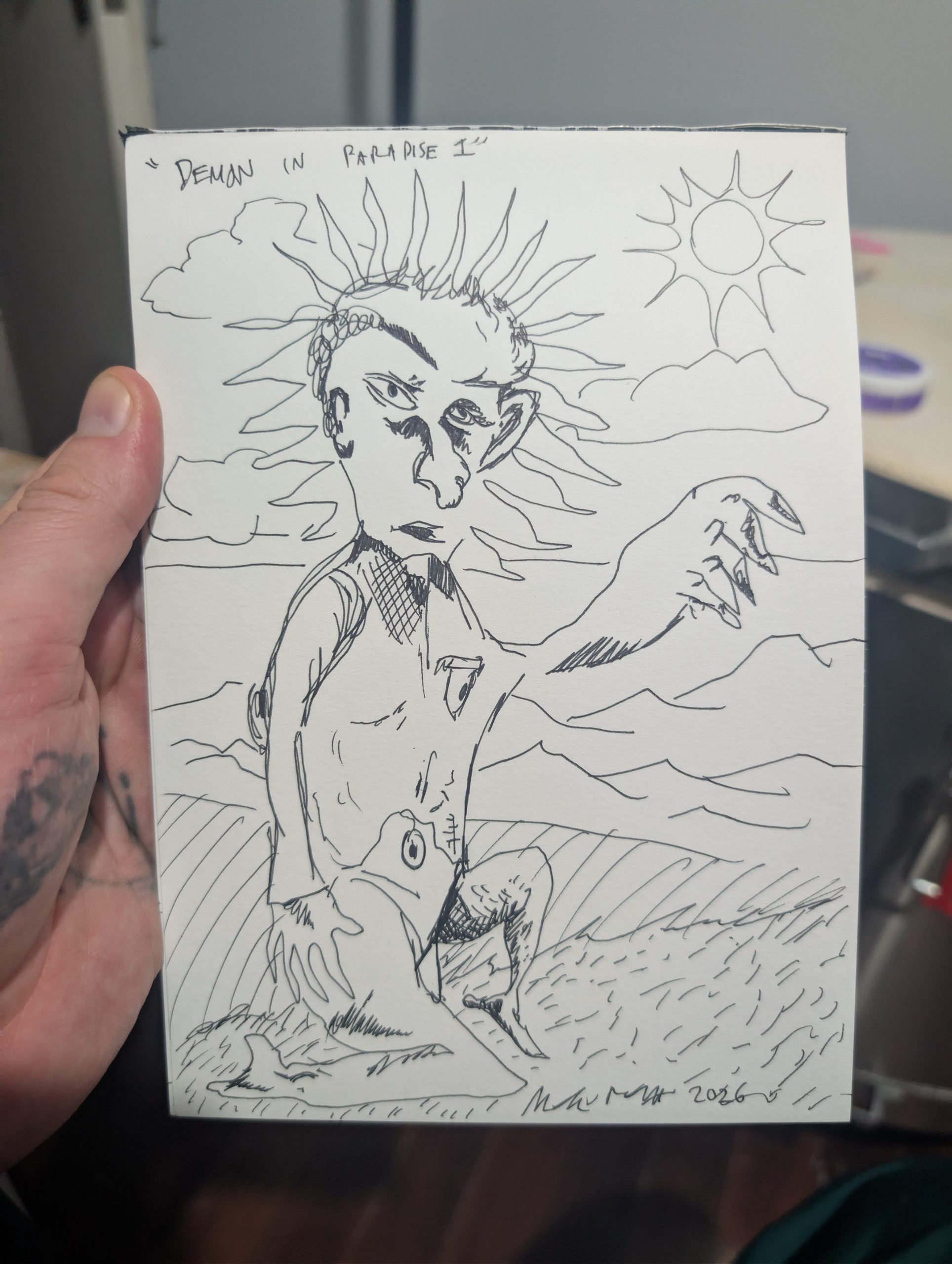
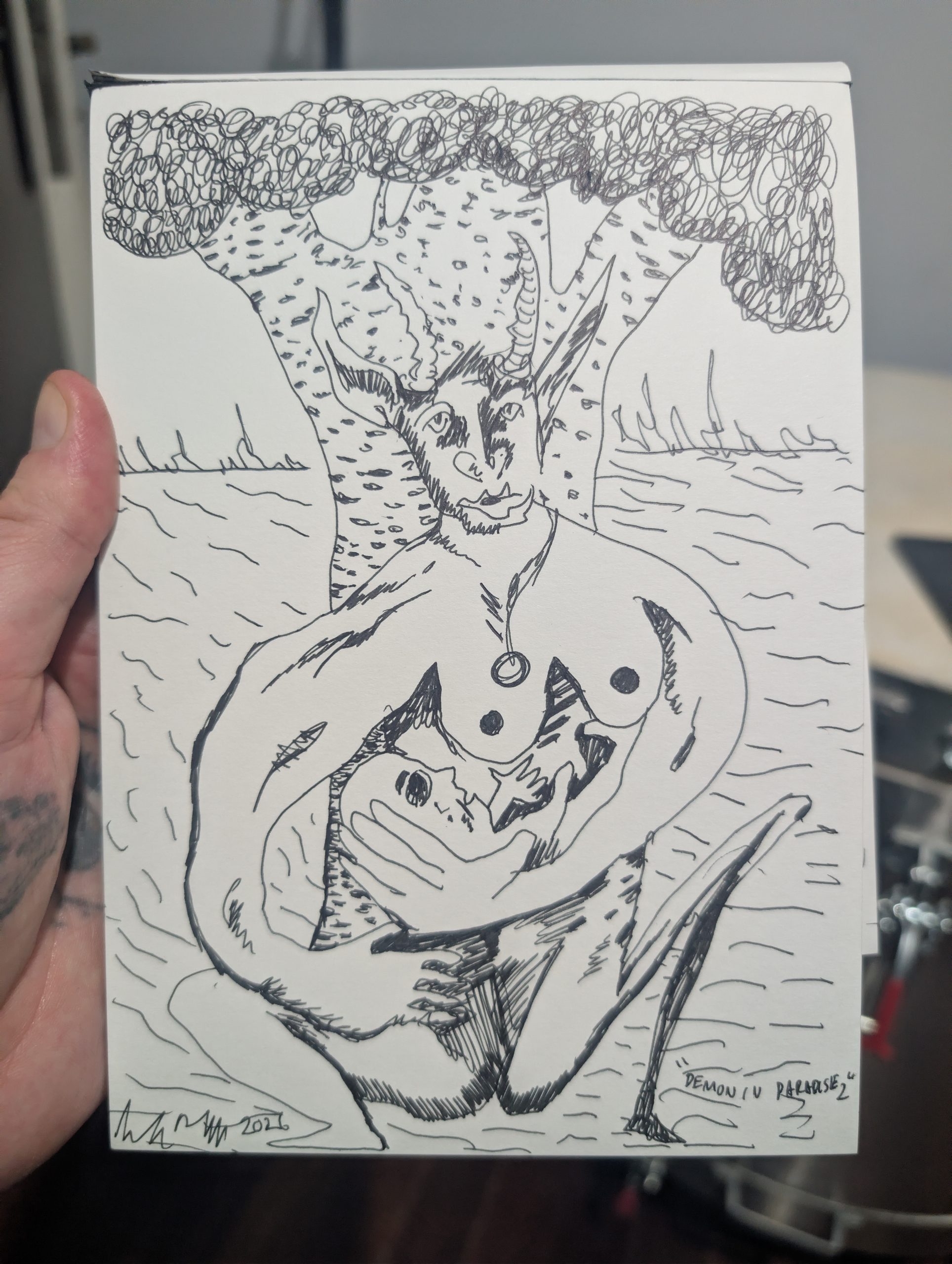
    “Goblin in boat”, Ballpoint pen on paper

    I caught a common cold here in Athens as summer is turning to fall, and indoors the temperature barely differs from the street. The city is changing slightly. The tourists’ faces morph from sweaty, confused expressions to calm and collected. It becomes harder to tell who is a local and who is not, and I find myself listening for languages in the conversations of others, though I am aware that this noticing says more about my wish to belong than about the people I am watching.

    I have been here for three weeks now and have exceeded the time I have ever spent in Athens before. Just like the shift of the seasons, my own image of the city is shifting. It is less exotic, less bewildering, and I can feel a confusion settling in my thoughts about this place as it moves from a surface image to a real place.

    In many ways it is like any other European big city, but with more challenges, or at least different ones. Like any of the multitude of cultures that constitute ‘Europe’, Greece is a phase-shifted version of another place. Culture seems to work like this many times, as a variation of skin on the same animal. It makes my work harder, and at the same time more interesting, to realize that the difference between Sweden and Greece is smaller than what connects us, and that the struggles we face are experienced in very similar ways. The differences reside more in the ‘Now’, in what moment is actively playing out in each society’s life cycle.

    I feel as if Greece is a place in transformation. But what exists beyond my horizon? What is it that I cannot grasp from my Stockholm view? What is that component which makes this place inspire me, and why do I feel it holds a key to another possibility for a future European identity, a Europe excessively in the claws of a Western world adopted from across the Atlantic?

    I set out to research this place as an ‘Otherworld’, a place that has not yet been ‘worlded’: not fully settled in a common conception of what reality is. And I should admit, from the start, what this framing serves. The person who benefits from Athens remaining an un-‘worlded’ Otherworld is me, the external observer, dreaming of a world that is yet to exist. Isn’t it better for the people who live here to become part of this machine that is the Western Empire, with all that this entails? I am not the one to answer that question. But I cannot honestly leave it behind, either; it follows me through everything I describe below.

    I wanted to find representations of this in sounds, textures, and objects. Sadly, I notice that what I capture loses what I perceived it to contain once it is documented. My own bias as to what reality is influences what I capture, inevitably ‘worlding’ those things into my own already colonized world.

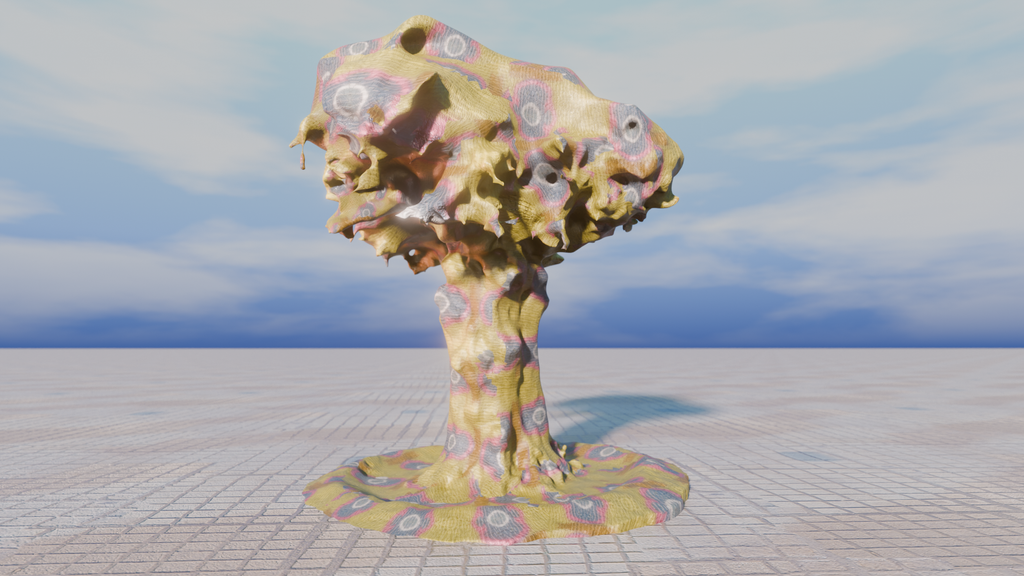
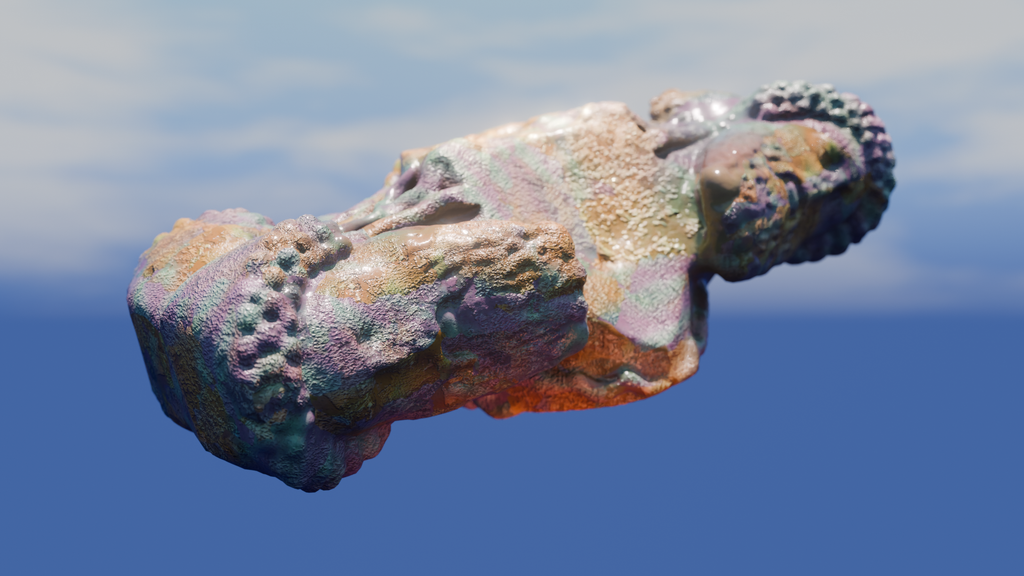
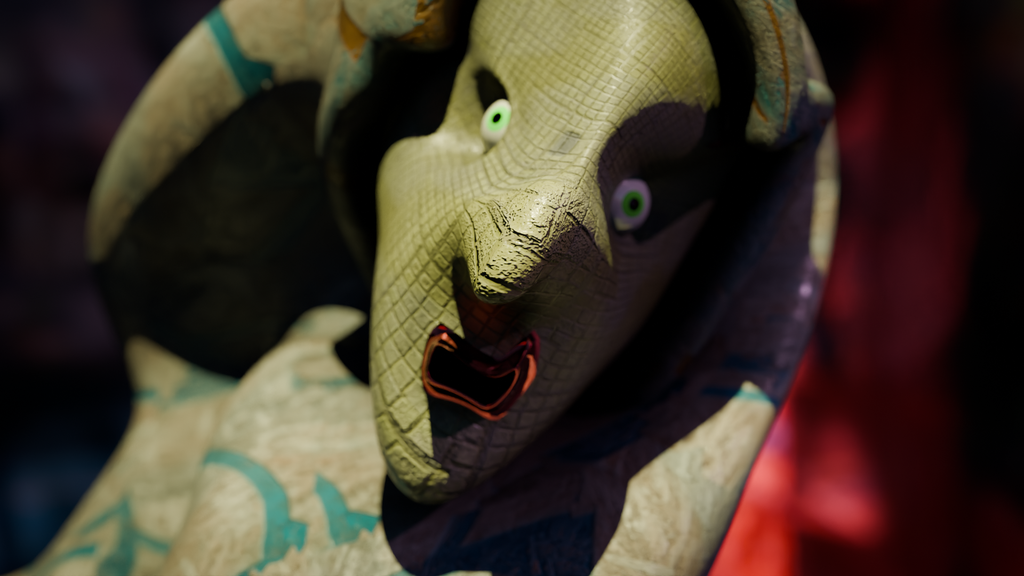
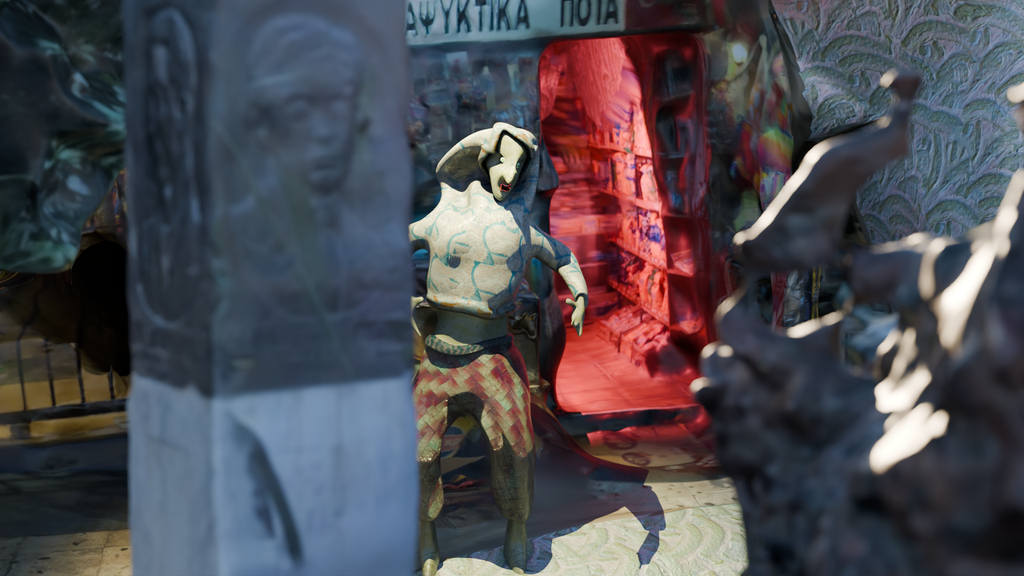
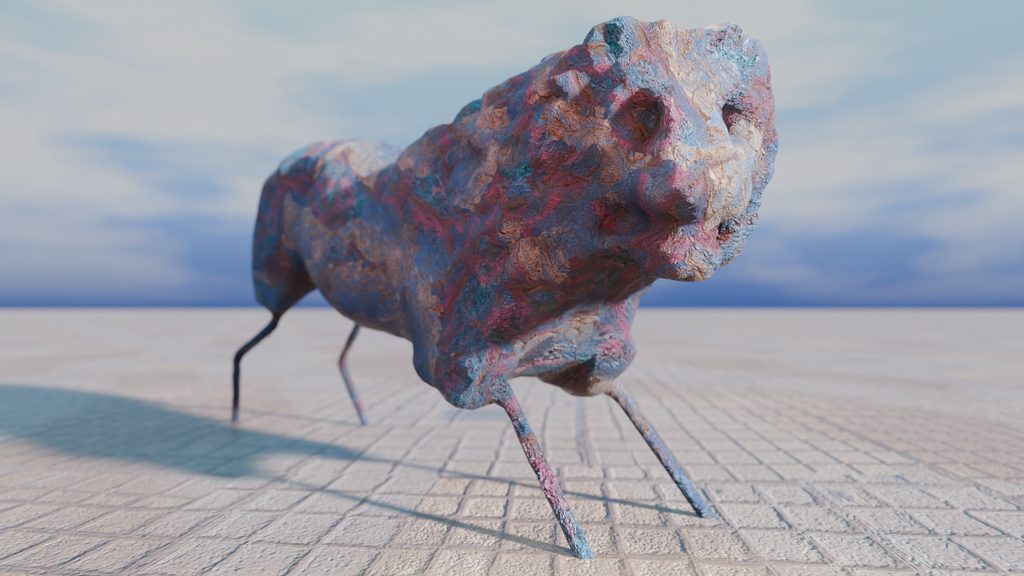
    “Double Janus” 3d scanned and modified object. Blender. Textures synthesized from Athens surfaces.

    A key to my interest in Athens resides in my memory of my first visits to Berlin in 2004, the 15th year after the fall of the Berlin Wall. The biggest shock of that transformation had subsided, but the city still existed in-between, on the threshold of two old worlds, the Soviet one and the American one. I would spend time in Friedrichshain, Neukölln, and Kreuzberg, areas filled with immigrants, old people, punks, junkies, artists, and techno people. Squats were everywhere. People were using their creativity in the ruins of the old world to construct something they could believe in. It seemed like a place that was birthing another world.

    Slowly, with every visit, it became clear that the direction of Berlin had been set: the pathway towards the Western Metropolis, a place where adaptation and economic structures follow the ideas of any place within the Empire that is the globalized West. Franchises, wine bars, and expensive galleries took over. Friedrichshain transformed into a street that was not the street I first saw. It became part of a world; it became ‘worlded’. Kreuzberg and Neukölln followed suit but kept some of their aesthetic surface, a strange Disneyland for cultural people sitting there surrounded by normalcy, in constant negotiation with the powers that be, while the population inside those areas become more like cultural signifiers with stable jobs than explorers searching for an alternative future.

    Growing up in Sweden during the late 80s and early 90s was, of course, a situation claimed by this radical European change that was the fall of the Berlin Wall. I can personally remember a society split between the East and the West (my favorite example being that of fast food). After school, if your parents had stocked up, you would pick a frozen snack from the freezer. The same brand manufactured both the Billys Pan Pizza and the Gorbys Pirogi, each carrying the packaging aesthetic of the global superpower most connected to those foods. Even the paradoxical format, with its very few choices of fast food in contrast to the choice between these two, tells the story of a society with one foot in each world. Today, I think both still exist, but the Gorby is rarely seen, and definitely not the one with porridge flavor.

    In this sense, I grew up in a society that experienced this radical ‘worlding’ firsthand: a geopolitical moment where the narrative of reality was being formed. I grew up embracing the world of Billys Pan Pizza, consuming the dream of America and all the culture that came with it, from Walt Disney to Marvel, Thrasher Magazine, hardcore punk, and eventually contemporary art. It was not until much later that I realized all the dreams connected to this culture belonged to someone else. The center of my identity had not been formed around a place where I exist, but around a place I have observed and internalized. In this world, my dreams always point away from myself, my family, and my neighbors, and instead make me subservient to something that fundamentally has nothing to do with me. This, I think, is the root of my aversion toward the center of the empire, as well as a consequence of decades of successful soft power applied to Europe. Today, the quality of any kind of cultural expression is unavoidably tied to the measures of a global West. It is by these metrics that I even view, and judge, my own work. To summarize: the perceived reality wherein you participate in the world is a reality where you are not the main actor, but a peripheral replica of the acting that goes on somewhere else, repeating and reinforcing the world that is put upon you.

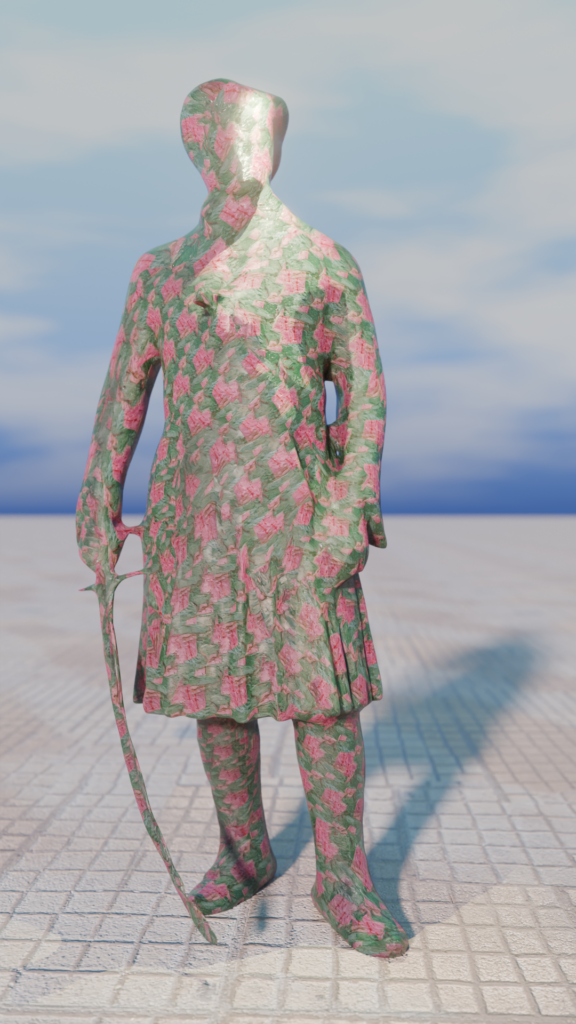
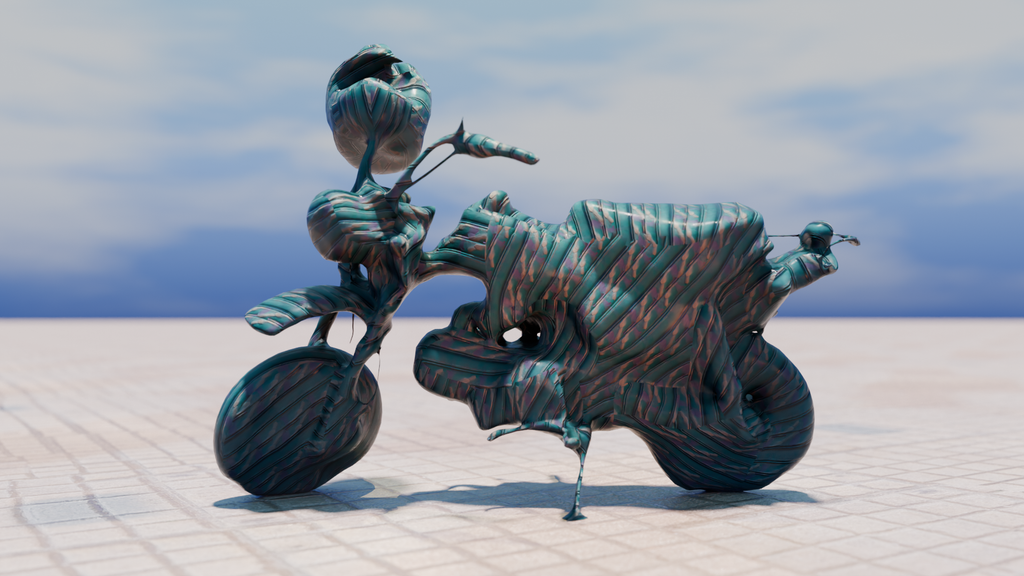
    “Vehicle” 3d scanned and modified object. Blender. Textures synthesized from Athens surfaces.

    Athens entered the economic crisis in 2008, which is now 18 years ago. A similar shift is happening here, even if the outcome is not yet fully decided. Gentrification is still a hot topic and the income gap is exploding like everywhere else. The question is if this place will follow the same fate as Berlin, or if the resilience of Athens is stronger.

    I 3D scan a lot of objects when I am here. Supposedly, it captures reality in an extra dimension compared to a picture. My phone is filling up with scans of everything from small Batman motorbikes to painted cactuses and ancient monuments. When I look at them, they seem explicitly dead, like I stole something that did not want to be stolen and later died from the sorrow of being captured. Never before have I felt so strongly related to the old Greek idea of aesthetics, where, to simplify with my own interpretation, a depiction of something real is the lowest form of art: it simply already exists in perfection. And yet I keep scanning, because I need to do something with these models that sends them away from their origin, not diluting it and pointing back toward it, but letting them be something in themselves. It is like Heidegger’s reading of van Gogh’s painting of a pair of shoes: the work is more a textured lump of paint than a painting of anything, and that is precisely its freedom.

    My place of residence, Stockholm, is unique in its own way. Still, compared to this place, it has incorporated the Global West to such an extent that it has entered the status of the Anyplace. In its most depressing description, it is another skin on a Fortnite character. It is not a textured lump of paint on a van Gogh painting; it is a slick picture of a shoe. It is not changing seasons; it is temporarily stuck in summer, a summer that is brighter and more summery somewhere else.

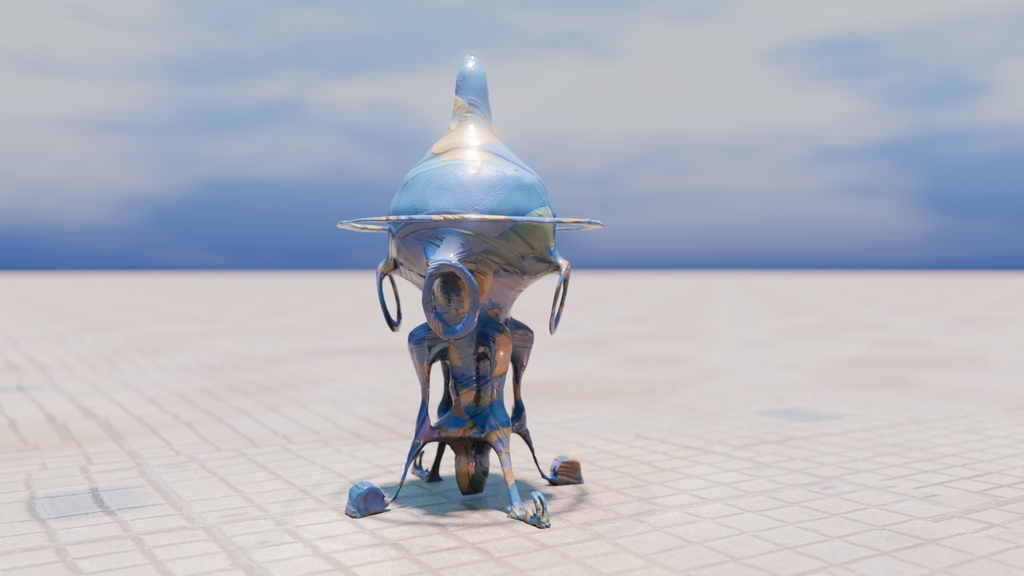
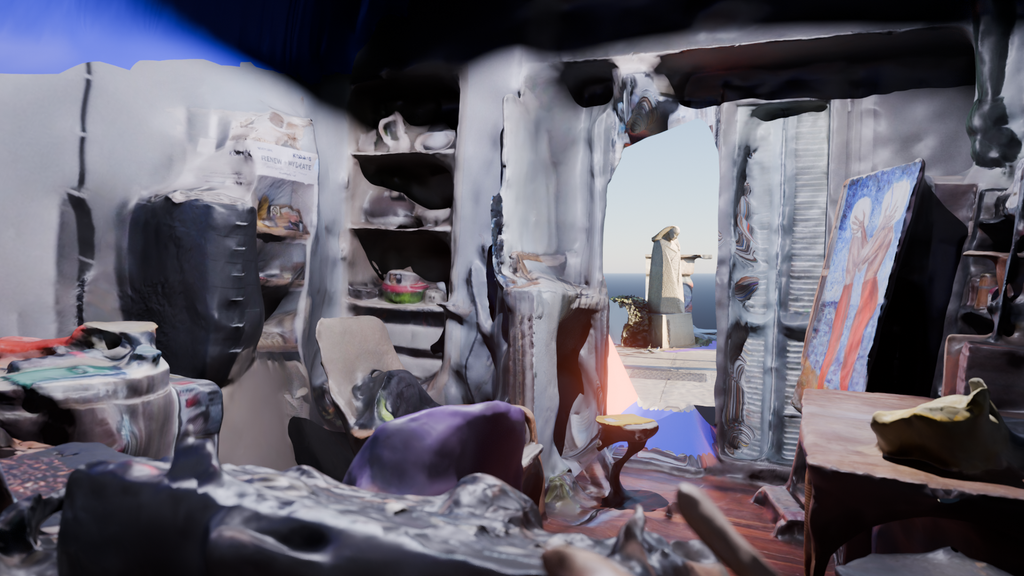
    “Metal Object” 3d scanned and modified object. Blender. Textures synthesized from Athens surfaces.

    And here, at the end, is what I keep circling: the curse of the Anyplace is to be a road sign pointing towards a center that exists somewhere else, a location that, through its architecture, art, culture, and economics, has accepted the reality of another world happening at another place. To progress in such a place as an individual or a group means moving toward the world your Anyplace is mimicking. There simply is no other option besides falling into what would appear as madness. That is the trap I recognize in myself, with my dreams pointing away from where I live; and it is the trap I am trying, through this place, to imagine a way out of.

  • 240926

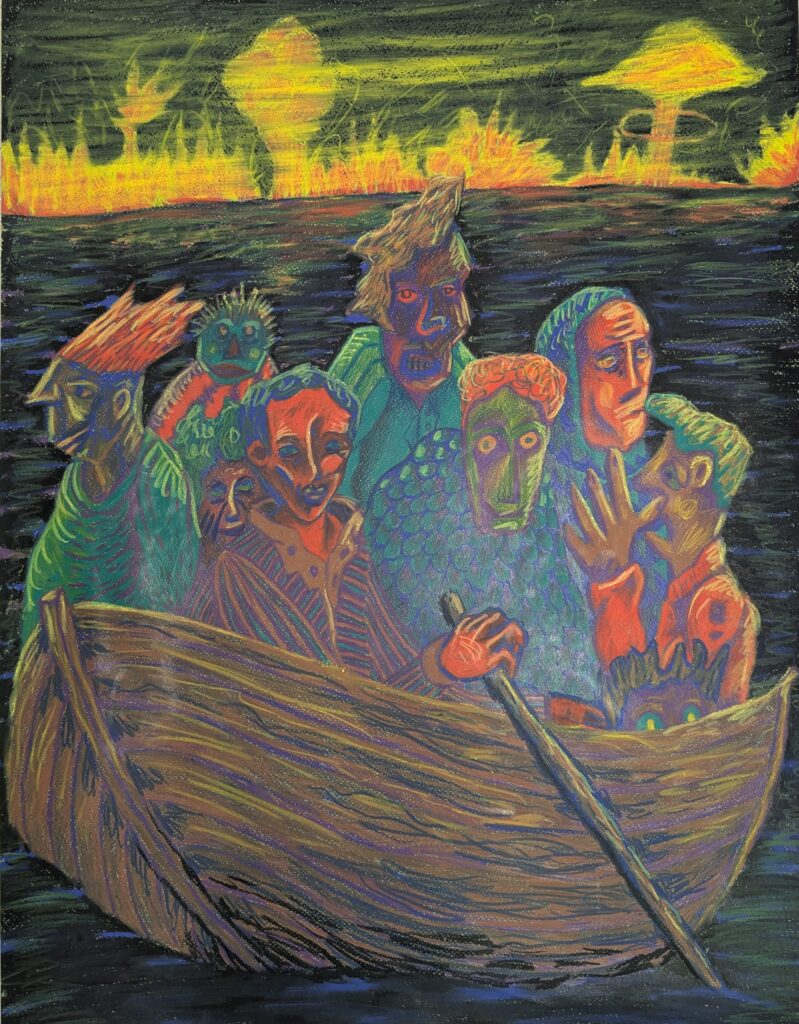
    “The Boat” Crayon on paper, Approx 50x40cm, 2024, Mark Frygell (Terrible photo)

    I started thinking the past days about Athens as a horizon.

    Imagine you are standing on the deck of a ship traveling away from your home to an unknown destination. Behind you, you have the horizon towards your home. In front, the horizon to the unknown. To the left and right, the horizons somewhere in-between.

    There is a threat in that unknown, baked in with excitement and wonder. At the past home, there is a threat of stagnation, or conservation, but also security and relatability.

    Greece, but specifically Athens, carries the full 360-degree view of these horizons to a Northern European. It is an image that is external, put upon Greece in general and Athens specifically.

    It is the origin of so much considered to be a uniquely Western identity and, simultaneously, it is the final frontier of the Western world living in a polemic fear of the Middle East.

    In Athens, the tourist quarters are washed of influence from its non-European neighbors. Greek idyllic paintings, Sparta t-shirts, and erotic bottle openers stand next to restaurants serving either traditional Greek food or other European dishes.

    Travel a bit into the suburbs and the scene changes. The Ottoman, Byzantine, and Persian layers make themselves known. But also, today, the African, Indian, and others.

    From a different angle, I am watching the mediocre movie The Two Faces of January. Another image of Athens, well-known in my subconscious, manifests.

    That is a world of the labyrinth and mystic rule, where we cannot entirely know who is the enemy and who is the friend. Where the surface is familiar and inviting, but, as in Greek mythology, the deceit of a forgotten god is not far away. It is the same kind of image that can reside in a small Italian village or a secluded family in the rural areas of North America. In the case of Greece, it is the Athenian maze of streets and the presence of the past that paint an imaginative backdrop to Western stories of contemporary mystery.

    This image is of course a lie, but it tells us something about the Western view of the “other” and Athens as a “gate” to the Orient to the European or American eye. It is a springboard more “home” than Istanbul, but still a place more in bed with “the other” than, let’s say, Paris.

    After 9/11 and the immense Islamophobia that arose from it, I can’t help but wonder what part this played in the new Western relationship to Greece. From then on the war on the Middle East has been ongoing and intensified. Just a few years later the economic collapse of 2008 struck Greece. In the news back then, Greece was laced with tropes of being “lazy,” “corrupt,” and “undisciplined.” Was Greece punished by Northern Europeans because it confirmed their subconscious bias? Would the economic crash have been handled differently if it occurred in Sweden? Would Italy see the same consequences? Is it the ways of a society with one foot in each world that instills fear into the Northern consciousness?

    This horizon, where the mysteries of the past, another reality, and maybe also our common possible future reside, of course we will clad in mystery.

    Then, yesterday, I went to see another film.

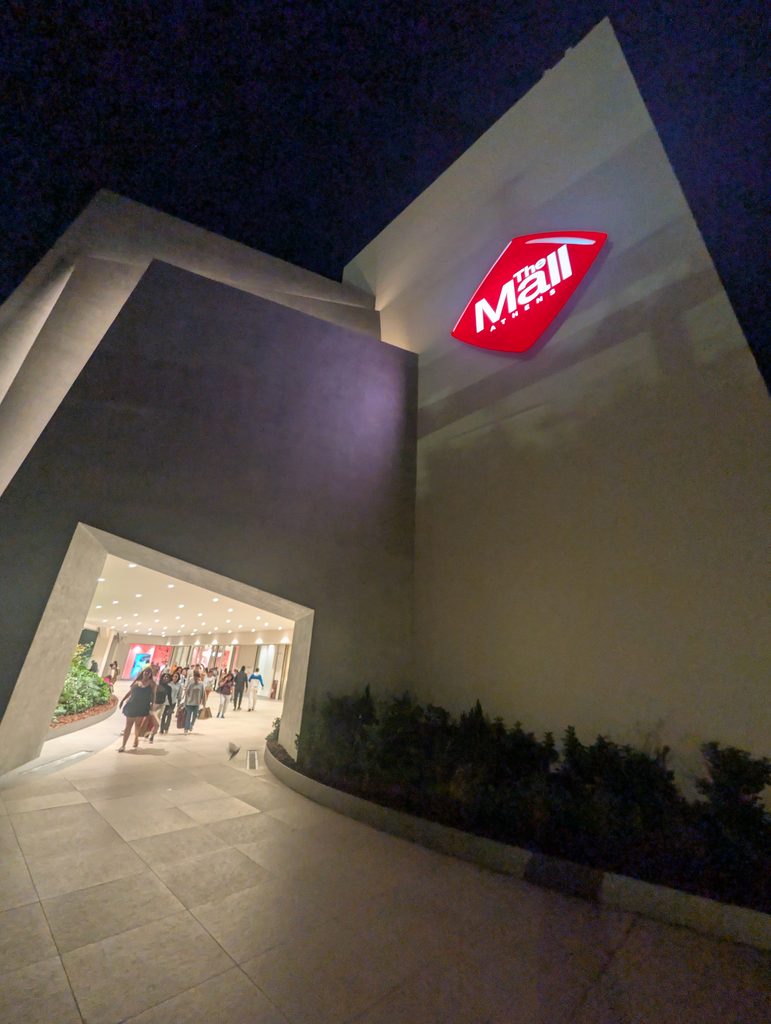
    This time it was at a major shopping mall, the “Mall of Athens.” It is a strange, semi-identical version of the “Mall of Scandinavia” that I am familiar with in Stockholm. In this location, the Athenian world seems identical to the Stockholm one, or the Paris one, and possibly the Istanbul one. The same stores and brands line the halls. The same kind of people reside there temporarily. They wear more or less the same clothes. It feels oddly at home.

    The Mall of Athens. To me a parallel universe version of Mall of Scandinavia.

    I went there to see Odysseus in the shape of the latest Hollywood interpretation, and through this experience, the next horizon makes itself known: that of the capitalist project. It is a horizon where every place is the same and every major city has an IMAX where we all watch the same movies with different subtitles.

    The story of Odysseus here is rewritten as an American-style hero’s journey where the main character is regretfull and full of wisdom. He returns home to put things morally right. The classic story is retold to fit a future where the viewer has forgotten about the past. The original Odysseus was an unreliable narrator, bragging about his exploits to get favor with the Phaeacians. He is presented as a liar and a bard who eventually, through his lies, manages to reclaim his rule. In many ways, he sets an example of a world not functioning, and why. It is a cautionary tale from Homer about how the Bronze Age he idealized came to collapse, a tale told 400 years later to show what was lost and who we became, but most importantly, the tragedy of this transformation.

    In Nolan’s version, Odysseus mourns the fall of his old world and does not stay but journeys west in exile to find a new world. Yes, he travels to the West, a place that, between the lines, is portrayed as a world where a possible new future resides. Interestingly, this mirrors the way so many Europeans set out to do when migrating to the New World that became the USA thousands of years later.

    Today, the Greek, as well as the general European world, is at the helm of a journey reminiscent of this as well, surrounded by horizons of the unknown, the past, and the promises of various lands surrounding our location. Is the future in the “Mall of Scandinavia/Athens/Wherever”? Is it in the ruins of our European past that litter our cities and landscapes? Is it in the ports where Chinese goods and migrants from the South enter, or is it in all those places simultaneously?

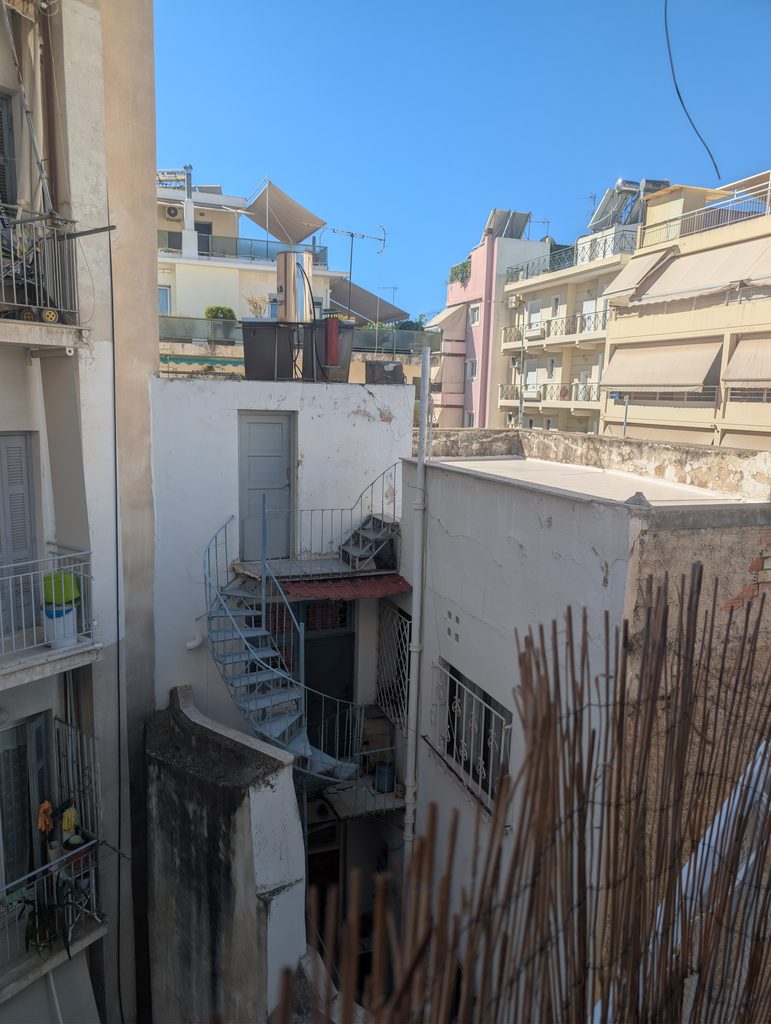
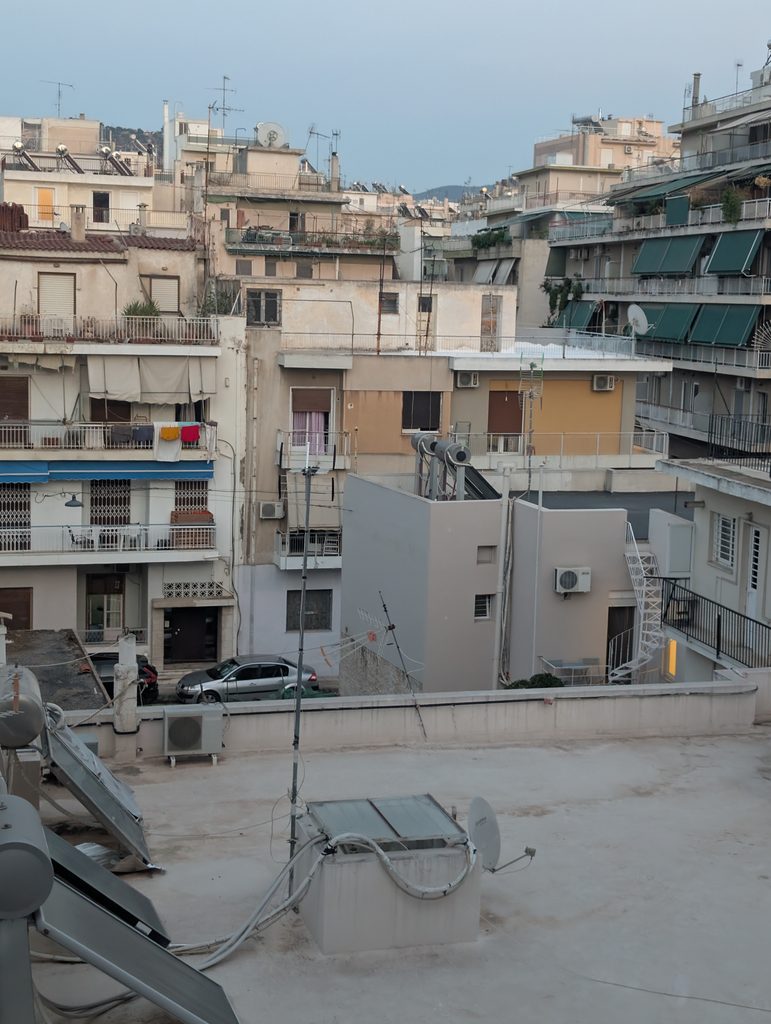
    View from the balcony of my studio.

    Just as Nolan reimagined the Odyssey to keep imagining the world we have lived in since after the Second World War, the European project needs to create its imagination of the future. The realities of our economy and stability might be the first things at hand when deciding what horizon to sail towards, but equally important is the mythology built around that future yet to exist.

    Stepping away from this fantastical imagination of a Greek, and larger European, future as a ship, it is important not to forget about the people that actually inhabit this place, Athens. The realities of Greece are painted more so on the canvas of a military junta that ended in the 1970s, Ottoman rule, the Bavarian monarchy, and the economic crisis, than the distant memory of Odysseus’s Bronze Age world or a distant future without painted outlines. These are consequences played out over a population in a long history of Mediterranean geopolitics that set the possibilities of a “now.”

    A big portion of Greeks would, I assume, prefer Odysseus as Nolan’s hero than a tragic figure of Homer. In most of Europe, this choice has already been clearly made for such a long time that the faults of our choices are becoming more apparent every day. Our current European reality is something attached, put upon us, inherited, offered, more so than created. It is a claimed possibility to return to a home that no longer exists.

    Most people in the world would embrace the promise of order and stability from clean malls around the world, instead of something that reminds them more of a disorganized bazaar or bleak concrete housing projects. As a visitor, these chaotic places serve as a romantic backdrop, a temporary escape from the mundane. As a resident, this backdrop is instead the fabric that covers your body. In the midst of a chaotic reality, it seems as if it is hard to find space to imagine. It might make more sense to experience a reality already created.

    The characters in The Two Faces of January eventually end up returning home to America in one way or the other, leaving behind the escape, exploration, and possibility for a new life in Athens, Crete, or Istanbul. They never found their horizon and instead got lost and torn apart. They could also never truly let go of the home they came from. Their visit to the “unknown” was not as explorers, but as fugitives. The locals in the film are props that walk around without agency. Our main characters never accept their reality far away from home and do not grab hold of the possibilities presented in front of them to imagine a new life. Instead, they are consumed by the realities of their predicament and the anxieties these produce.

    They remain unable to imagine what could lie at the horizon.

    Ο Δράκος, The Ogre Of Athens

  • 09202026

    Random Gauche sketch from vacation past summer. Somehove fit here.

    Places at war always attract a myriad of factions.

    Vultures that want to capitalize on the collapse of a previous regime and possibly make a “reality” of their “reality”.

    When Syria collapsed everything from major nations like USA and Russia fought wars there and allied with minor faction of Kurds, Anarchists, Taliban etc. A collapse into war creates two hydras fighting at best, maybe more. I remember that even a member of the American hardcore band, Warkrime, went to fight for the Kurds (?) at the same time making it into a reality show you could follow on Twitter.

    Warkrimes excellent “Give war a chance” from their 7″ record from 2006.

    We all live in a fragile mental construction of what reality and stability is. Most people in a society outside of collapse just want to keep this reality in check. A narrative in your own world building collapsing is like a taped Alien movie being interrupted by a Friends episode on a VHS tape in the 90s. All of a sudden you have to decide if you want to see if Alien continues, embrace Friends or pivot to something different.

    Of course it does not always have to be this dramatic, in terms of war not VHS that is…

    For countries like Greece that have endured extreme economic hardship for a EU-country, yet not fallen into violence, there is still a reality that has been broken. And as a consequence the vultures land to create a new reality for both its local inhabitants as well as the self image of those vultures themselves. In Greece the battle is more cultural than physical. The usual suspects that would move to Berlin in the early 90s show up here. Artists, musicians, tattooists, writers, curators etc as well as the more sinister megacorps and foundations backed by successful said megacorps or interest organizations for various countries. Wealthy Chinese people buy property and wealthy Americans purchase land. An economic collapse, even a small like the greek, attract alot of attention.

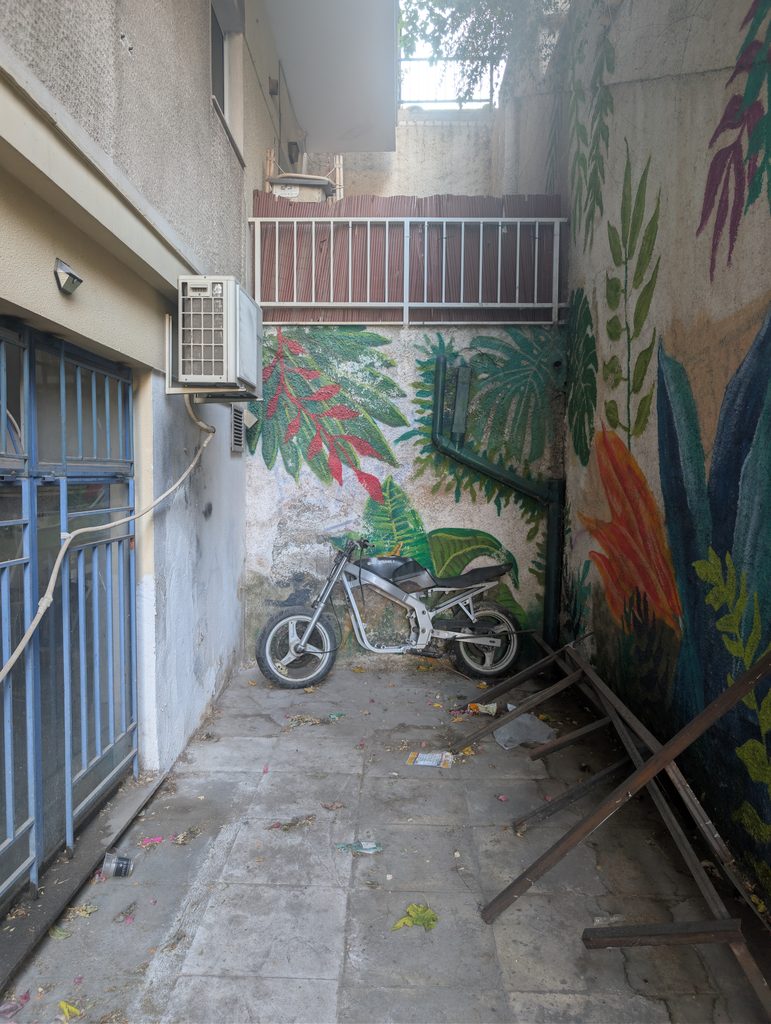
    A stripped bike I keep passing on the way to my boxing gym in Athens that I think about a fair amount.

    In the case of Berlin I think we have already seen the outcome of this battleground. With Athens not so much yet. Of course the concept of capital and big corp is omnipresent as everywhere in the west so one might think the race is already lost/won. The same feeling strikes me when I am here today as when I visited Berlin for the first time 2004. That the foundation of a western system is still in place but the details are yet to be determined.

    For a place like Greece, that has laid the foundation for the whole European project, it is an especially interesting time to see where this part of the world will pivot. Can Greece sustain the pressure of, in extension, America influence and become the first purely European country post Trump? Will it form a new bridge in-between the north and south as and start functioning more as a euro Istanbul? Will it configure itself in a totally unforeseen way?

    Nevertheless it’s presence is clear despite its economic struggles. As a child in the 90s, Greece was a vacation country of little cultural merit that was rarely mentioned in northern Europe. Still, its economy was in a much better condition relative to its European neighbors. Back home in Sweden obvious cartoon characteristics, like olives and Platon, and hotel complexes next to beaches ruled the image of Greece. Athens was a capital and a distant historic memory, at least to me and many of my peers growing up. Today this city is a place that means something beyond that. Athens, as a defining location, sits as a cultural mecca where the urban chaos provides a much needed “Oriental” infusion in a European self image that is slowly crumbling under the false narrative it has constructed around itself.

    Other than thinking about I went to see Merzbow, and more importantly some great Greek stuff, and visit the Benaki museum. More about this later… At the bottom is also the track of this post.

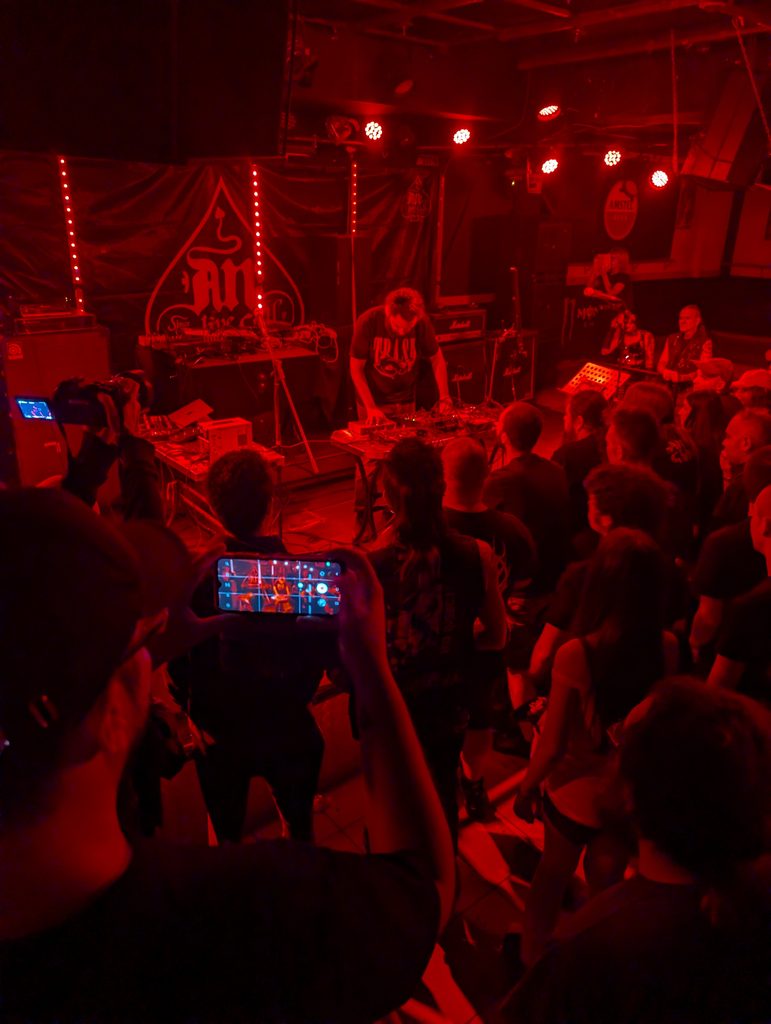
    Ghone performing at An CLub in Athens

  • 091326

    First run in Athens today. After sundown but still super hot. I ran around in the national park with its combination of greenery, sculpture, construction sites, fancy food and drink places, CrossFit gangs, shady small paths smelling of weed, kids riding bikes, big marble plazas, museums, tourists, armed military police, and most other things you can think of.

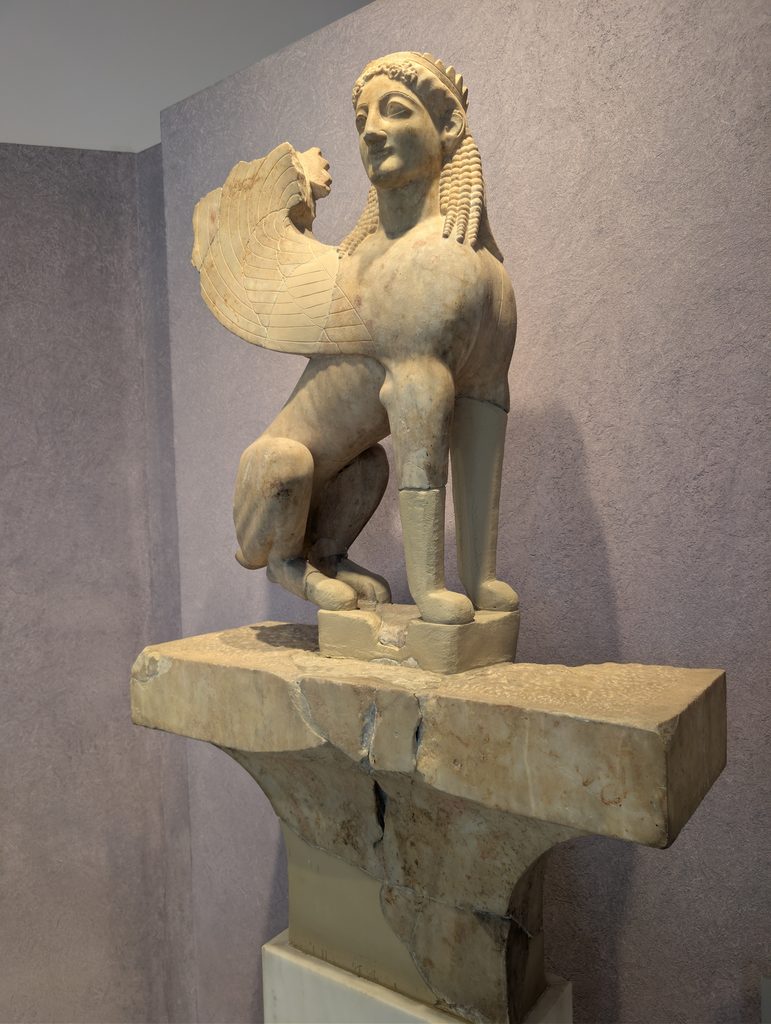
    I mostly worked at home today with a 3D model I’m making. I’m stitching together photogrammetry scans I’m finding around Athens and made a 3D figure based around a sculpture that I think, unofficially, is the saint of doves.

    I’m still not sure what it is I am trying to find here in Athens. Since I was a kid, this geographic area (the Mediterranean) has been fascinating to me. I suppose there is an element of exoticism. Still, it’s not enough to explain it. I had a similar feeling when I first visited Istanbul. A feeling of a location that is not at all defined and, at the same time, so specific and culturally rooted.

    It is true for many geopolitical areas around the world end up seeing collapse, reconstruction, and rebirth just as the Mediterranean has. So what makes this area unique in this aspect and what could we learn from it? Why have I been intrigued by the cultures and stories around the Mediterranean Sea since I was a child?

    I think that the argument that writer Federico Campagna puts forth in his book “Otherworlds” is a valid one. That the Mediterranean stems from its unique history as a compressed crossroads where entirely different cosmologies (philosophies, religions…) have collapsed into one another. Continuously and somewhat aggressively making the cross-breeding of cultures, as well as a certain kind of cultural conservatism, a survival tactic.

    In the times we live in, and face, where accelerating migration leads to cultural conflicts all over the northern hemisphere, there is a lot to learn from this history. Not only about pride and openness but also about imagination, dreams, and chaos as things to possibly embrace as a valid alternative to a fiction of stability.

    I cannot say I exactly know what that would come to mean in reality, but I know that it can be applied at a personal level as an art maker. It is that beautiful mystery of the grotesque (as in the merging of things not supposed to be one) that throughout our history has been seen as horrid until we are used to it and it is integrated into our future culture.

    It’s those things that AI cannot do, since its imagination is limited to what actually exists. It is a mathematical schedule that results in logical conclusions. It does not suffer the chaos of the body with all its flaws and imperfect translations from mind into matter.

    This city manifests as the opposite of an AI utopia and, in light of the super-tech cities around the world, appears dystopian.

    But suppose the super-tech city is only a path to the future in terms of technology and that this technology, in itself, is in the way of developing our humanistic sensibilities. Maybe these developments need to happen in places like this. Places where the unexpected waits around the corner, where personal innovation is part of your everyday life, and where giving someone a free nut and bolt from your hardware store makes sense. After all, it costs less than a euro.

    Αγία των περιστεριών, Saint of Doves

  • 130926

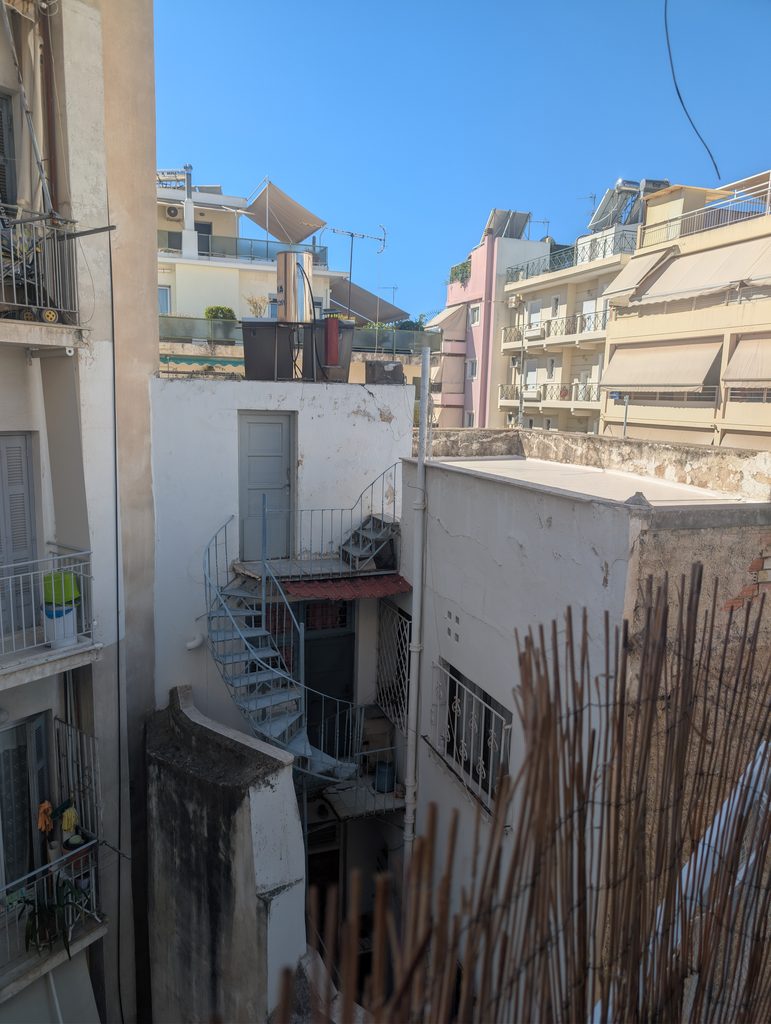
    The architecture is stacked. Like Legos in a makeshift playground. It contributes to the charm. City planning is reserved for the areas that either no one visits or everyone visits. Standing on a rooftop; the city stretches like a desert of cubes, wires and DETAILS. This is the beauty of cities like this. Everywhere a small decision has contributed to the view I am taking in. Wherever I look there is a odd story. An unorthodox solution for a cable fitting, a way to feed doves, a spot to read a book.


    Athens reads like a Moebious sci-fi. Scribbled with squiggly lines that are easy to appreciate if you look from the correct angle. If you are from here, maybe not so much… The beauty of decay means something else when you are in it. Existing in chaos will make you long for order. The same is true the other way around. For a north European the madness of Athens feels like a weight falling off your shoulders. A backpack filled with starbucks, neat roads and western hegemony.

    When people tourist here, they go for this reason (or Akropolis). To them, it’s a chaotic playground that transmit a tingle of excitement. “Maybe here something can happen?” It’s a dream put upon a place from the outside but only possible because of what happens on the inside as a response to life back home.

    A location in a state of pure decay instills dread. Athens is not this kind of place. The people you meet live normal lives, engage and have your interests. They watch the same movies and read the same books in school. They walk around well kept and groomed, even more so than most central European countries. Instead of the dead in a graveyard, Athenians seem more misplaced in the situation they inhabit.

    I went to a trading card game shop and played some Magic the gathering. It felt like normal. Same lovable nerds I feel most comfortable with. I set out to buy a nut and a bolt at a hardware store to fix a broken chair. I ended up getting it for free. At the local supermarket they know me now.

    Περπατώντας σε δρόμους γεμάτους σύριγγες προς το κατάστημα παιχνιδιών με κάρτες / Walking through streets full of needles to the trading card games store.

  • 100926

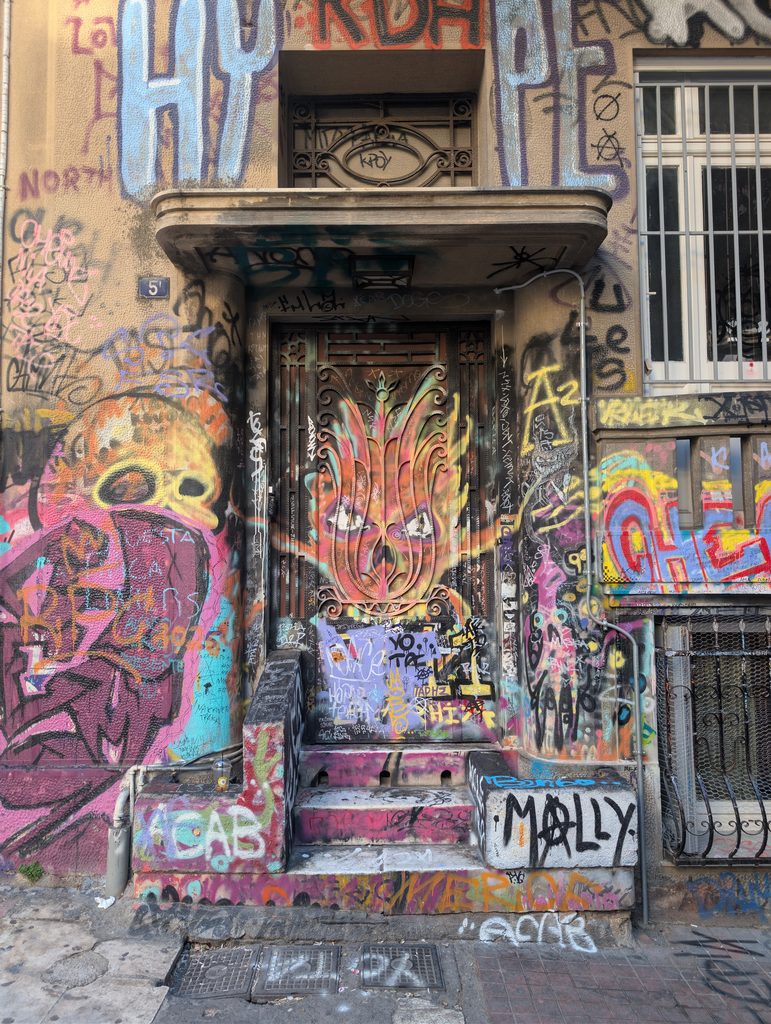
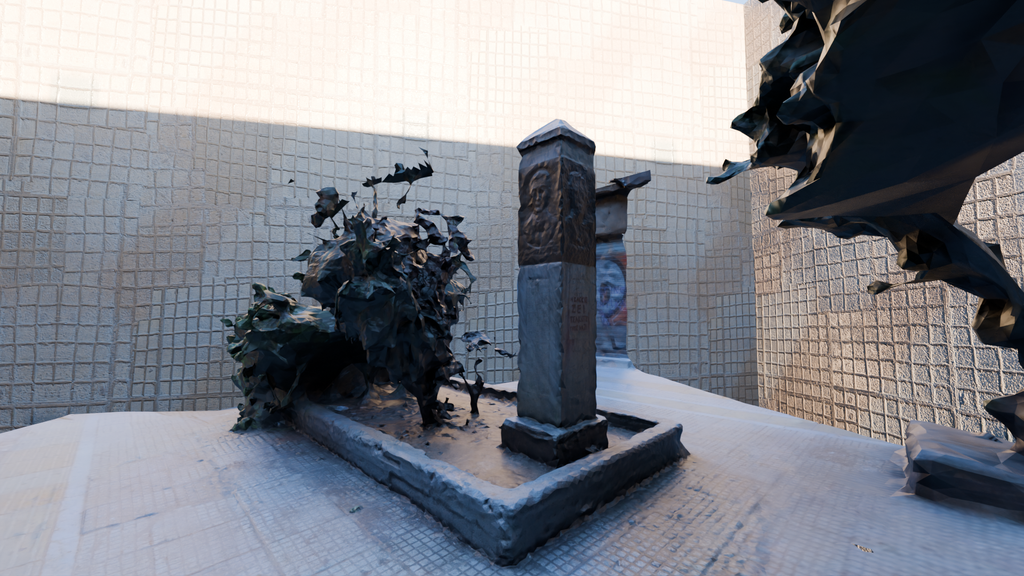
    3d scanned modell of monument put in a box of Athens typical street tiles.

    A few loosely connected observations:

    Third day in Athens. I have been doing a lot of walks, sound capture, 3D scans, reading, and exploring. One thing that strikes me when I am here after is how the city is divided into different areas. Naturally every city has it’s own divisions but the divisions in Athens are somehow very “flare-full”. The fact that you have Εξάρχεια (Exarchia, the anarchist neighborhood) next to Κολωνάκι (Kolonaki, the posh area) is probably the most obvious thing, but this “conflict” goes into the very DNA of the city. It is a city with a certain poetic charm that is in a constant state of negotiation. Fancy stores are covered in graffiti. A street vendor of snacks also sell books of serious historic merit because it is this person’s interest. Police guard the embassies close to the national park while smoking cigarettes and arguing about the latest football game (with their bulletproof vests sitting on the street because of the heat).

    In the context of Europe, Greece is the missing link to the Middle East and Muslim culture. Even when Alexander the great embraced Persian culture. Or during the Ottoman empire up until the migration crisis today. Greece is the most protruding (corrupted) embassy for European consciousness at the Mediterranean sea.

    Hospitality and friendliness to the “other” is stronger than in most European places I have visited. It’s the old myth about Balkan of family and friends distrusting the government. As a northern European this feels like the back of the moon. Maybe it is true, maybe it is not, but the story of cultures shifting like a gradient seem realistic. Similar myths exist about Irak or Afghanistan but in their cases they get a slightly more scary word of clans or brotherhoods.

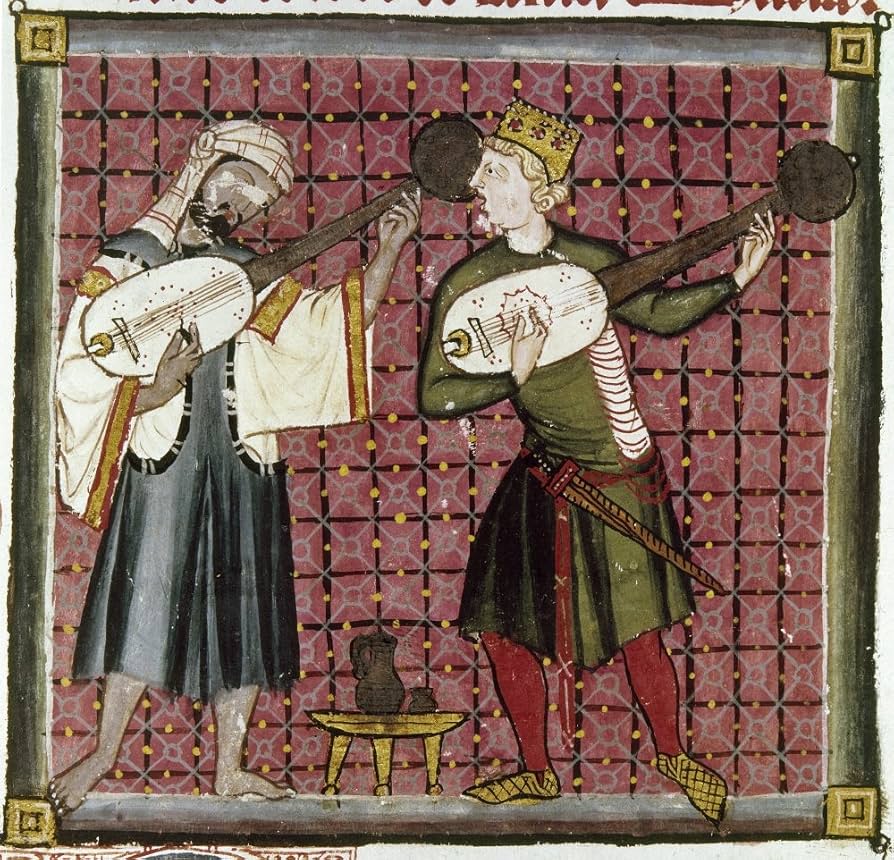
    “A physical manifestation of the shared European consciousness and its deep, undeniable connection to the Middle East. Long before modern political divides, this 13th-century miniature from the Cantigas de Santa Maria captures the living ‘missing link’: a European Christian courtier and a Middle Eastern Muslim musician sitting side-by-side, sharing the same space, the same aesthetic grid, and the same instrument. It stands as a visual reminder that what modern central powers often ostracize as ‘the other’ is, in reality, woven into the very DNA of our shared European heritage.”

    I have in general been interested in this connection of European consciousness and the connection with the Middle East. Probably because immigration from Turkey and Iran was part of my upbringing, and eventually Afghanistan, Syria, and Iraq post-9/11. Personally, I view a lot of these wars as a way to erase the past, or distance yourself from it. Of course the oil, minerals, geopolitical goals etc are the main motivation pragmatically. Still, this flogging of your heritage and how western culture have treated these parts of the world is something different. It has made certain actions possible, and certain thoughts impossible.

    It is a relative you can not stand anymore and you just want their inheritance, but you can’t stand them because of something a distant uncle pointed out.

    Cultural conflict spreads. Perhaps that is what has happened to Greece. A little bit too Μεσογειακή (Mediterranean), and also somewhat Persian from Μέγας Αλέξανδρος (Alexander the Great) maybe, for the tastes of Central European people. That is not a good mix in a world that is highly skeptical toward Middle Eastern culture.

    Following in the footsteps of the economic crisis of 2008. Greece became that relative in the family that the caught a bad rep from an other family member. Demands came from Central European countries that ended up sending Greece into the economic situation it now inhabits. Meanwhile, most other countries that struggled economically before the EU have improved their economic situation, while Greece keeps lagging behind.

    But Athens has always been in a state of collapse and renegotiation. Just as so many other places decorating the boarders of the Mediterranean sea. This temple of Europe, like Jerusalem to the Middle East, intrigues me and escapes simple answers.

    The first mention of the word Europe was in a Hymn to Apollo by Homeros:

    “Here I am minded to make a glorious temple, an oracle
    for men, who will ever bring me perfect hecatombs,
    both those who possess the rich Peloponnesus
    and those of Europe and the wave-washed islands,
    coming to seek counsel; and to them all I would
    deliver a decree that cannot fail, giving answers in my rich temple.”

    “Αγόρια που μιλάνε για το κινητό κάποιου”/”Boys talking about someone’s phone”

  • 08092026

    Landed in my Athens studio that will be my home for the coming months (reach out if you are here! I am lonely!). I’m here on a grant from Helge Ax:son Johnson working with sound, 3d, drawing and other media to explore Athens as a source of imagination inspired by collapse/mutation and Europe as a fantasy world, whatever that means… Either way it will be a lot of exploring the nooks and corners of this city for information and inspiration, creatives and artsy nerds.

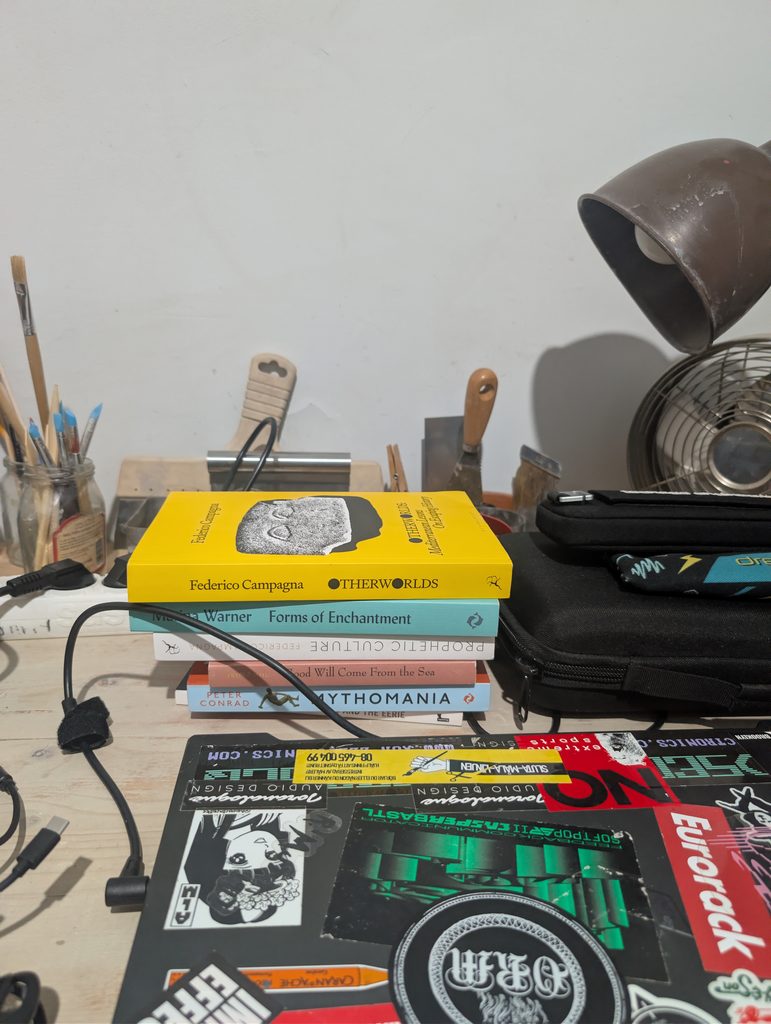
    As a guiding light I am working with the excellent book “Otherworlds” (Federico Campagna) that I recommend to everyone. It chronicles the Mediterranean relationship to myth, tale and imagination across the ages up until present day.

    Another great book, but in the genre of fiction, I am working with is “Good will come from the sea” (Christos Ikonomou) that covers an era of Greek history after the economic collapse of 2008. A beautiful depiction of when the promise of justice given by the contemporary west collapse. Specifically upon its own and, somehow, a cultural “us” turn into “them”.

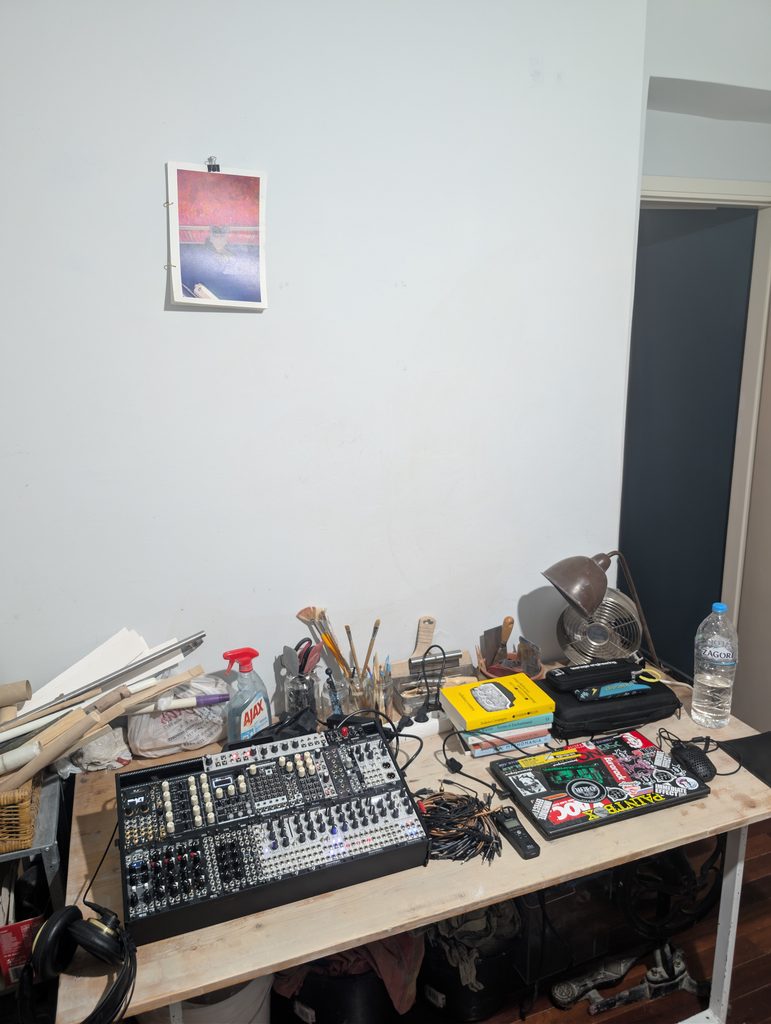
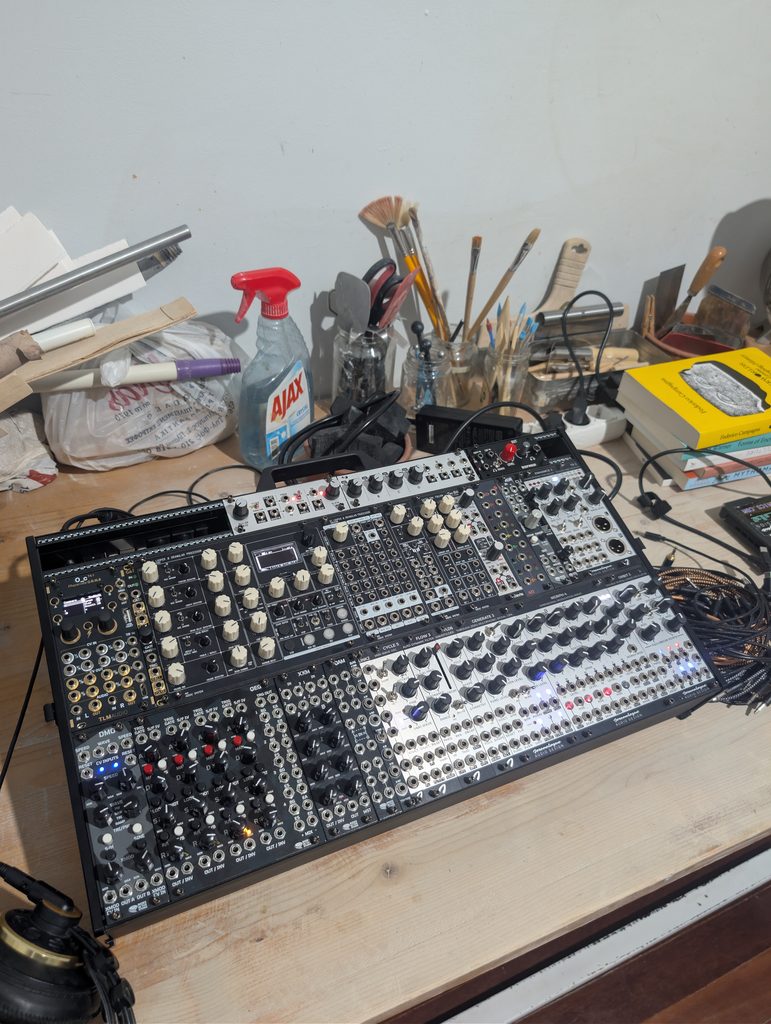
    Sound will be a major part of what I am doing here. The past years I have been drifting more and more into what sound is and how I can relate to it myself. I have taken this as an opportunity to continue this research with a bunch of small, fast, studies. Like sketches but with audio. For the most part I am recording sounds and working with granular synthesis using modular synths. Somewhat time consuming, highly unpractical and kind of impossible to listen to as music. I prefer to look at it as a way to work with sound that is more as a painting. Something listen to as a sound you hear walking down the street. A ambiance to itself or something like that. Buying food at Elvis Souvlaki today I recorded some ambiance I mangled through the modular synth that you can listen to here:

    Expect more continues updates from me while I am here since I would like to keep more active journaling what I am doing for my own sake.

  • 20082026

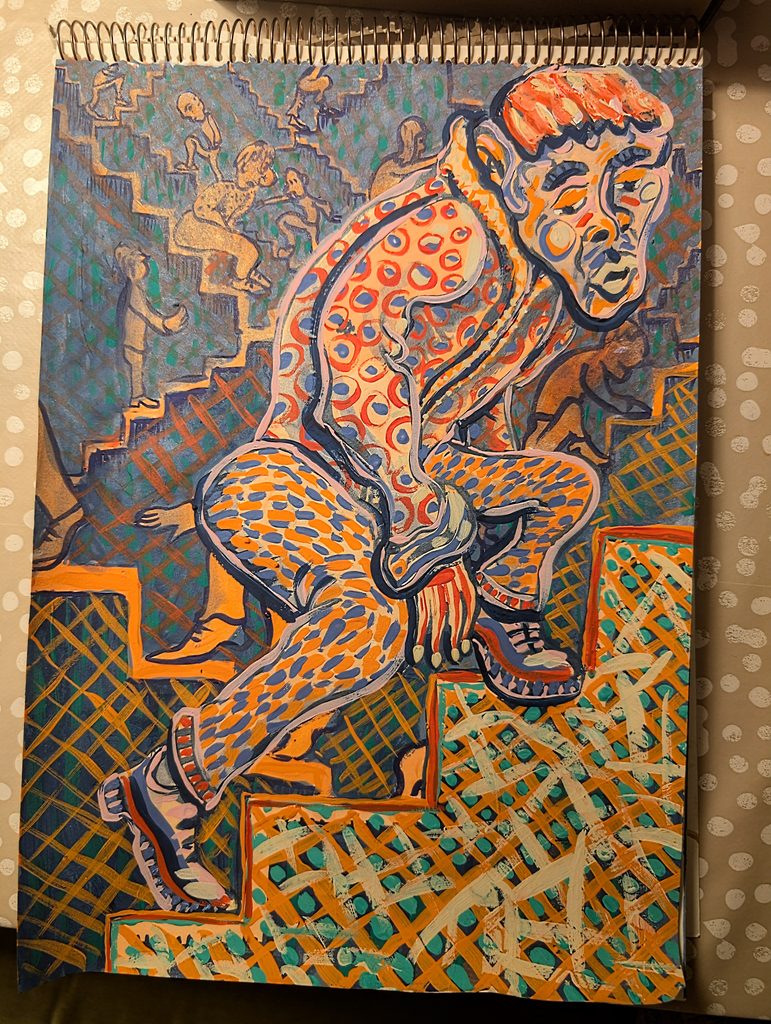
    Finished the majority of my animated short film and back in the big studio painting with a @babybjörn (sponsor me!) and the @skidznyc pants I got from Josh at @Room57.

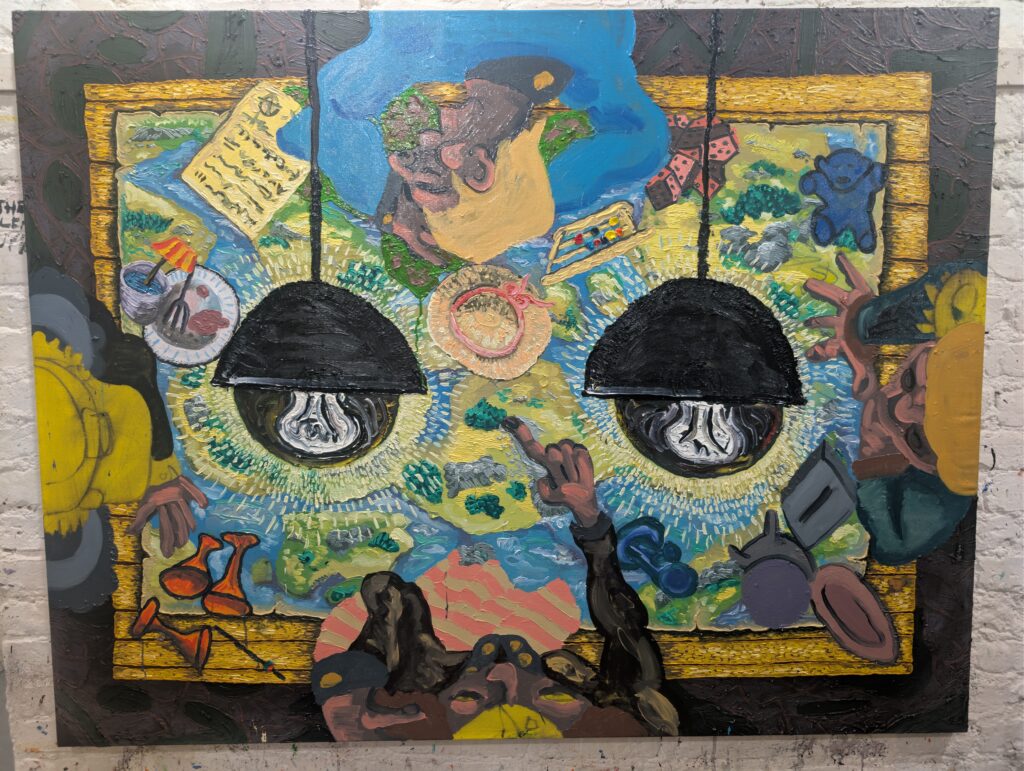
    This painting is a funny one. I think I started it before my kid was born, and because of all the other work and trying to hang out with her, I have just been fiddling with it way too much time. At some point, I just gave up on making it good, and it just sort of grows with time. It feels like when you would doodle in the margins of your school books. Still, I think it’s great to have those kinds of paintings around that allow you to break with all your hang-ups on how “something should be” that I have built up over the years. Breaking all your own rules contributes to something that just makes the overall process much more meaningful than working away at something that ends up attached to some rulebook in your head so you won’t divert from your path. I think those paintings are very much like thinking aloud about your process and coming up with ideas about how you can progress, and there is honestly no better time to do those kinds of things than when you have a small baby to manage all the time.

    The visit in the studio will be short this time, though. I’m heading over to Athens for 2 months in early September to work and read books. If you happen to know anyone I should meet there or have any art tips, I’m happy to know about it so I can make the most out of those months in the heart of Europe.

    Here is also a crooked low quality process-shot of the “random” painting in it’s current state.

    Enjoy your weekend!

  • The imagining tear trailer

    I’m very happy to release this trailer for my short film “The imagining tear”! 💧

    “The imagining tear” a dreamlike visual narrative inspired by mythological creation tales, early Y2K video game cutscenes and theoretical litterature of reality and imagination I have been reading lately. Maybe mostly the work of Federico Campagna. In no way a visual theoretical essay, this short is my way of exploring the short film medium, and is the result of hours spent hand crafting every 3d-model, texture and animation while learning the medium. It’s been a fantastic experience and I am so greatfull to Konstnärsnämnden here in Sweden for supporting this project!

    The full release is still in the future but are planned to go out to animation film festivals and screenings next year. it turns out that there are MANY parts with making a semi-professional film I never had foreseen and even though I am making a self produced silent short there are more people to involve to make it into what it should be.

    For this trailer I had help from the fantastic Coco Magnusson that did the cutting, grading and music.

    Enjoy your vacation, if you have any, and stay posted on the development of this project. It will be something out of the ordinary!

  • Update June 27, 2026

    Radio silence from me the past couple of months for a bunch of reasons. First of all I have been going crazy in a small, way to hot, studio working on my animated short. Luckily, the first phase is coming to its conclusions! Soon I will have something moving to show! It has been a copious amount of work but thanks to the economic support of the Swedish Arts Grants Committee I have been able to relax a reasonable amount in this process.

    I also have had the pleasure of starting a sketching process for a big public work in Stockholm. It is still alot of work and time left but it’s a new and great experience to work with a bigger scale and budget. More on that later…

    It was a long time since I felt it so rewarding to work as an artist. I have alot of projects going on and it’s all moving forward. Most importantly I find alot of it interesting and worth investing time and money into. I think the biggest benefit for me with becoming a parent is that your scope changes slightly. It’s more important for me to be present in my everyday life now and I think this spills over into the artworks. It’s somehow easier to cut away the bullshit, I think… or, I’m just still on my parental high.

    Anyway, to me this feels alot like a production year for showing things in 2027. Everything in its time I guess.