I started thinking the past days about Athens as a horizon.
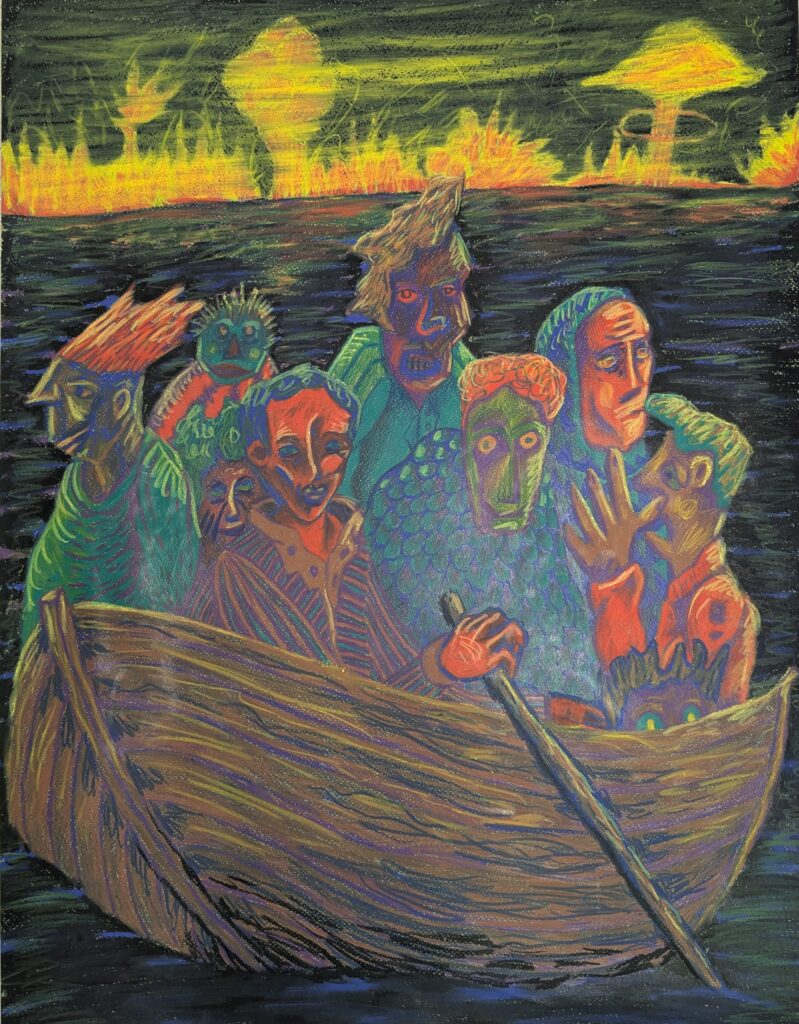
Imagine you are standing on the deck of a ship traveling away from your home to an unknown destination. Behind you, you have the horizon towards your home. In front, the horizon to the unknown. To the left and right, the horizons somewhere in-between.
There is a threat in that unknown, baked in with excitement and wonder. At the past home, there is a threat of stagnation, or conservation, but also security and relatability.
Greece, but specifically Athens, carries the full 360-degree view of these horizons to a Northern European. It is an image that is external, put upon Greece in general and Athens specifically.
It is the origin of so much considered to be a uniquely Western identity and, simultaneously, it is the final frontier of the Western world living in a polemic fear of the Middle East.
In Athens, the tourist quarters are washed of influence from its non-European neighbors. Greek idyllic paintings, Sparta t-shirts, and erotic bottle openers stand next to restaurants serving either traditional Greek food or other European dishes.
Travel a bit into the suburbs and the scene changes. The Ottoman, Byzantine, and Persian layers make themselves known. But also, today, the African, Indian, and others.
From a different angle, I am watching the mediocre movie The Two Faces of January. Another image of Athens, well-known in my subconscious, manifests.
That is a world of the labyrinth and mystic rule, where we cannot entirely know who is the enemy and who is the friend. Where the surface is familiar and inviting, but, as in Greek mythology, the deceit of a forgotten god is not far away. It is the same kind of image that can reside in a small Italian village or a secluded family in the rural areas of North America. In the case of Greece, it is the Athenian maze of streets and the presence of the past that paint an imaginative backdrop to Western stories of contemporary mystery.
This image is of course a lie, but it tells us something about the Western view of the “other” and Athens as a “gate” to the Orient to the European or American eye. It is a springboard more “home” than Istanbul, but still a place more in bed with “the other” than, let’s say, Paris.
After 9/11 and the immense Islamophobia that arose from it, I can’t help but wonder what part this played in the new Western relationship to Greece. From then on the war on the Middle East has been ongoing and intensified. Just a few years later the economic collapse of 2008 struck Greece. In the news back then, Greece was laced with tropes of being “lazy,” “corrupt,” and “undisciplined.” Was Greece punished by Northern Europeans because it confirmed their subconscious bias? Would the economic crash have been handled differently if it occurred in Sweden? Would Italy see the same consequences? Is it the ways of a society with one foot in each world that instills fear into the Northern consciousness?
This horizon, where the mysteries of the past, another reality, and maybe also our common possible future reside, of course we will clad in mystery.
Then, yesterday, I went to see another film.
This time it was at a major shopping mall, the “Mall of Athens.” It is a strange, semi-identical version of the “Mall of Scandinavia” that I am familiar with in Stockholm. In this location, the Athenian world seems identical to the Stockholm one, or the Paris one, and possibly the Istanbul one. The same stores and brands line the halls. The same kind of people reside there temporarily. They wear more or less the same clothes. It feels oddly at home.
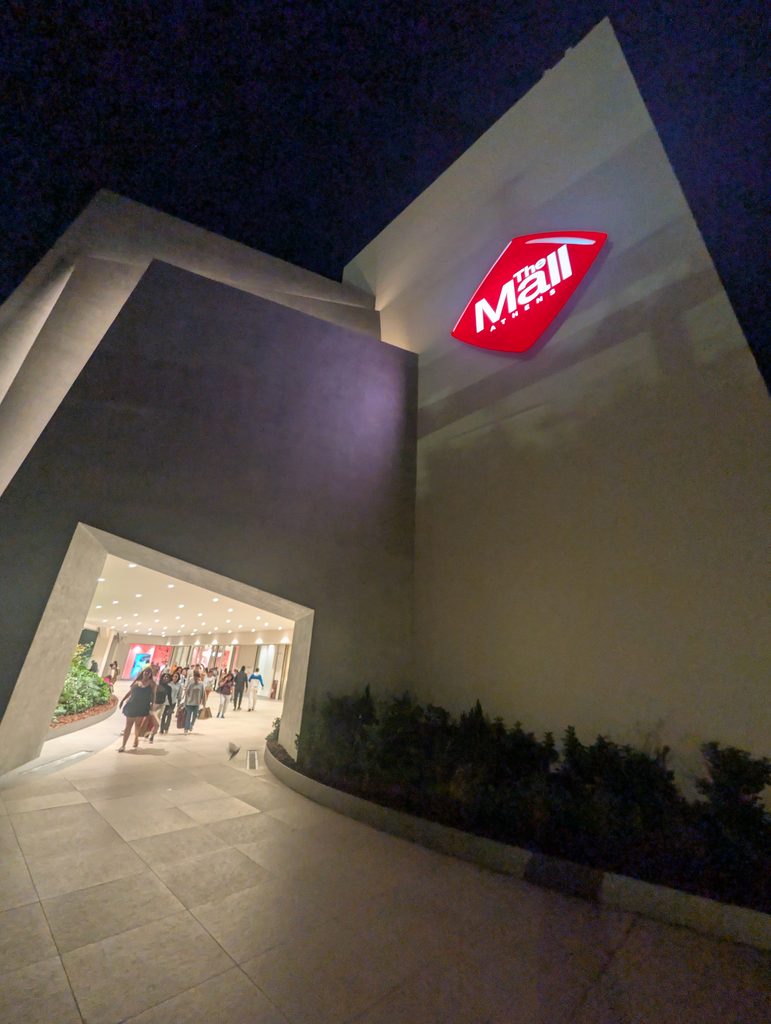
I went there to see Odysseus in the shape of the latest Hollywood interpretation, and through this experience, the next horizon makes itself known: that of the capitalist project. It is a horizon where every place is the same and every major city has an IMAX where we all watch the same movies with different subtitles.
The story of Odysseus here is rewritten as an American-style hero’s journey where the main character is regretfull and full of wisdom. He returns home to put things morally right. The classic story is retold to fit a future where the viewer has forgotten about the past. The original Odysseus was an unreliable narrator, bragging about his exploits to get favor with the Phaeacians. He is presented as a liar and a bard who eventually, through his lies, manages to reclaim his rule. In many ways, he sets an example of a world not functioning, and why. It is a cautionary tale from Homer about how the Bronze Age he idealized came to collapse, a tale told 400 years later to show what was lost and who we became, but most importantly, the tragedy of this transformation.
In Nolan’s version, Odysseus mourns the fall of his old world and does not stay but journeys west in exile to find a new world. Yes, he travels to the West, a place that, between the lines, is portrayed as a world where a possible new future resides. Interestingly, this mirrors the way so many Europeans set out to do when migrating to the New World that became the USA thousands of years later.
Today, the Greek, as well as the general European world, is at the helm of a journey reminiscent of this as well, surrounded by horizons of the unknown, the past, and the promises of various lands surrounding our location. Is the future in the “Mall of Scandinavia/Athens/Wherever”? Is it in the ruins of our European past that litter our cities and landscapes? Is it in the ports where Chinese goods and migrants from the South enter, or is it in all those places simultaneously?
Just as Nolan reimagined the Odyssey to keep imagining the world we have lived in since after the Second World War, the European project needs to create its imagination of the future. The realities of our economy and stability might be the first things at hand when deciding what horizon to sail towards, but equally important is the mythology built around that future yet to exist.
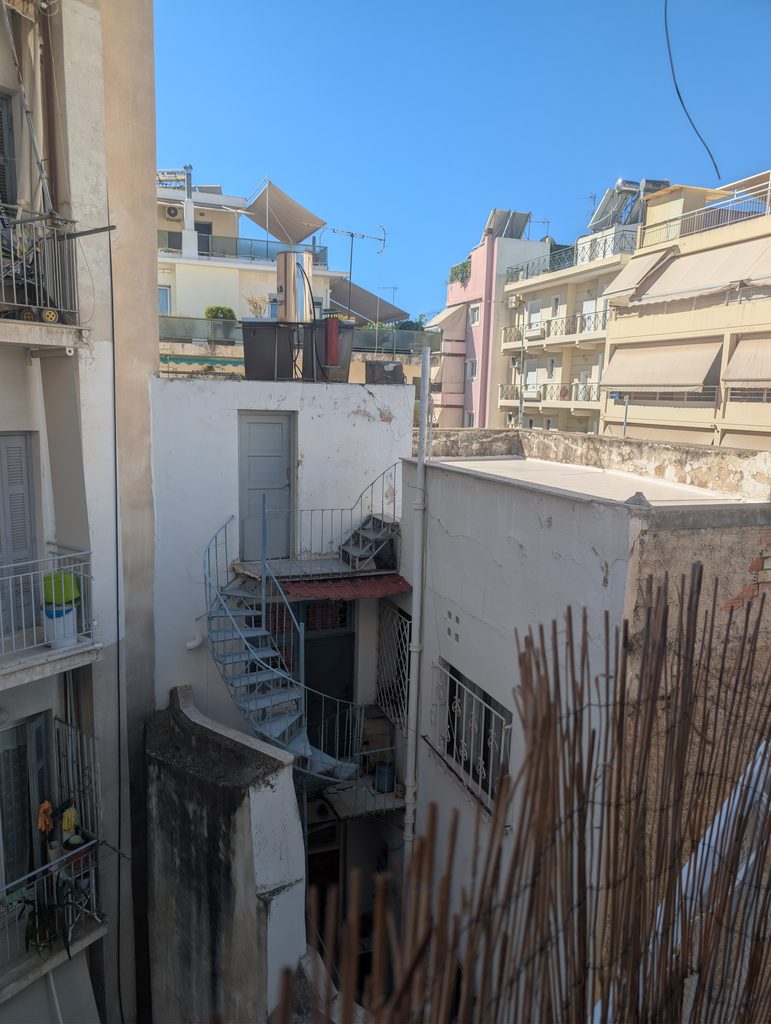
Stepping away from this fantastical imagination of a Greek, and larger European, future as a ship, it is important not to forget about the people that actually inhabit this place, Athens. The realities of Greece are painted more so on the canvas of a military junta that ended in the 1970s, Ottoman rule, the Bavarian monarchy, and the economic crisis, than the distant memory of Odysseus’s Bronze Age world or a distant future without painted outlines. These are consequences played out over a population in a long history of Mediterranean geopolitics that set the possibilities of a “now.”
A big portion of Greeks would, I assume, prefer Odysseus as Nolan’s hero than a tragic figure of Homer. In most of Europe, this choice has already been clearly made for such a long time that the faults of our choices are becoming more apparent every day. Our current European reality is something attached, put upon us, inherited, offered, more so than created. It is a claimed possibility to return to a home that no longer exists.
Most people in the world would embrace the promise of order and stability from clean malls around the world, instead of something that reminds them more of a disorganized bazaar or bleak concrete housing projects. As a visitor, these chaotic places serve as a romantic backdrop, a temporary escape from the mundane. As a resident, this backdrop is instead the fabric that covers your body. In the midst of a chaotic reality, it seems as if it is hard to find space to imagine. It might make more sense to experience a reality already created.
The characters in The Two Faces of January eventually end up returning home to America in one way or the other, leaving behind the escape, exploration, and possibility for a new life in Athens, Crete, or Istanbul. They never found their horizon and instead got lost and torn apart. They could also never truly let go of the home they came from. Their visit to the “unknown” was not as explorers, but as fugitives. The locals in the film are props that walk around without agency. Our main characters never accept their reality far away from home and do not grab hold of the possibilities presented in front of them to imagine a new life. Instead, they are consumed by the realities of their predicament and the anxieties these produce.
They remain unable to imagine what could lie at the horizon.