Tag: digital
  • 261026

    261026

    Saint of Doves

    All stories have an end
    before they can become new.

    When you’re a child, you can, like a
    mystic, glimpse the infinite.
    World-builders with ketchup
    all over their faces.

    To grow up is to
    crush worlds and build them.

    Lego, different pieces puzzled together, changed.
    There is always a plan, but suddenly
    it happens.

    Everyone has an account.
    An account that ties us to
    reality.
    A buoy, an anchor, a bridge, a yoke.

    I look at faces.
    Fantasies in a book.
    A reality greater than me.
    Out there.
    To navigate, not to exist in.

    A world like others,
    a world not like others.
    An otherworld,
    beside an anyworld.


    There is a value in preserving
    the memory of something that was important.

    It travels between mouths,
    lungs, ears, eyes, tongue and
    thin skin.


    And I feel how
    the 90s smelled.

    To maintain or to uphold.
    Are they so different?

    Or is it a power relation.

    Some places have:
    grown, sunk, been broken, been patched.

    It rests in the place itself.
    In layers of gravel and macadam.
    In a past that reveals itself
    we may perhaps glimpse
    our future.


    The pigeons see the now in the crumbs.
    They eat from boxes even if they’re poisoned.

    1

    I’m now a little bit over half my time here in Athens. Last week I had a quick visit back to Stockholm and, to little surprise, had that slight foreign feeling you can get when returning home after some time away. Going ‘somewhere’ does not necessarily give you the strongest realizations about the place you are going to, but, as my favorite anthropologist Michael Taussig would argue, it teaches you mostly about the place you are from. So, instead of focusing on what I am trying to find in Athens, I would like to speculate on what I am feeling is missing where I normally exist.

    I have this feeling that we caught the world in a fall. Not the bigger world, but the world I inhabit normally: Sweden and northern Europe. While society increases its economy, it seems to somehow do so at the expense of myth and imagination. Two components retracted from a society that desperately needs to reinvent the human in the technological age. Somehow braided into the logic of our society itself, the activity of fantasizing, or lying for the fancy of a tale, is reduced to cheap entertainment instead of being understood as the foundational playground for our spiritual development. Many people in the world at the moment can sense that something is wrong with the setup we have created. Some escape into increasingly dogmatic religious beliefs, or ideological equivalents, enamored by the familiar feeling of something old and filled with passion. Maybe they are trying to find the flank at which to die with conviction?

    “Confronted by the difficult task of learning how to die well, subjects standing at the tail end of a future often feel that their world-building aesthetic machine is beginning to jam.”

    … Federico Campagna writes in one of the final chapters of the book Prophetic Culture. I think this precise notion is what has fueled my work as an artist for the past decade. As an artist I often feel confronted by the conflict of creativity as a labor and creativity as a vessel for something much less tangible. The naming of this second one has a lot less to do with everything measurable and quantifiable. For lack of better explanations, it is as if the world I inhabit has buried this notion, or reason, for creativity so far underneath the layers of language that constitute contemporary life that it falls into the sensations of madness or mysticism.

    All of us are seeking means to sustain ourselves in a world that twists and turns like a huge ship on a stormy sea, most of us passengers forced to adapt far away from the helm. Even the galleries, book publishers and record labels are forced to go on a similar journey. One that always leads you to pay homage to increasingly rigid frameworks of cultural production. An image in my head paints Stockholm as a ship and its crew at port, tied not only with rope to the harbor but also tied through new trade opportunities, bastard children, imprisonment from not understanding the rules of the harboring country, or lost in the maze of foreign architecture. Athens still feels like a ship on the coast, trying to decide where, if and when to throw anchor.

    2
    I think it comes as no surprise that in a reality motivated at its core by economic growth, the productivity of any action is always in question. Why do X, and what is the purpose of Y? There is a moral at stake somewhere in the action of creation, and there is a fine line between a lack of purpose and an escape from purpose. How many times have we not heard discussions of art for art’s sake as a plaything for the upper class, entertainment for an academic elite, or masturbatory activity for egocentric artists?

    If artistic endeavors are world-building, what kind of worlds are built when motivated by purpose?

    I went through our academies in the early 2000s, taught by post-modern teachers coming from the post-modern schools and Conceptual Art. A way of looking at making where the thought produces the work. A strong way of unmasking the very white, male-dominated world of modern art that came before it. A huge wrestling match between the old champs and the coming ones, but still in the same arena. A playing field where “purpose” is central and the idea of aimless creativity is naive and/or suspicious. I remember a professor of mine writing my work off as shamanistic at one point, saying he experienced it as obtuse and as using language as a way to hide intention, in this way deprecating language itself. Something this professor viewed as “witch doctor aesthetic”, or theatrics without purpose. His main point, as I think of it today, would be how the flooding of meaningless “things” in the world just drowns us without giving us anything to hold on to.

    Since then the world has entered a new era of internet, ecological crisis, AI and migration. Also, for us in Europe specifically but generally everywhere, a centralization of wealth after many events of economic collapse. The economic growth concept has moved into many segments of our society. Personal growth, emotional growth, brand growth, spiritual growth. Everything must grow, it seems. In the same way, the biggest achievement of an artist today is the size of their fame in itself. How many Picassos and Warhols have we not seen around the world? A story worth telling because of its success. And are we not smart enough to realize that this means success and visibility are what must grow to create the artistic prophets of the future under western capitalism? Learning from the success stories of social media and its magical algorithms, what is being appreciated, or at least looked at, has become a currency in itself.

    Purpose, and how it is questioned, is in this sense judged in two separate but tied-together ways. The first is visibility, mentioned above, which forms a necessity for anything to be appreciated as art. The second is affiliation, meaning: what does this art serve? Once visible, and once what the art serves has been laid bare, it can be used by others to populate a location in the continuous world-building of the contemporary world we still inhabit. It’s an industrialized way of producing and developing culture, increasing output and diversity inside a system at the cost of imagining something outside of it.
    Simultaneously, the need for something outside of this effective machine seems absurd for anyone besides the artist. Just as surrealism needed psychology and ideology to legitimise its surge of imagination, so would any artist wanting to imagine outside of this world need to invent reasoning to exist inside of it. There most definitely is a mould to follow, of common language and expectations of behavioural patterns among artists, gallerists and collectors. Something that has only hardened with competition and the increasing stress upon a world that seems to be heading for collapse.

    In Athens you can visit the gallery district in Piraeus. It is the same as the gallery district in Stockholm, Copenhagen or Berlin. It tells me that Athens is simultaneously a place where artists struggle and adapt, or don’t, like anywhere under the rigid machine of contemporary art. Simultaneously, the scope of the city and the abundance of cheap space create a breeding ground for alternative forms of imagination that have mostly been pushed out of existence or institutionalised in Stockholm. The same old story of gentrification and its relationship to contemporary art. My question would be: can art affect this transformation itself if we could be less complicit in the arena that inevitably chokes us? Does it have less to do with where we are, and more with the kind of artistic languages we regurgitate?
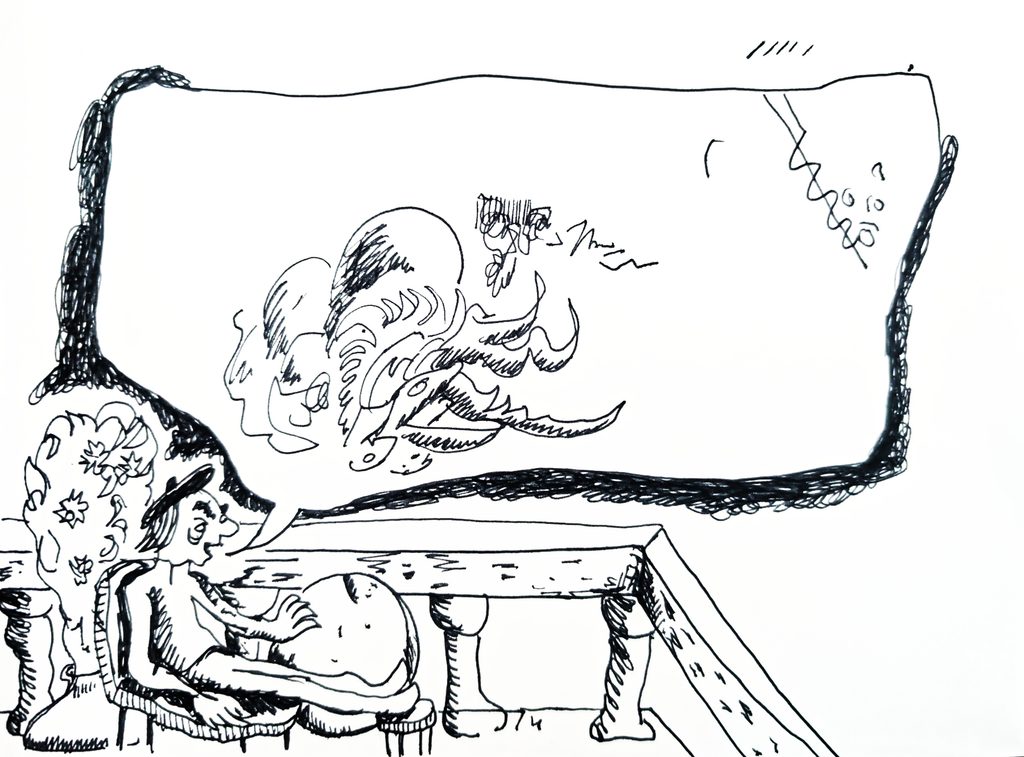
    “Lying Artist on Balcony”, Napkin Sketch, October 2026 by Me

    Any relatively well-off western country exists in this aesthetic spiral where the hardening of the models for making art is stricter. Where the economy for sustaining yourself is more challenging, and the engine that drives you to produce outside a well-established machine is consistently challenged. It’s a kind of “Midas trap”, where the wealth of a system and its stability bind you to this same wealth and proliferation. Being an individual who steps outside of this proliferation of wealth is dangerous. Don’t fix what is not broken, yet. Compare this to areas of systemic collapse, where the chaos of unknown direction will allow for all kinds of realities and worlds to start taking shape. Societies with less to lose can truly work without purpose, relying on the hope that what feels correct should have a good outcome, or on whatever other idea that seems absurd under contemporary western life.
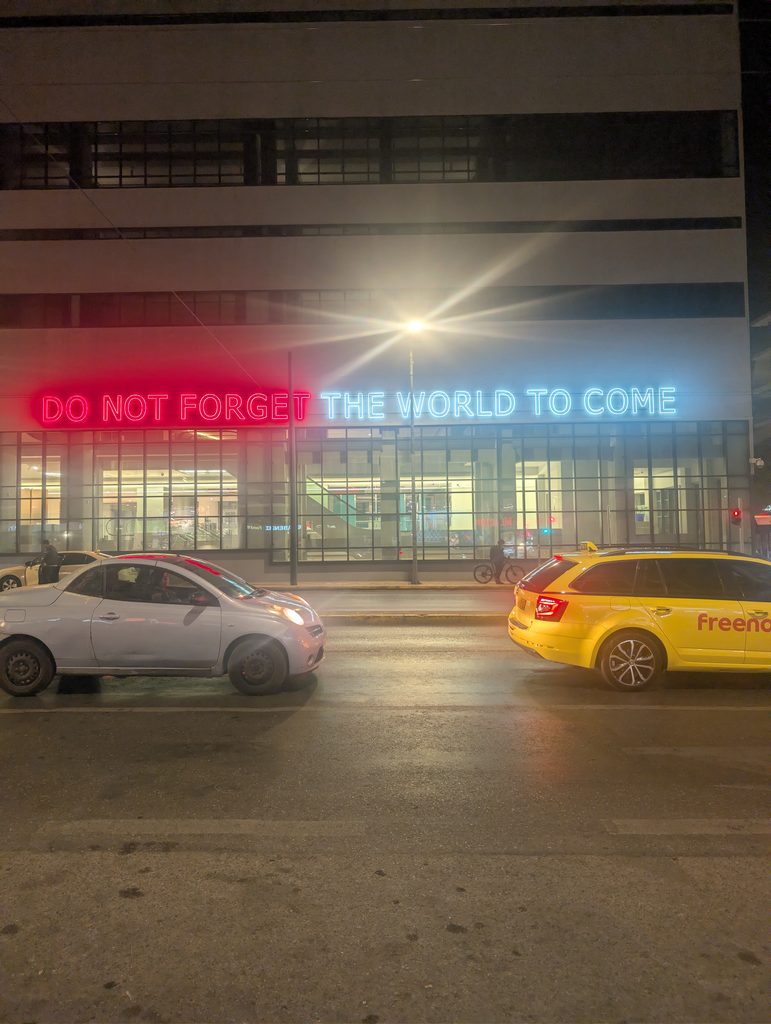
    Neon signs outside of The Modern Museum of Contemporary art in Athens

    This is not to paint places of economic strife as possessing something that puts them in a better position compared to Switzerland or any other rich western country. It is a position inherited from the mechanics of the system itself. In the Museum of Contemporary Art in Athens they are right now showing their exhibition “South by South-East”, an attempt to frame Athens in a new artistic context related to the Mediterranean area instead of replicating the stories of North American and Eurocentric art histories. It’s a commendable effort that opens a small strait for sailing your ship past the ports already populated and exhausted. An act of resistance not equally possible in a country like Sweden, where the debt to the machine that feeds the society itself means it cannot afford to leave the game it is constantly reinforcing.

    As I mentioned in previous texts, to inhabit the location of the “Anyplace” means always pointing towards its logical centre. What would happen if that centre were to disappear or lose its function as stabiliser of the world you exist in? And, more importantly, isn’t it more relevant to point somewhere else (or maybe even better, into nothingness) before that happens?

    When I think about the place I am from, I see it as a missed opportunity for artists not to detach more strongly from the expectations of the system we exist in. Hopefully discovering places of thought that those who are not artists, but designers and technologists, can explore further. The aimless wandering in deserts to find the scraps of past civilisations, or an oasis to fill your water, cannot come from a strategic removal of all sand. Instead, the walking, looking, sensing, finding, reacting, evaluating and eventual production of some sort of trace seem more tangible as something meaningful.
    Περιδιαβαίνοντας τον Γιάννη Χρήστου, Moving through Jani Christou

  • 091326

    091326

    First run in Athens today. After sundown but still super hot. I ran around in the national park with its combination of greenery, sculpture, construction sites, fancy food and drink places, CrossFit gangs, shady small paths smelling of weed, kids riding bikes, big marble plazas, museums, tourists, armed military police, and most other things you can think of.

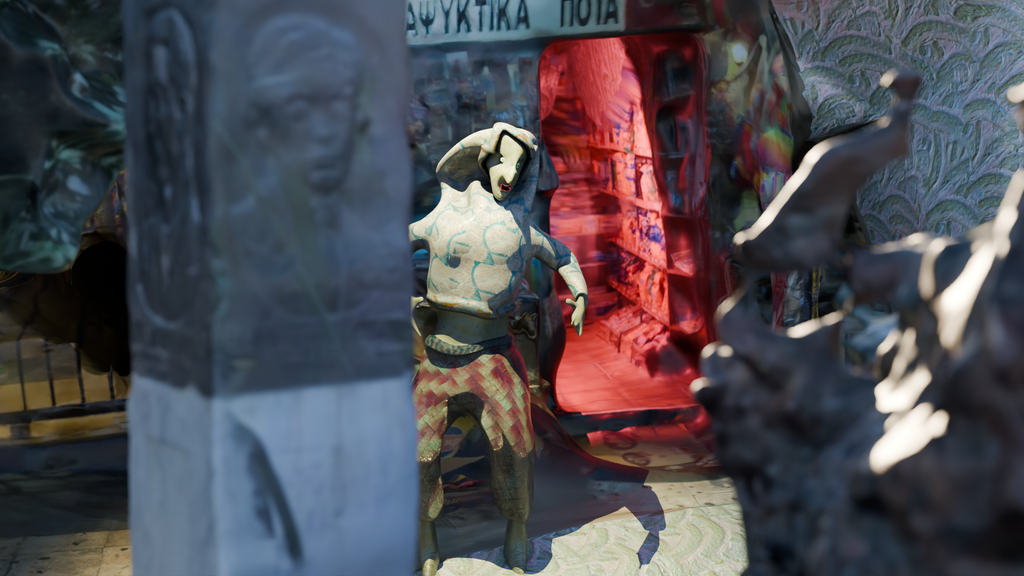
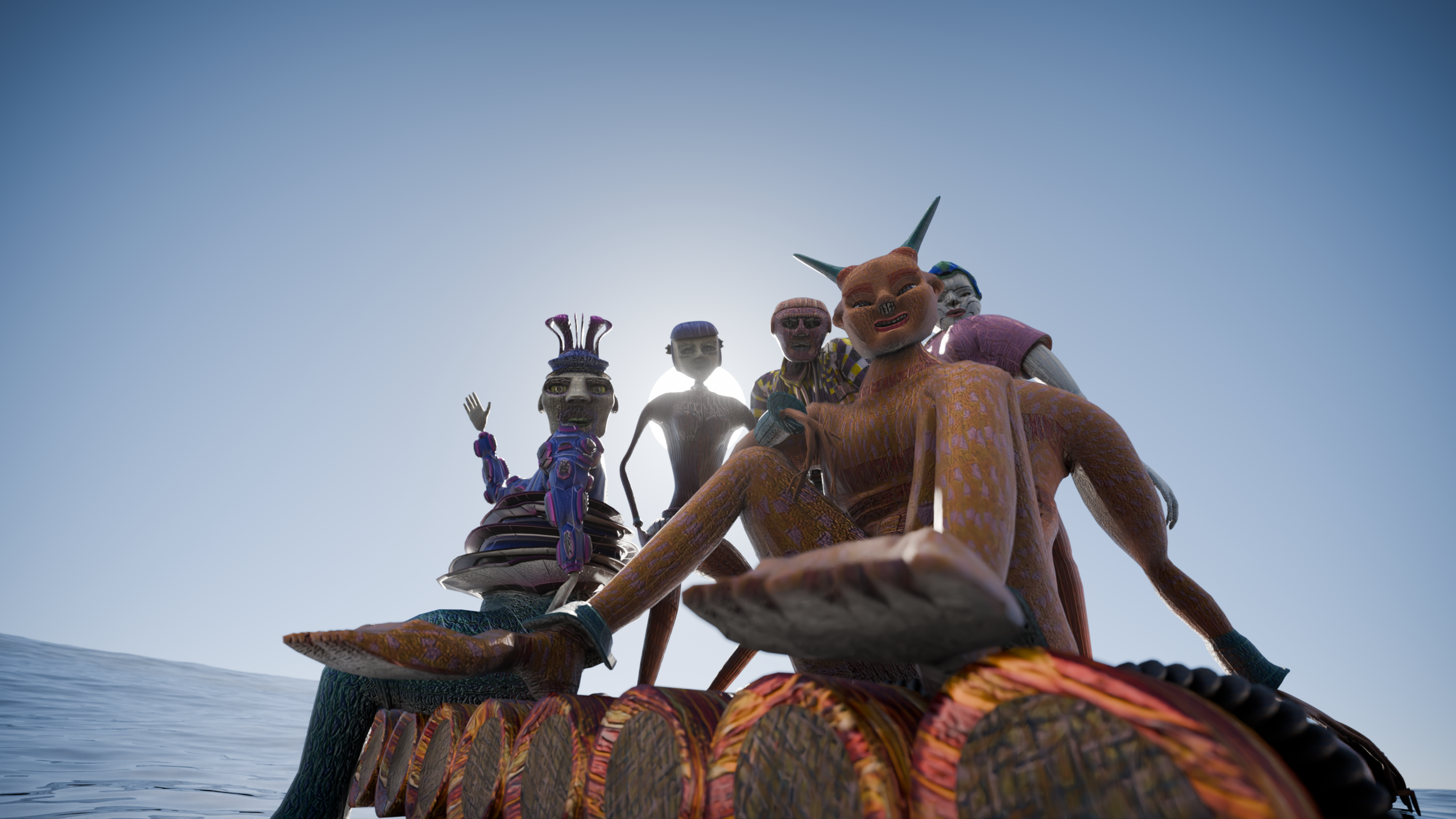
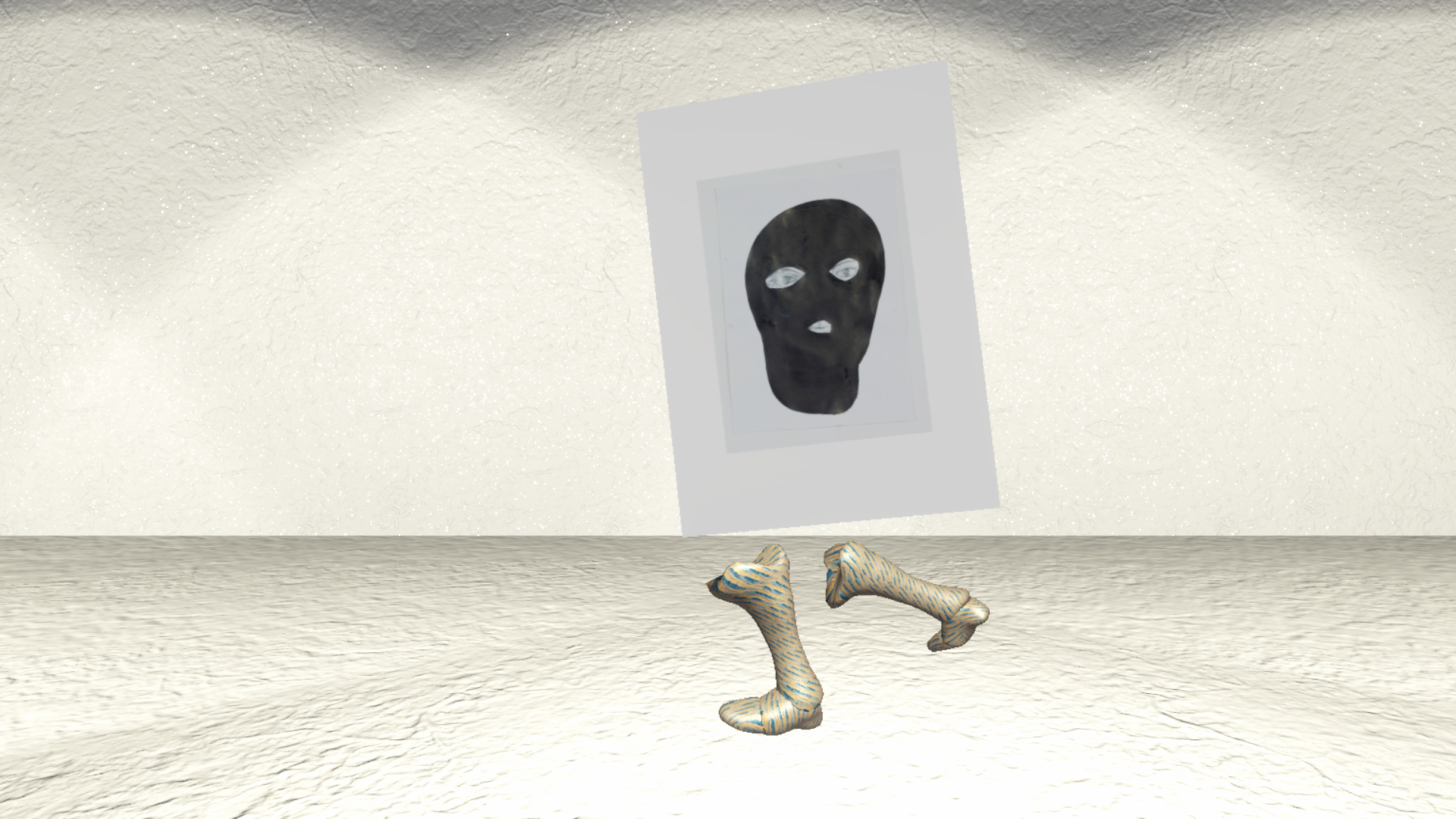
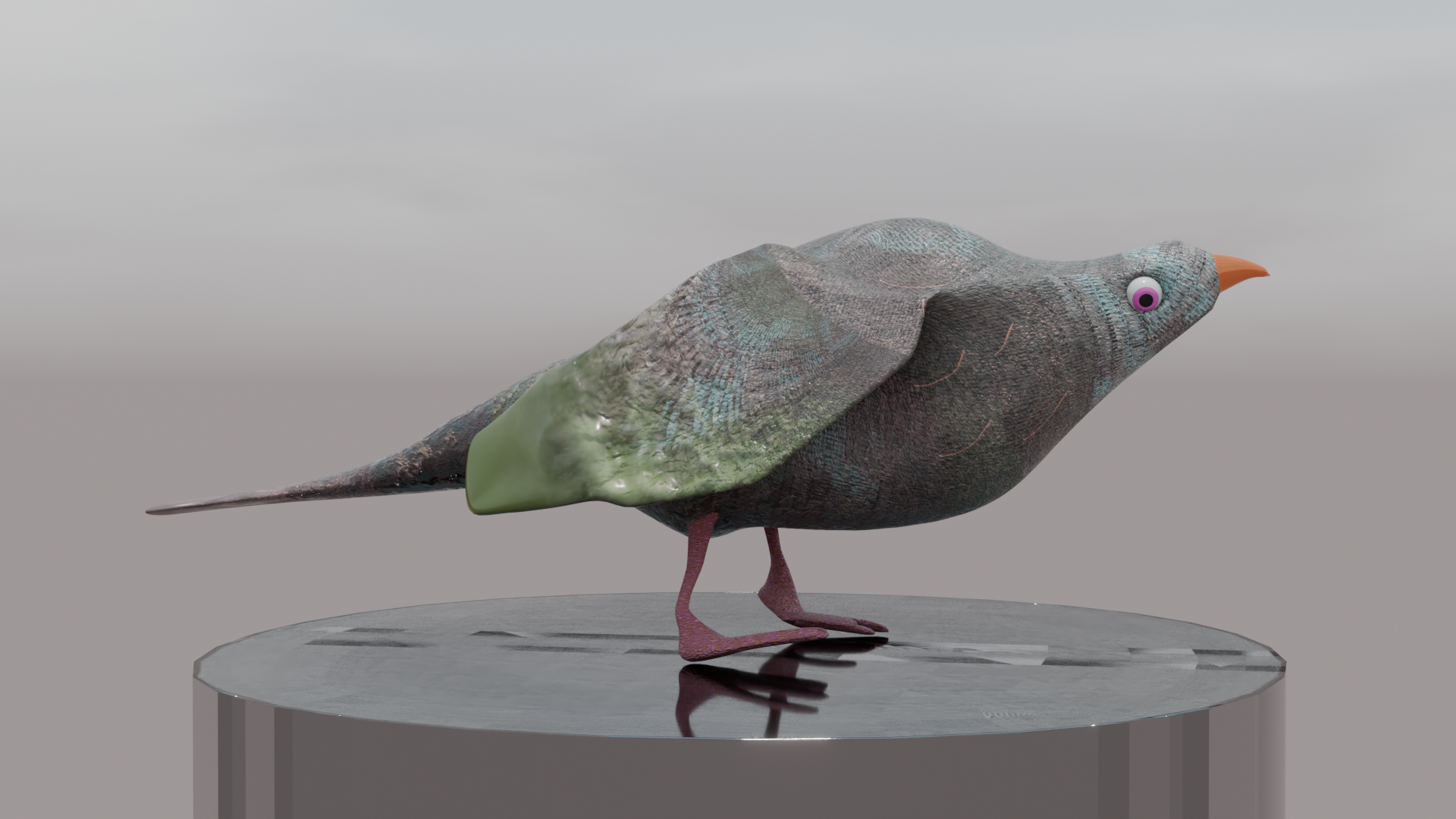
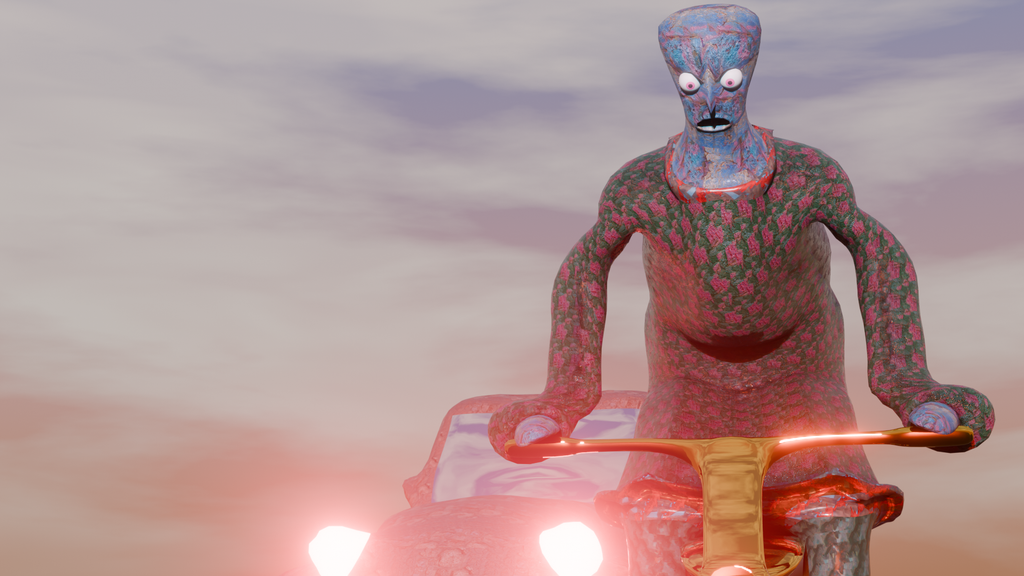
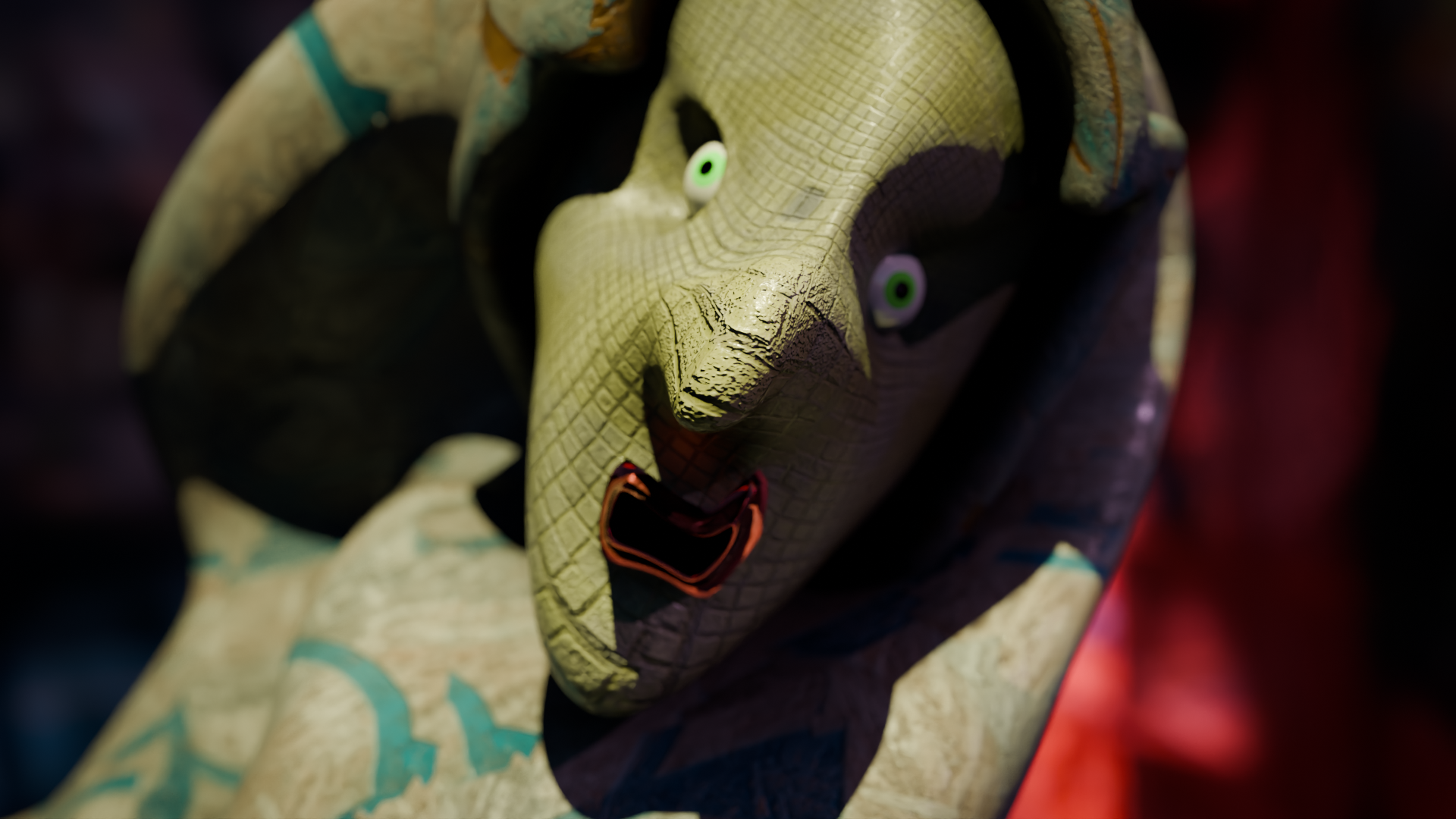
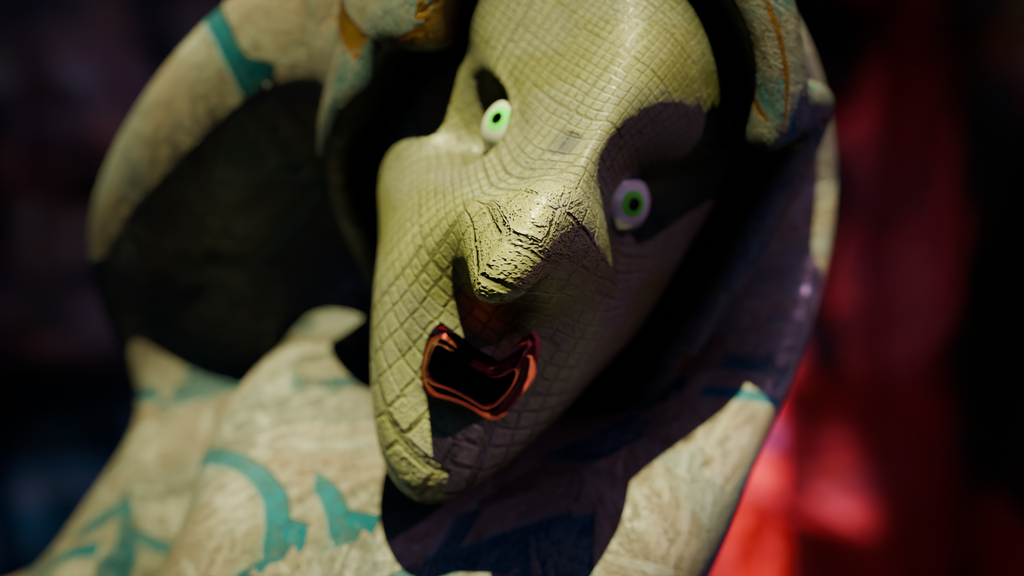
    I mostly worked at home today with a 3D model I’m making. I’m stitching together photogrammetry scans I’m finding around Athens and made a 3D figure based around a sculpture that I think, unofficially, is the saint of doves.

    I’m still not sure what it is I am trying to find here in Athens. Since I was a kid, this geographic area (the Mediterranean) has been fascinating to me. I suppose there is an element of exoticism. Still, it’s not enough to explain it. I had a similar feeling when I first visited Istanbul. A feeling of a location that is not at all defined and, at the same time, so specific and culturally rooted.

    It is true for many geopolitical areas around the world end up seeing collapse, reconstruction, and rebirth just as the Mediterranean has. So what makes this area unique in this aspect and what could we learn from it? Why have I been intrigued by the cultures and stories around the Mediterranean Sea since I was a child?

    I think that the argument that writer Federico Campagna puts forth in his book “Otherworlds” is a valid one. That the Mediterranean stems from its unique history as a compressed crossroads where entirely different cosmologies (philosophies, religions…) have collapsed into one another. Continuously and somewhat aggressively making the cross-breeding of cultures, as well as a certain kind of cultural conservatism, a survival tactic.

    In the times we live in, and face, where accelerating migration leads to cultural conflicts all over the northern hemisphere, there is a lot to learn from this history. Not only about pride and openness but also about imagination, dreams, and chaos as things to possibly embrace as a valid alternative to a fiction of stability.

    I cannot say I exactly know what that would come to mean in reality, but I know that it can be applied at a personal level as an art maker. It is that beautiful mystery of the grotesque (as in the merging of things not supposed to be one) that throughout our history has been seen as horrid until we are used to it and it is integrated into our future culture.

    It’s those things that AI cannot do, since its imagination is limited to what actually exists. It is a mathematical schedule that results in logical conclusions. It does not suffer the chaos of the body with all its flaws and imperfect translations from mind into matter.

    This city manifests as the opposite of an AI utopia and, in light of the super-tech cities around the world, appears dystopian.

    But suppose the super-tech city is only a path to the future in terms of technology and that this technology, in itself, is in the way of developing our humanistic sensibilities. Maybe these developments need to happen in places like this. Places where the unexpected waits around the corner, where personal innovation is part of your everyday life, and where giving someone a free nut and bolt from your hardware store makes sense. After all, it costs less than a euro.

    Αγία των περιστεριών, Saint of Doves

  • 100926

    100926

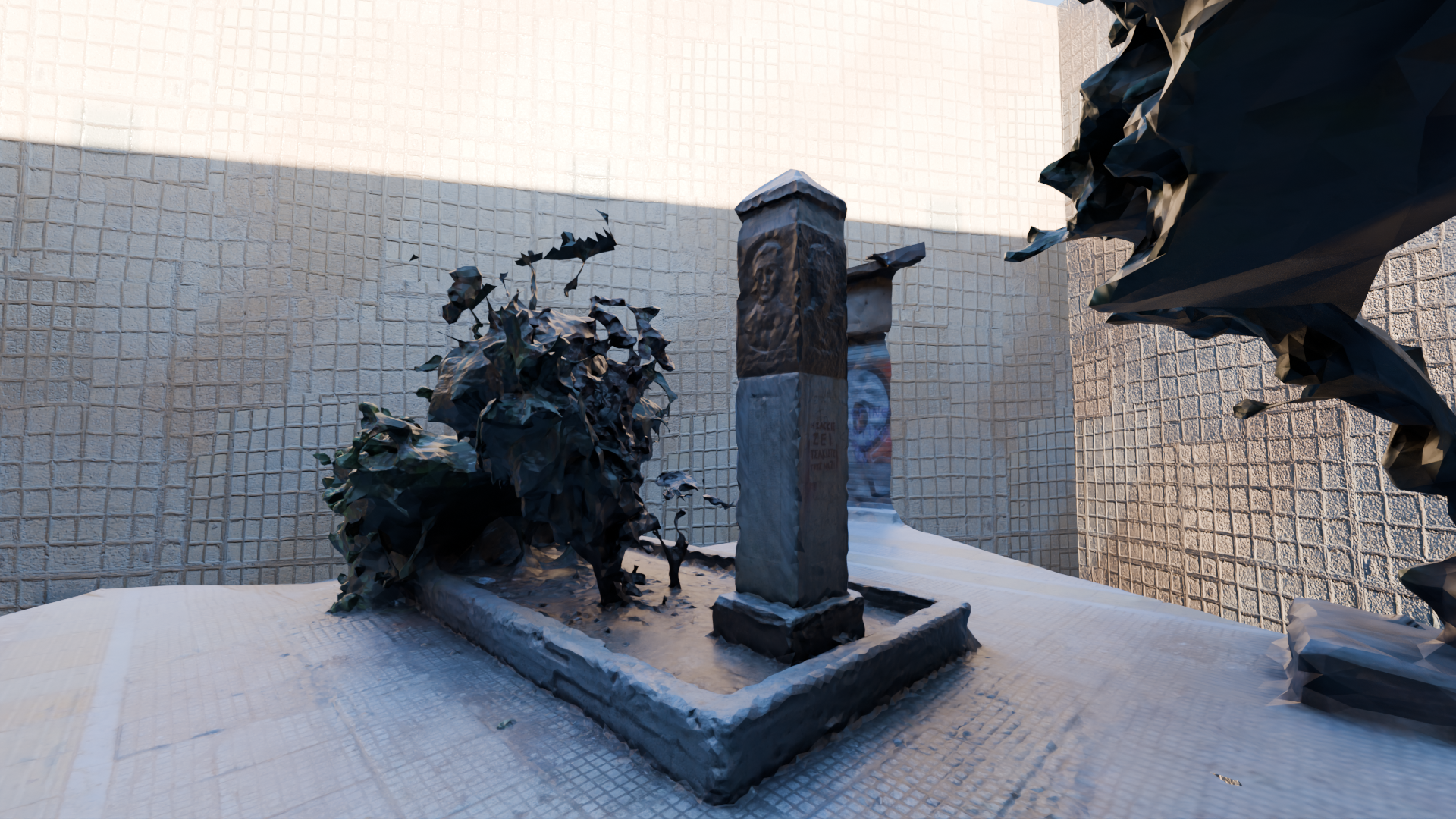
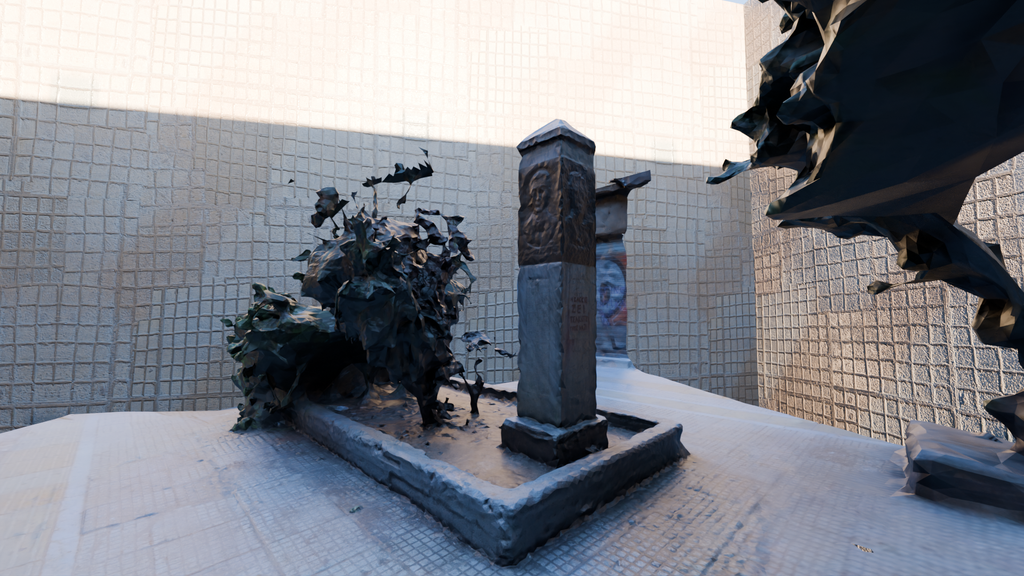
    3d scanned modell of monument put in a box of Athens typical street tiles.

    A few loosely connected observations:

    Third day in Athens. I have been doing a lot of walks, sound capture, 3D scans, reading, and exploring. One thing that strikes me when I am here after is how the city is divided into different areas. Naturally every city has it’s own divisions but the divisions in Athens are somehow very “flare-full”. The fact that you have Εξάρχεια (Exarchia, the anarchist neighborhood) next to Κολωνάκι (Kolonaki, the posh area) is probably the most obvious thing, but this “conflict” goes into the very DNA of the city. It is a city with a certain poetic charm that is in a constant state of negotiation. Fancy stores are covered in graffiti. A street vendor of snacks also sell books of serious historic merit because it is this person’s interest. Police guard the embassies close to the national park while smoking cigarettes and arguing about the latest football game (with their bulletproof vests sitting on the street because of the heat).

    In the context of Europe, Greece is the missing link to the Middle East and Muslim culture. Even when Alexander the great embraced Persian culture. Or during the Ottoman empire up until the migration crisis today. Greece is the most protruding (corrupted) embassy for European consciousness at the Mediterranean sea.

    Hospitality and friendliness to the “other” is stronger than in most European places I have visited. It’s the old myth about Balkan of family and friends distrusting the government. As a northern European this feels like the back of the moon. Maybe it is true, maybe it is not, but the story of cultures shifting like a gradient seem realistic. Similar myths exist about Irak or Afghanistan but in their cases they get a slightly more scary word of clans or brotherhoods.

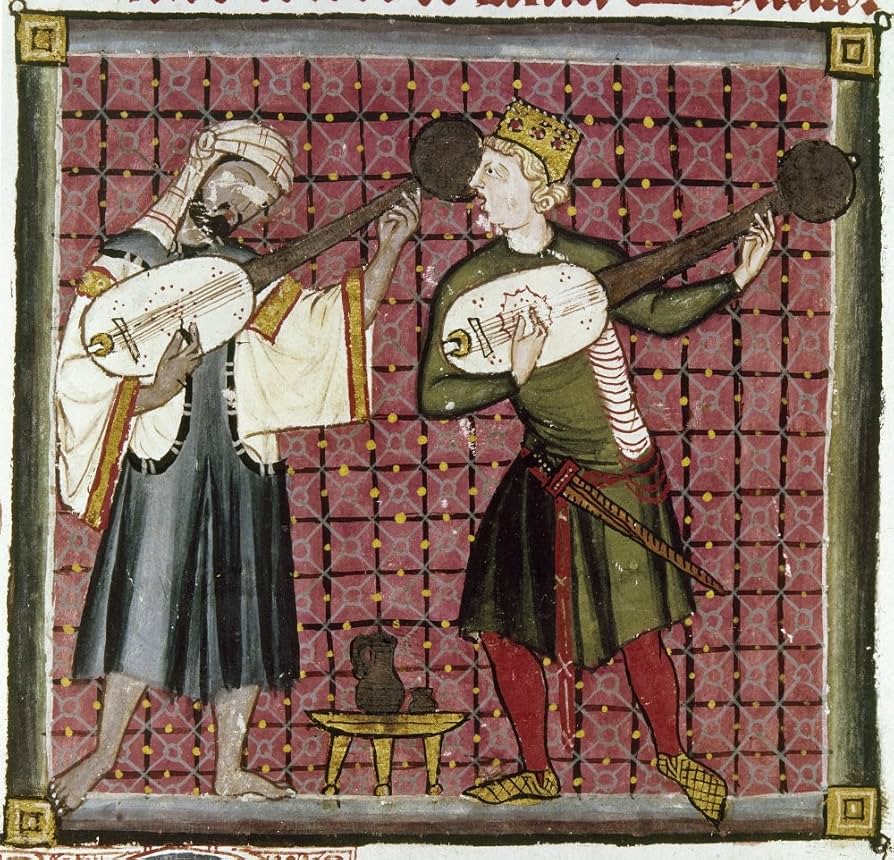
    “A physical manifestation of the shared European consciousness and its deep, undeniable connection to the Middle East. Long before modern political divides, this 13th-century miniature from the Cantigas de Santa Maria captures the living ‘missing link’: a European Christian courtier and a Middle Eastern Muslim musician sitting side-by-side, sharing the same space, the same aesthetic grid, and the same instrument. It stands as a visual reminder that what modern central powers often ostracize as ‘the other’ is, in reality, woven into the very DNA of our shared European heritage.”

    I have in general been interested in this connection of European consciousness and the connection with the Middle East. Probably because immigration from Turkey and Iran was part of my upbringing, and eventually Afghanistan, Syria, and Iraq post-9/11. Personally, I view a lot of these wars as a way to erase the past, or distance yourself from it. Of course the oil, minerals, geopolitical goals etc are the main motivation pragmatically. Still, this flogging of your heritage and how western culture have treated these parts of the world is something different. It has made certain actions possible, and certain thoughts impossible.

    It is a relative you can not stand anymore and you just want their inheritance, but you can’t stand them because of something a distant uncle pointed out.

    Cultural conflict spreads. Perhaps that is what has happened to Greece. A little bit too Μεσογειακή (Mediterranean), and also somewhat Persian from Μέγας Αλέξανδρος (Alexander the Great) maybe, for the tastes of Central European people. That is not a good mix in a world that is highly skeptical toward Middle Eastern culture.

    Following in the footsteps of the economic crisis of 2008. Greece became that relative in the family that the caught a bad rep from an other family member. Demands came from Central European countries that ended up sending Greece into the economic situation it now inhabits. Meanwhile, most other countries that struggled economically before the EU have improved their economic situation, while Greece keeps lagging behind.

    But Athens has always been in a state of collapse and renegotiation. Just as so many other places decorating the boarders of the Mediterranean sea. This temple of Europe, like Jerusalem to the Middle East, intrigues me and escapes simple answers.

    The first mention of the word Europe was in a Hymn to Apollo by Homeros:

    “Here I am minded to make a glorious temple, an oracle
    for men, who will ever bring me perfect hecatombs,
    both those who possess the rich Peloponnesus
    and those of Europe and the wave-washed islands,
    coming to seek counsel; and to them all I would
    deliver a decree that cannot fail, giving answers in my rich temple.”

    “Αγόρια που μιλάνε για το κινητό κάποιου”/”Boys talking about someone’s phone”

  • Update June 27, 2026

    Update June 27, 2026

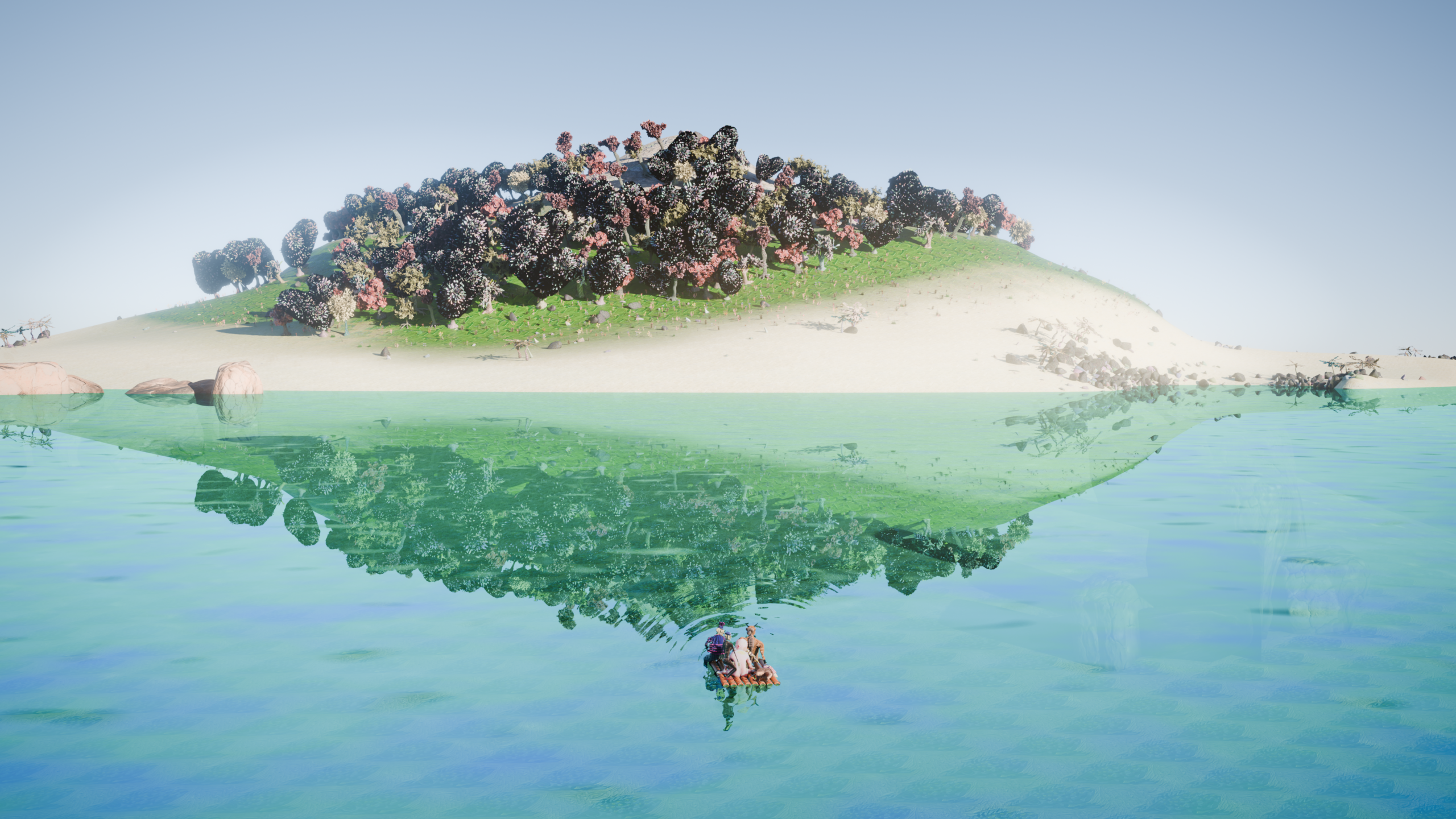
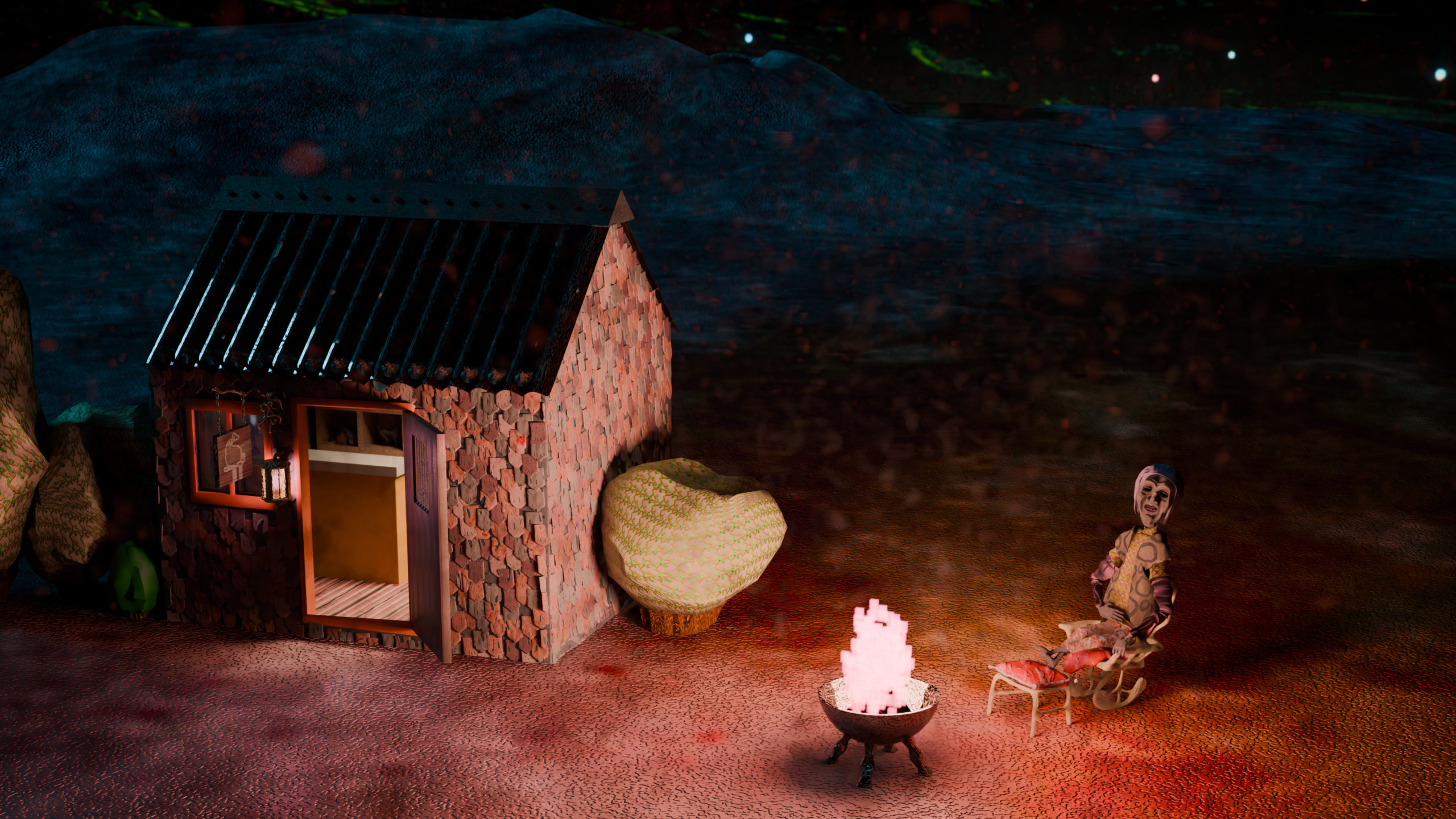
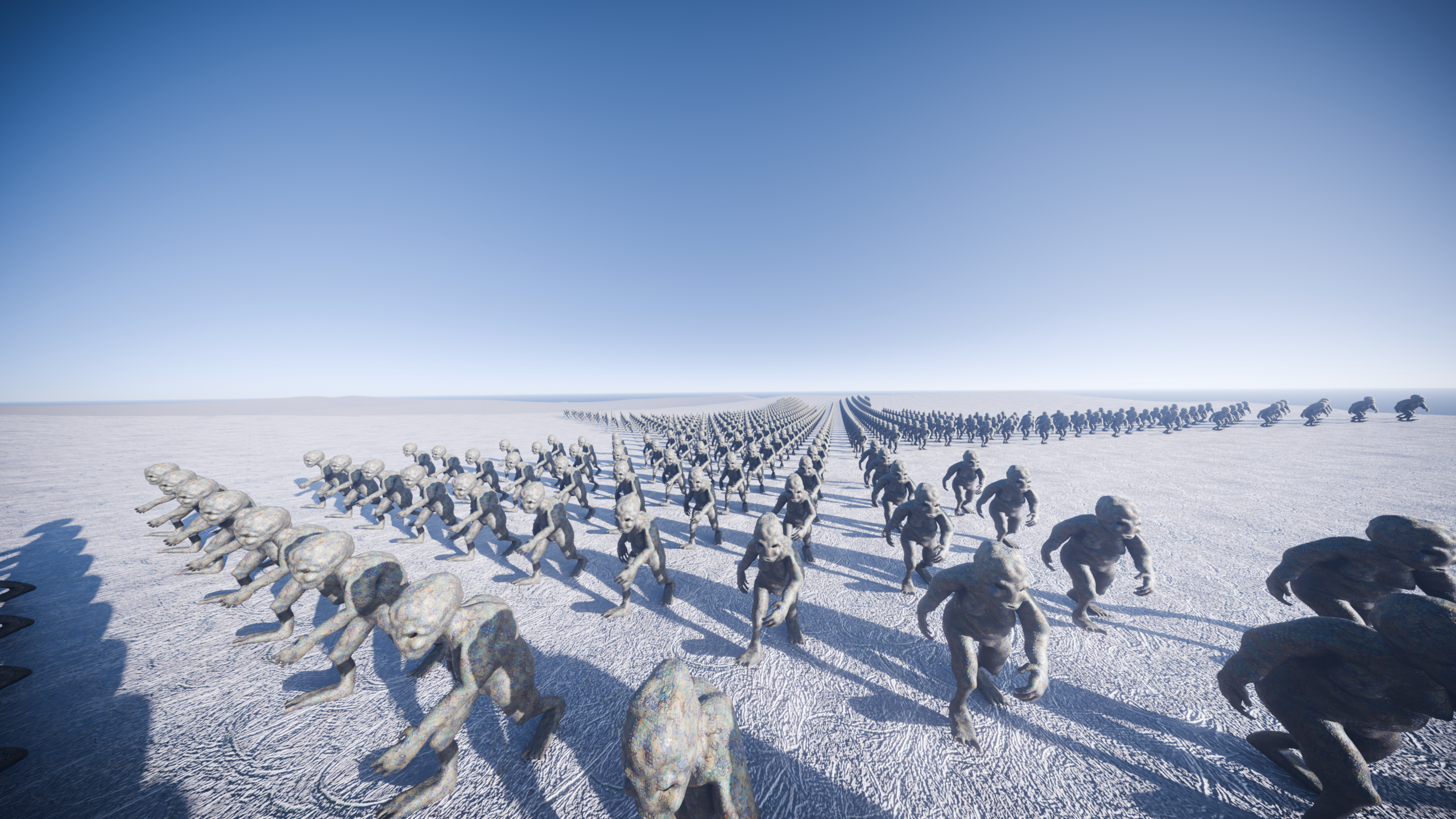
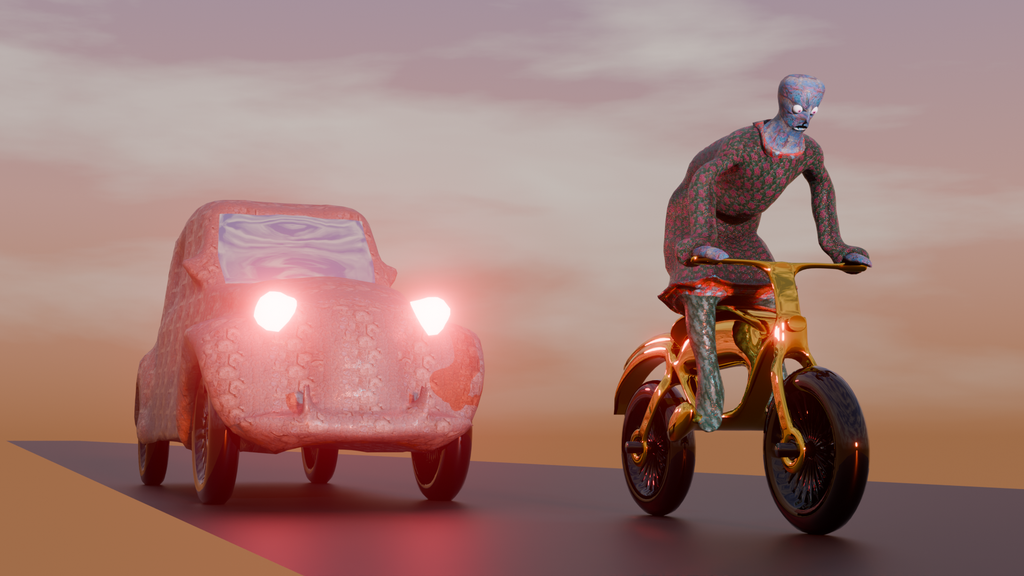
    Radio silence from me the past couple of months for a bunch of reasons. First of all I have been going crazy in a small, way to hot, studio working on my animated short. Luckily, the first phase is coming to its conclusions! Soon I will have something moving to show! It has been a copious amount of work but thanks to the economic support of the Swedish Arts Grants Committee I have been able to relax a reasonable amount in this process.

    I also have had the pleasure of starting a sketching process for a big public work in Stockholm. It is still alot of work and time left but it’s a new and great experience to work with a bigger scale and budget. More on that later…

    It was a long time since I felt it so rewarding to work as an artist. I have alot of projects going on and it’s all moving forward. Most importantly I find alot of it interesting and worth investing time and money into. I think the biggest benefit for me with becoming a parent is that your scope changes slightly. It’s more important for me to be present in my everyday life now and I think this spills over into the artworks. It’s somehow easier to cut away the bullshit, I think… or, I’m just still on my parental high.

    Anyway, to me this feels alot like a production year for showing things in 2027. Everything in its time I guess.

  • Walking

    Walking

    Web-app. Pictures walking. Works best on desktop or horizontal phone. From MoMas collection of paintings. I made it to look at the classics from time to time. Will probably add/remove/change what is in the pictures further on. Have some kind of obtuse future plan. Go fullscreen!

    Click here to try *click*

  • Falling

    Falling

    A software thing made during Christmas 2025.

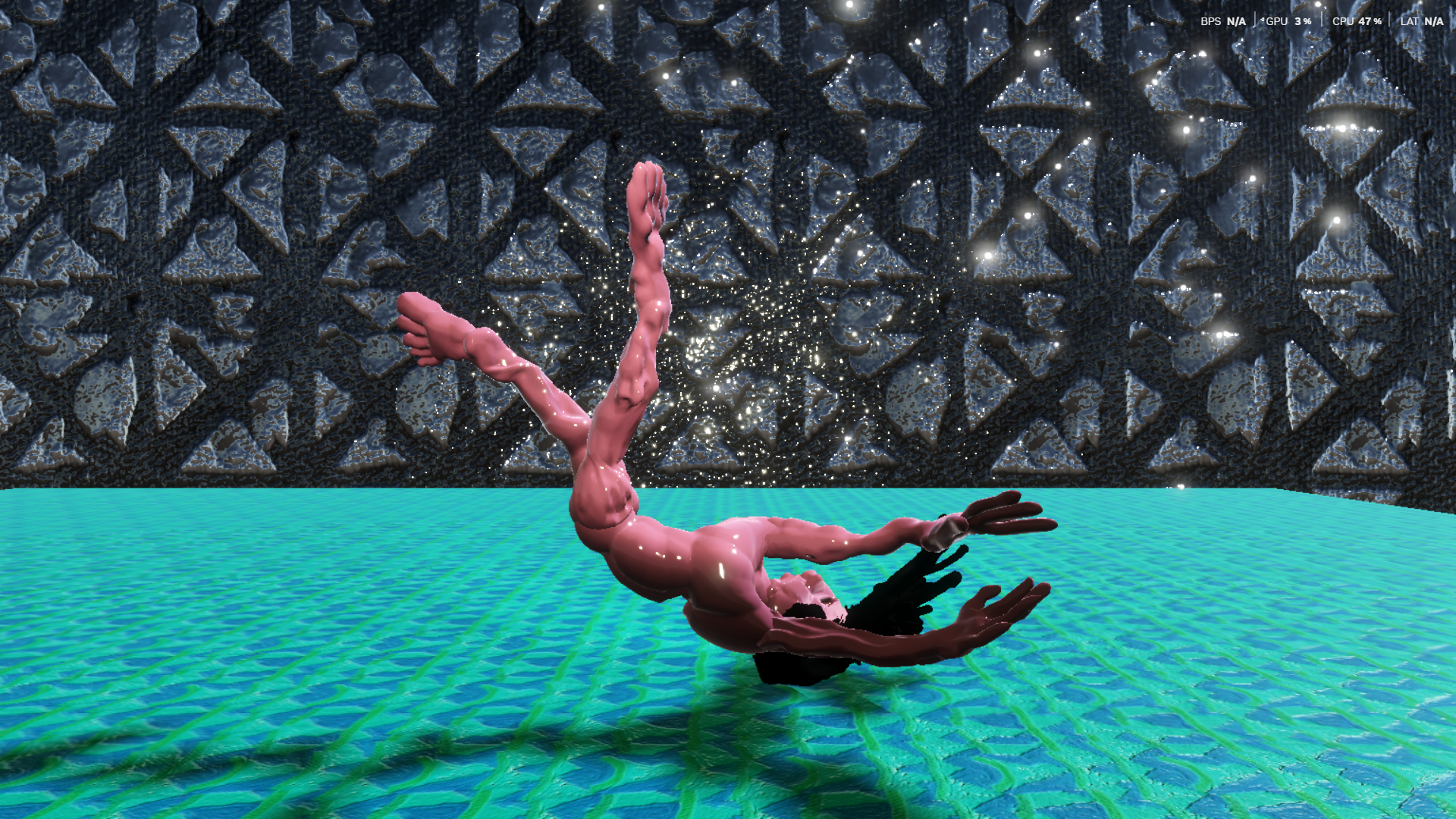
    “Falling”, Unity webGL project, continuous duration

    A figure is falling continuously. You can decide to have the figure hit the ground, and let the figure keep falling. Works best on desktop. All content by me.

    If you have problem on mobile and want to have the figure keep falling and not hit a new floor. Simply push and hold either side of the screen then drag all the way to the other side to make the figure continue fałling endlessly. You can also tilt the screen sideways to make this easier.

    Click here to open in browser

  • 21 Aug 25

    21 Aug 25

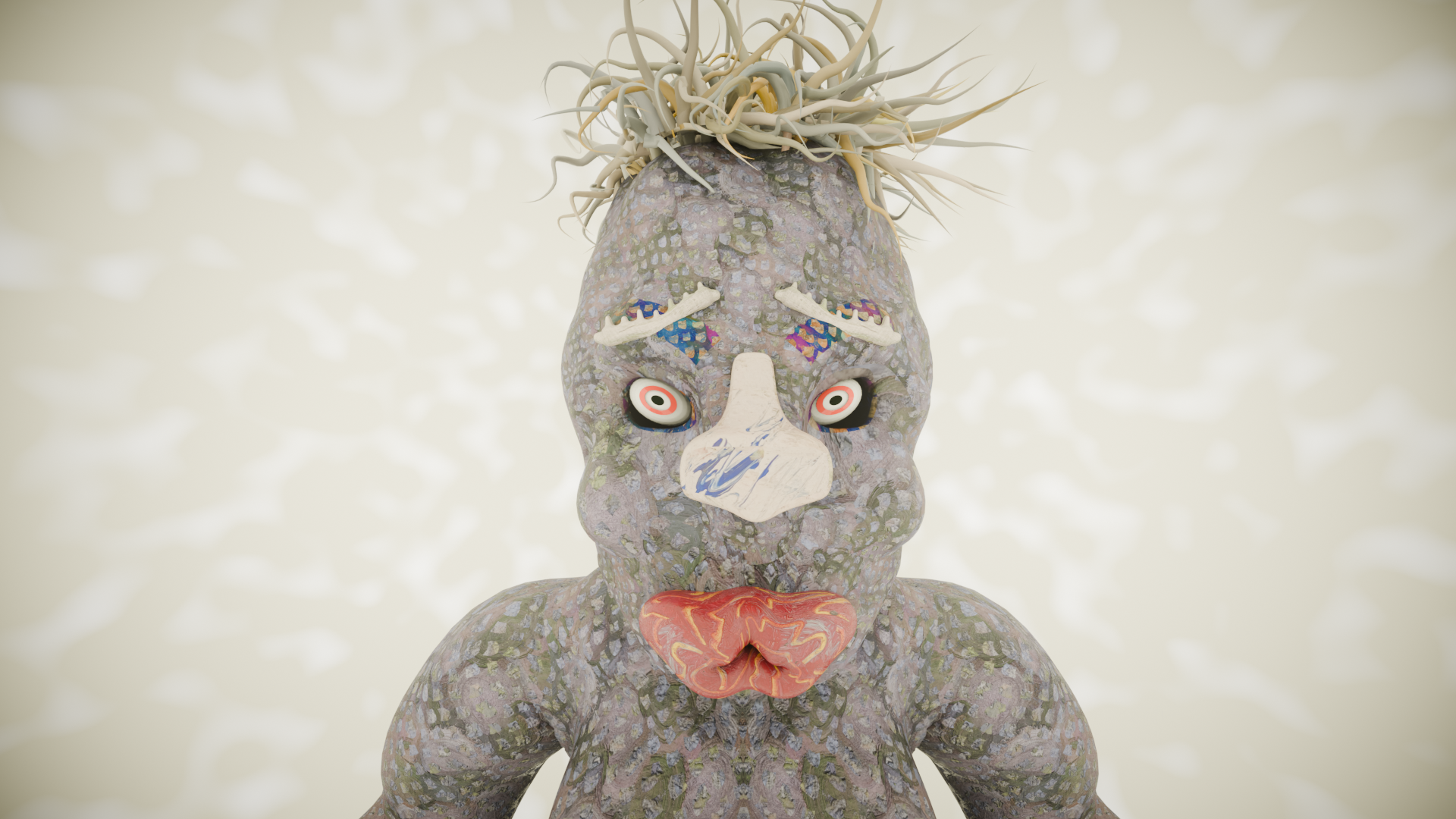
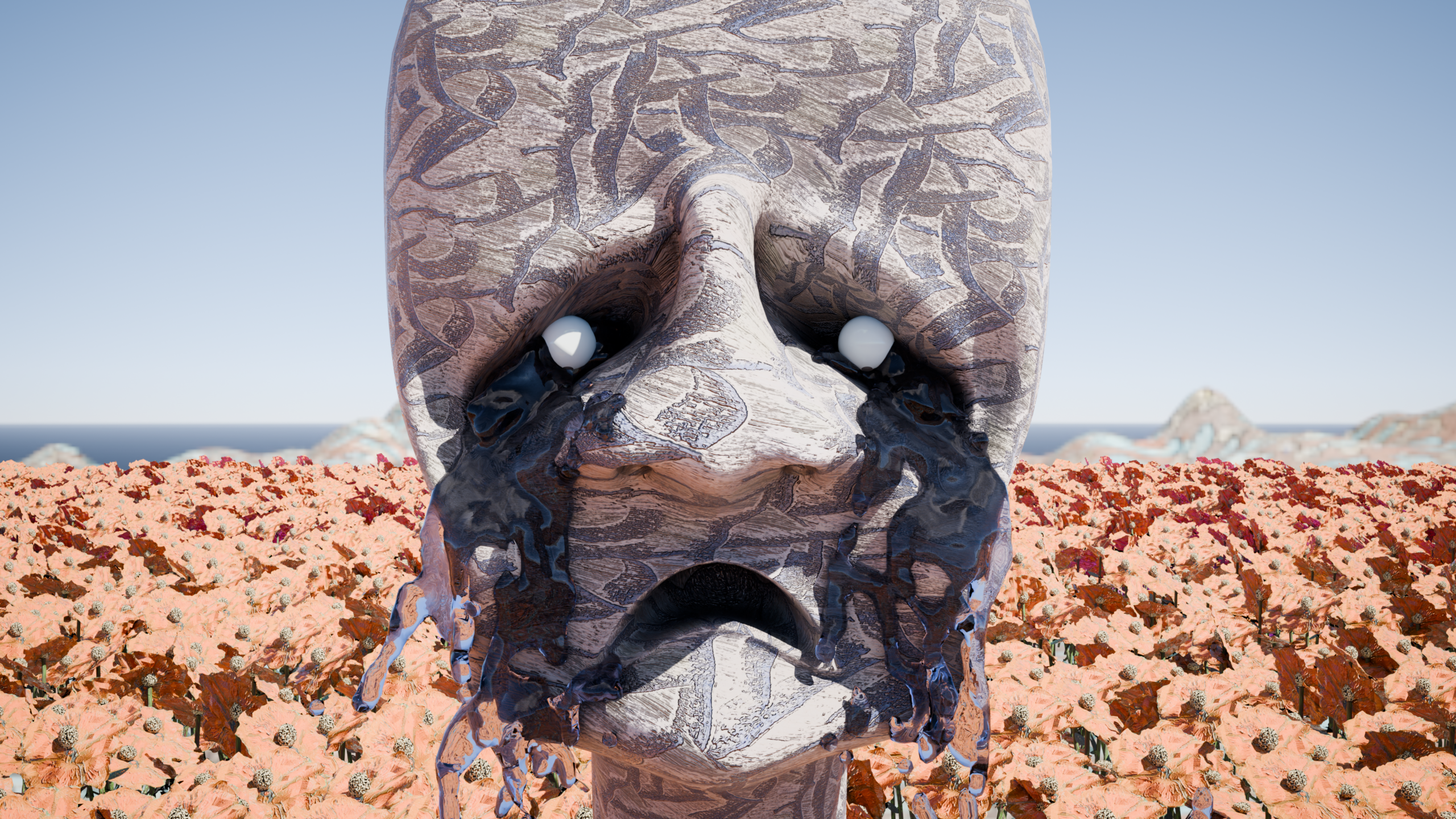
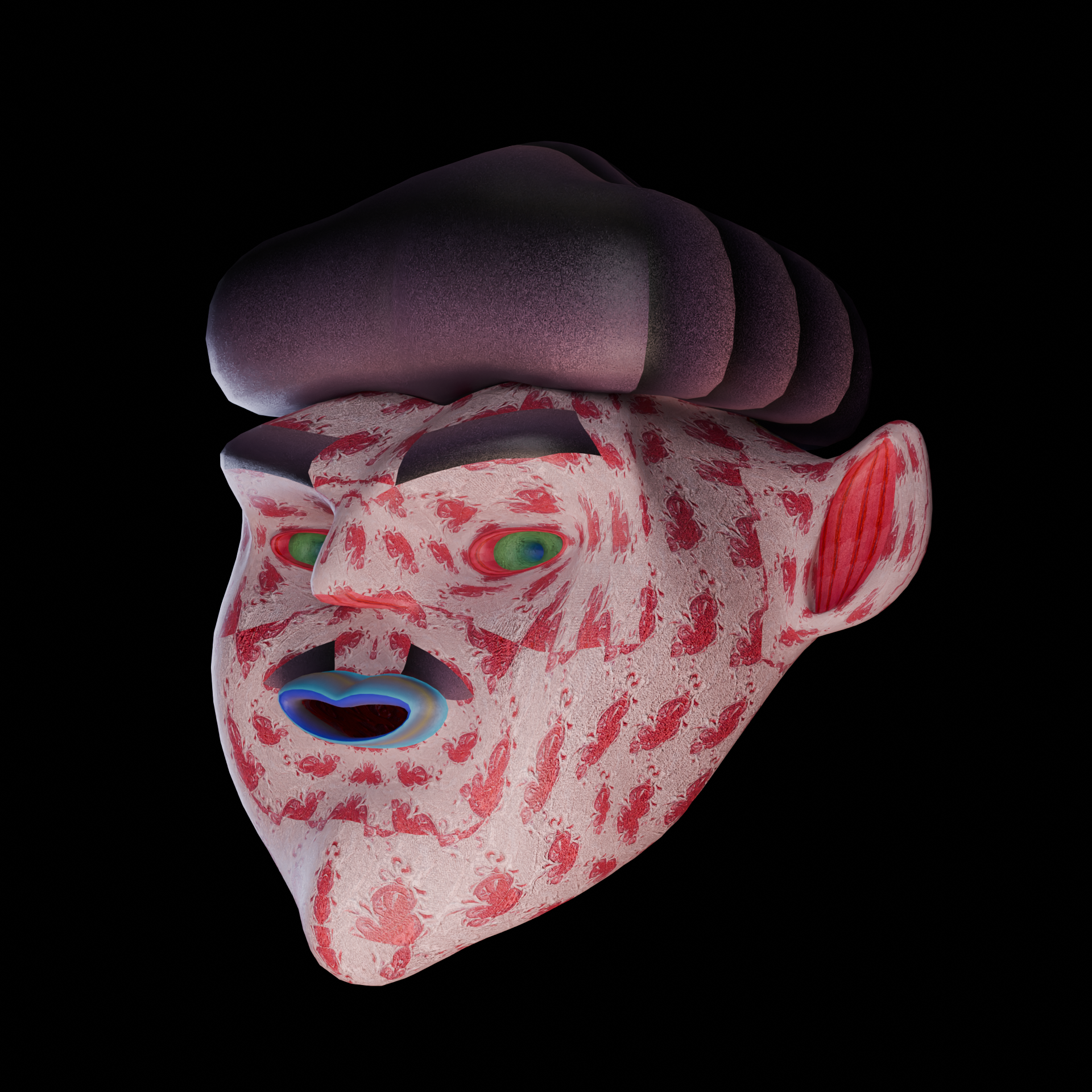
    Heads for animated 3d model. Made a bunch of these for hole video I am showing at South Hampton art centre, outside New York, at the moment. This is my first post from my website, trying some thing out to push all the content from one place that is my own instead of mucking about in all kinds of social media places where I do not want to spend to much of my time. Hopefully you will still find it interesting to click on this kind of stuff!