Tag: diary
  • 091326

    091326

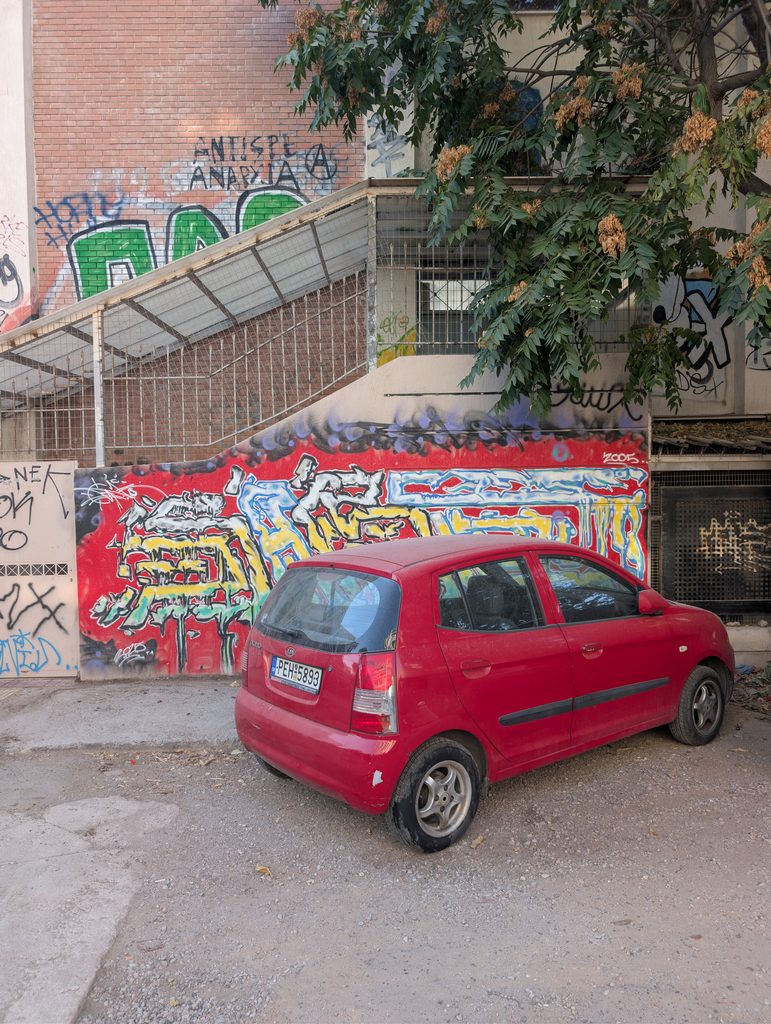
    First run in Athens today. After sundown but still super hot. I ran around in the national park with its combination of greenery, sculpture, construction sites, fancy food and drink places, CrossFit gangs, shady small paths smelling of weed, kids riding bikes, big marble plazas, museums, tourists, armed military police, and most other things you can think of.

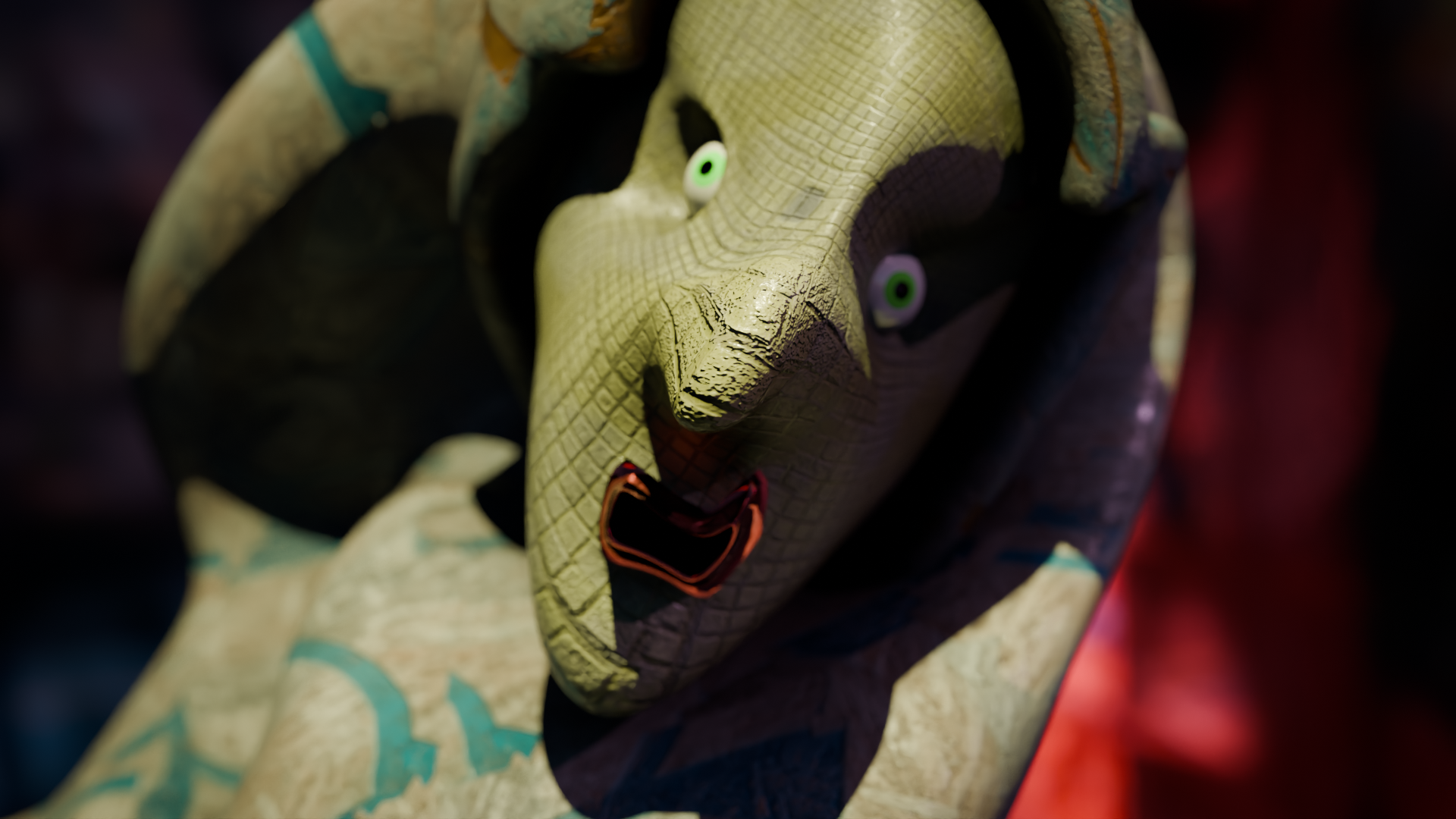
    I mostly worked at home today with a 3D model I’m making. I’m stitching together photogrammetry scans I’m finding around Athens and made a 3D figure based around a sculpture that I think, unofficially, is the saint of doves.

    I’m still not sure what it is I am trying to find here in Athens. Since I was a kid, this geographic area (the Mediterranean) has been fascinating to me. I suppose there is an element of exoticism. Still, it’s not enough to explain it. I had a similar feeling when I first visited Istanbul. A feeling of a location that is not at all defined and, at the same time, so specific and culturally rooted.

    It is true for many geopolitical areas around the world end up seeing collapse, reconstruction, and rebirth just as the Mediterranean has. So what makes this area unique in this aspect and what could we learn from it? Why have I been intrigued by the cultures and stories around the Mediterranean Sea since I was a child?
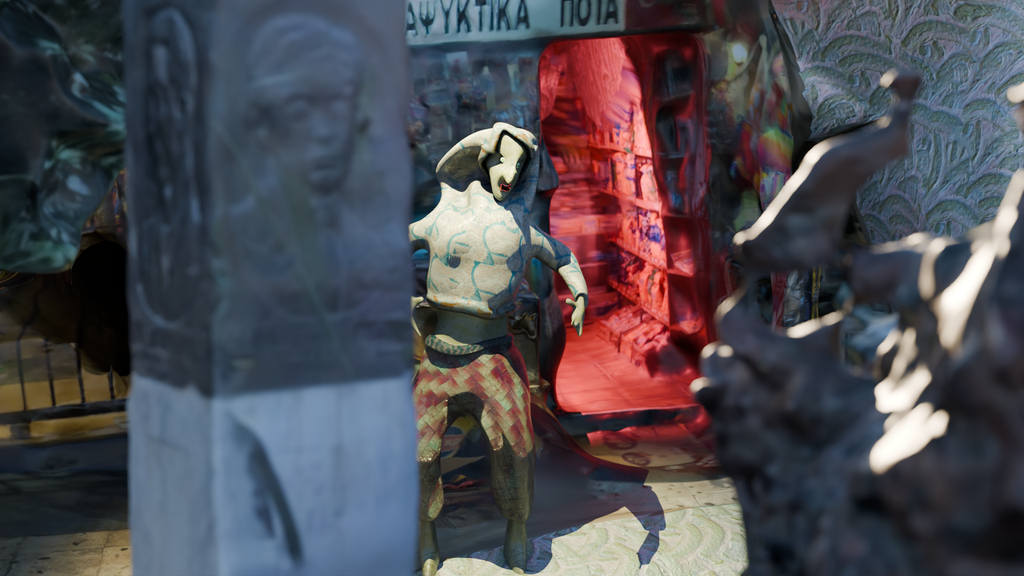
    I think that the argument that writer Federico Campagna puts forth in his book “Otherworlds” is a valid one. That the Mediterranean stems from its unique history as a compressed crossroads where entirely different cosmologies (philosophies, religions…) have collapsed into one another. Continuously and somewhat aggressively making the cross-breeding of cultures, as well as a certain kind of cultural conservatism, a survival tactic.

    In the times we live in, and face, where accelerating migration leads to cultural conflicts all over the northern hemisphere, there is a lot to learn from this history. Not only about pride and openness but also about imagination, dreams, and chaos as things to possibly embrace as a valid alternative to a fiction of stability.

    I cannot say I exactly know what that would come to mean in reality, but I know that it can be applied at a personal level as an art maker. It is that beautiful mystery of the grotesque (as in the merging of things not supposed to be one) that throughout our history has been seen as horrid until we are used to it and it is integrated into our future culture.

    It’s those things that AI cannot do, since its imagination is limited to what actually exists. It is a mathematical schedule that results in logical conclusions. It does not suffer the chaos of the body with all its flaws and imperfect translations from mind into matter.
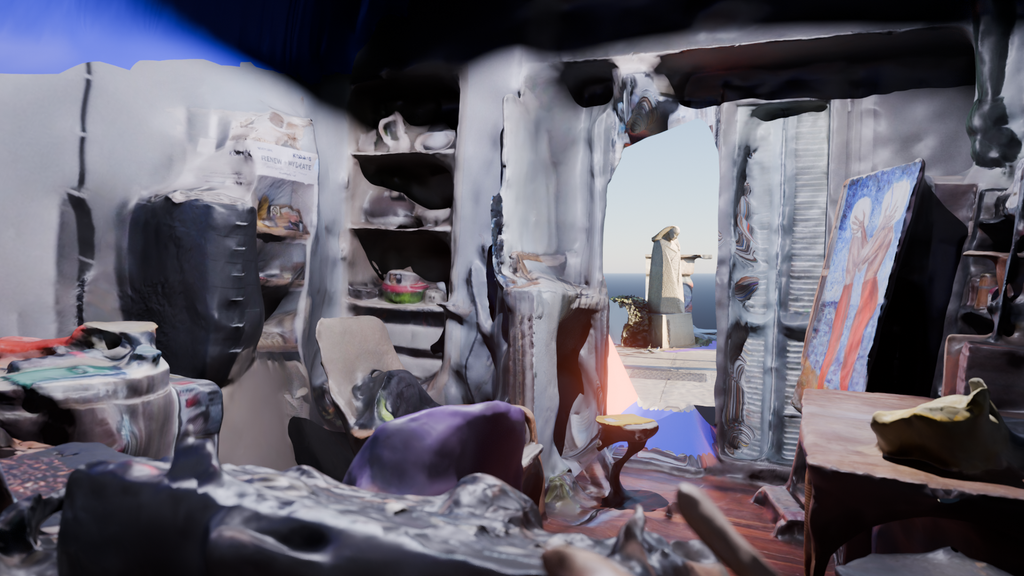
    This city manifests as the opposite of an AI utopia and, in light of the super-tech cities around the world, appears dystopian.

    But suppose the super-tech city is only a path to the future in terms of technology and that this technology, in itself, is in the way of developing our humanistic sensibilities. Maybe these developments need to happen in places like this. Places where the unexpected waits around the corner, where personal innovation is part of your everyday life, and where giving someone a free nut and bolt from your hardware store makes sense. After all, it costs less than a euro.
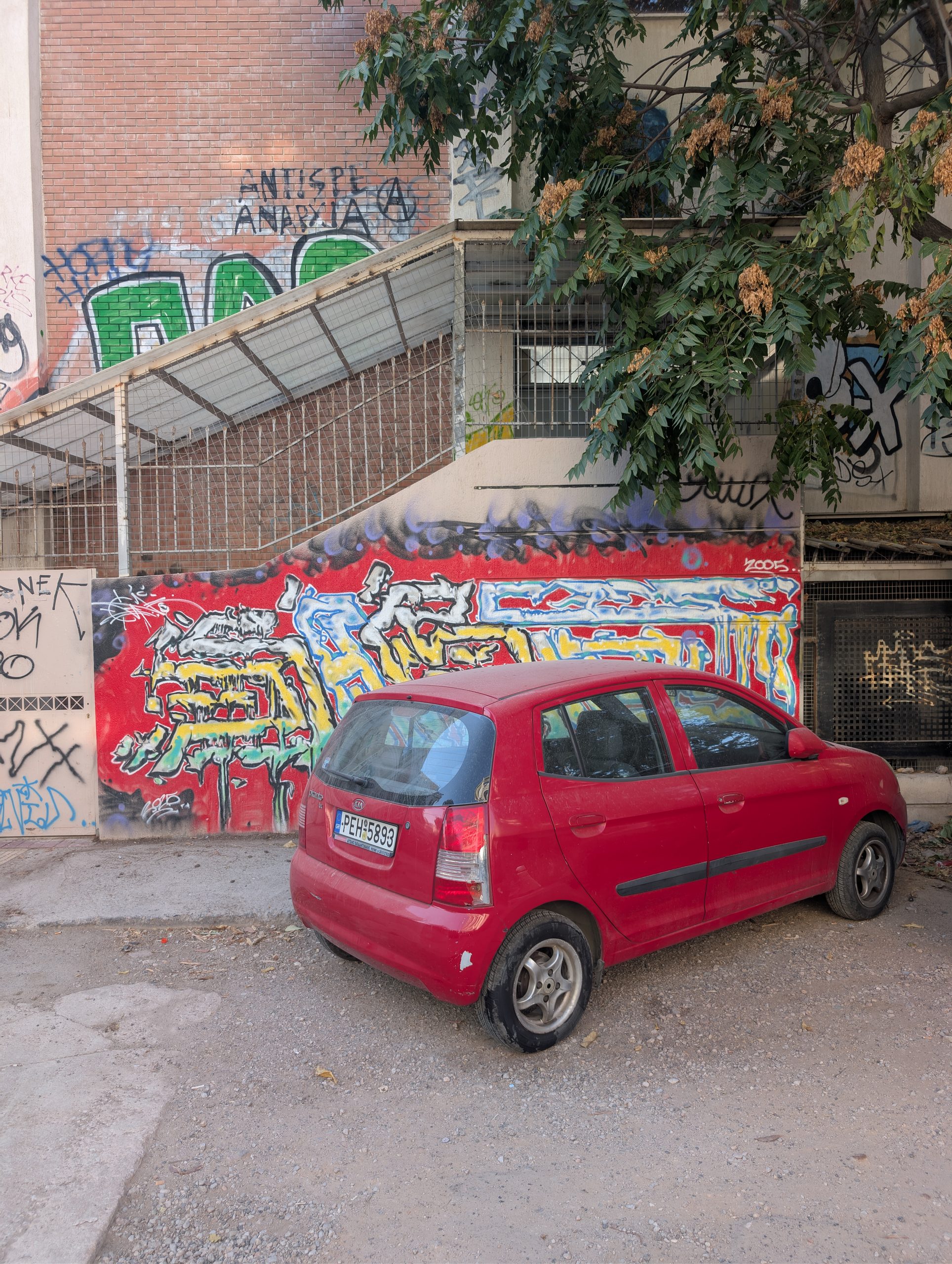
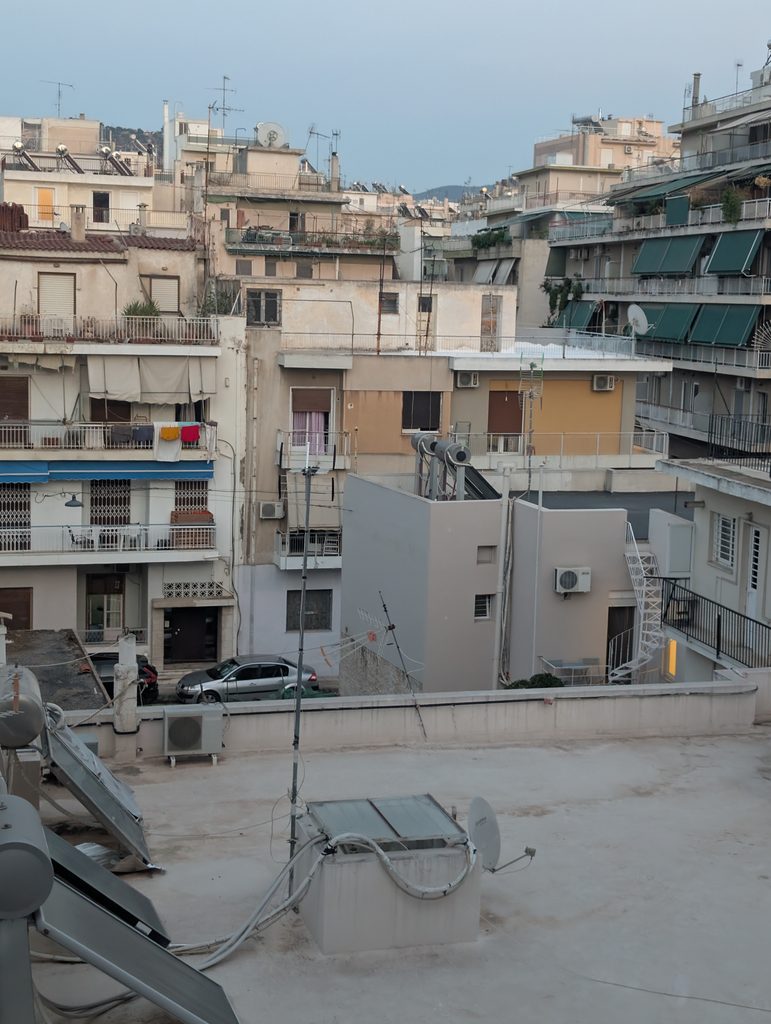
    Αγία των περιστεριών, Saint of Doves

  • 130926

    130926

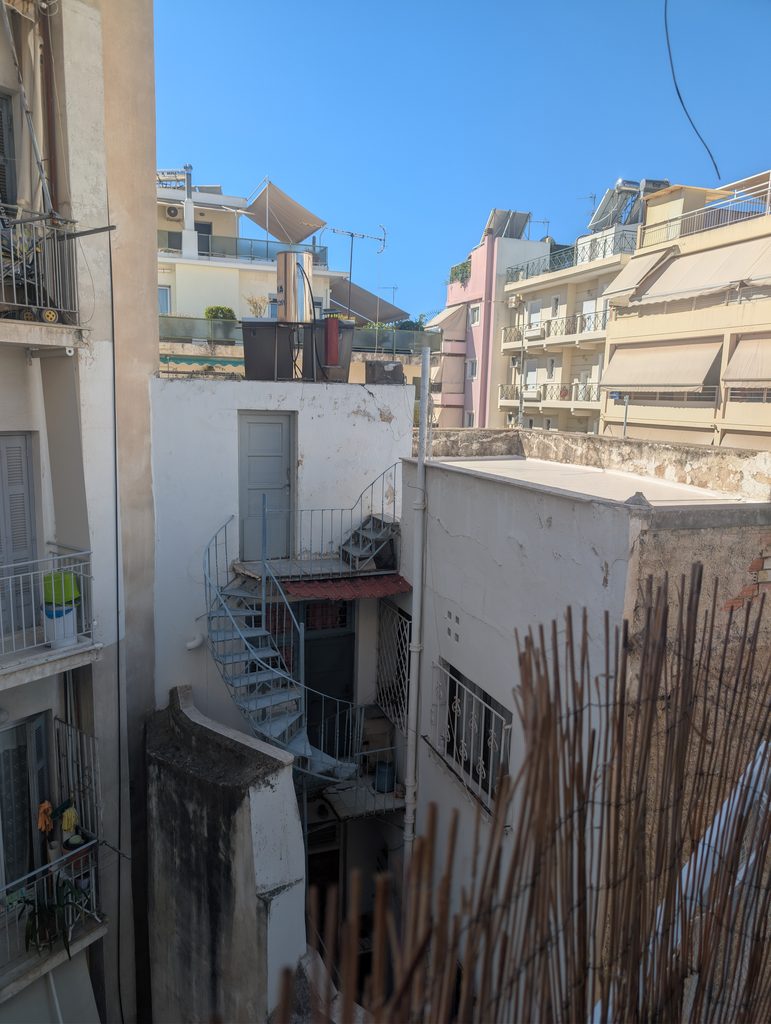
    The architecture is stacked. Like Legos in a makeshift playground. It contributes to the charm. City planning is reserved for the areas that either no one visits or everyone visits. Standing on a rooftop; the city stretches like a desert of cubes, wires and DETAILS. This is the beauty of cities like this. Everywhere a small decision has contributed to the view I am taking in. Wherever I look there is a odd story. An unorthodox solution for a cable fitting, a way to feed doves, a spot to read a book.


    Athens reads like a Moebious sci-fi. Scribbled with squiggly lines that are easy to appreciate if you look from the correct angle. If you are from here, maybe not so much… The beauty of decay means something else when you are in it. Existing in chaos will make you long for order. The same is true the other way around. For a north European the madness of Athens feels like a weight falling off your shoulders. A backpack filled with starbucks, neat roads and western hegemony.

    When people tourist here, they go for this reason (or Akropolis). To them, it’s a chaotic playground that transmit a tingle of excitement. “Maybe here something can happen?” It’s a dream put upon a place from the outside but only possible because of what happens on the inside as a response to life back home.

    A location in a state of pure decay instills dread. Athens is not this kind of place. The people you meet live normal lives, engage and have your interests. They watch the same movies and read the same books in school. They walk around well kept and groomed, even more so than most central European countries. Instead of the dead in a graveyard, Athenians seem more misplaced in the situation they inhabit.

    I went to a trading card game shop and played some Magic the gathering. It felt like normal. Same lovable nerds I feel most comfortable with. I set out to buy a nut and a bolt at a hardware store to fix a broken chair. I ended up getting it for free. At the local supermarket they know me now.

    Περπατώντας σε δρόμους γεμάτους σύριγγες προς το κατάστημα παιχνιδιών με κάρτες / Walking through streets full of needles to the trading card games store.

  • 100926

    100926

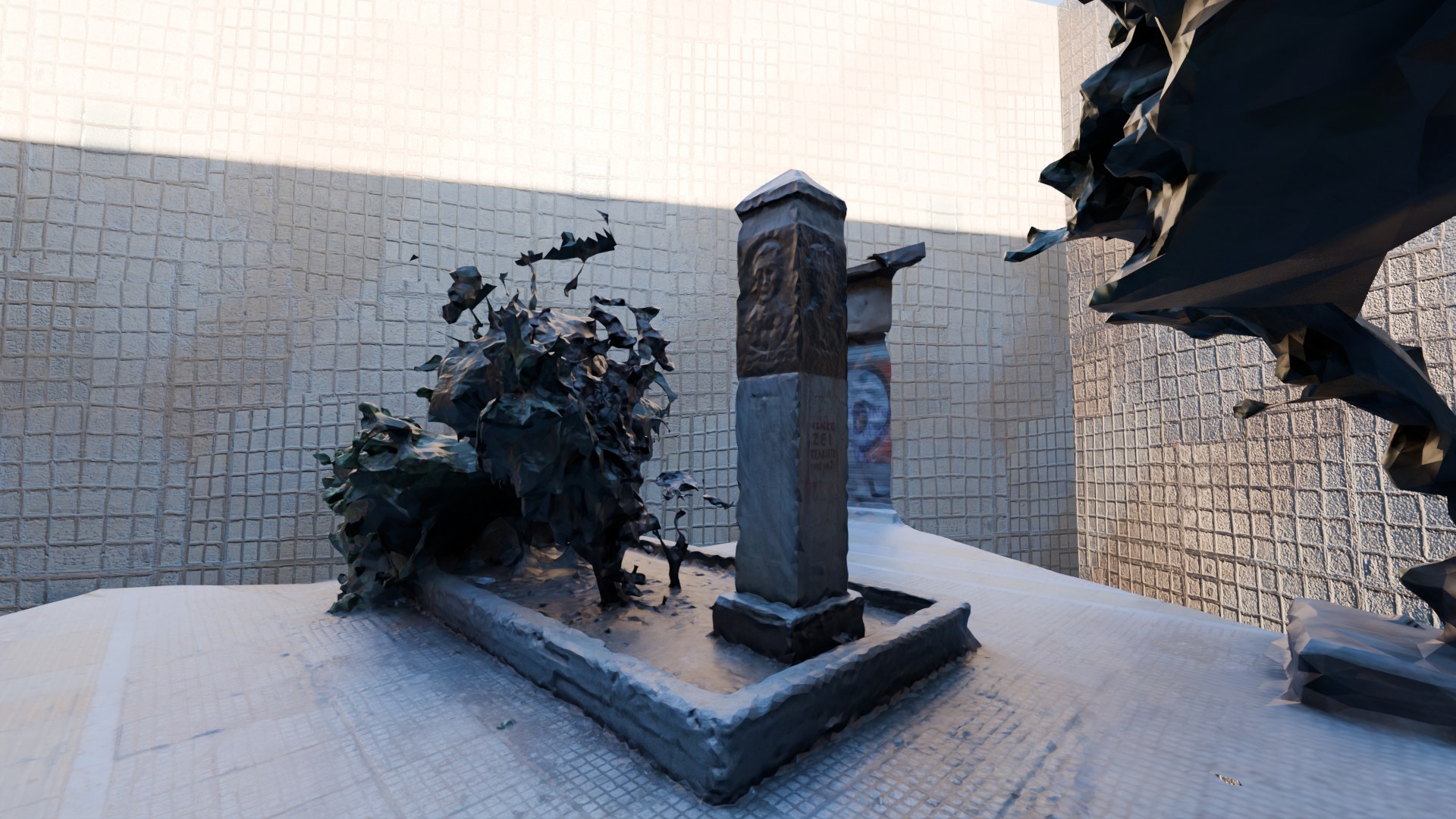
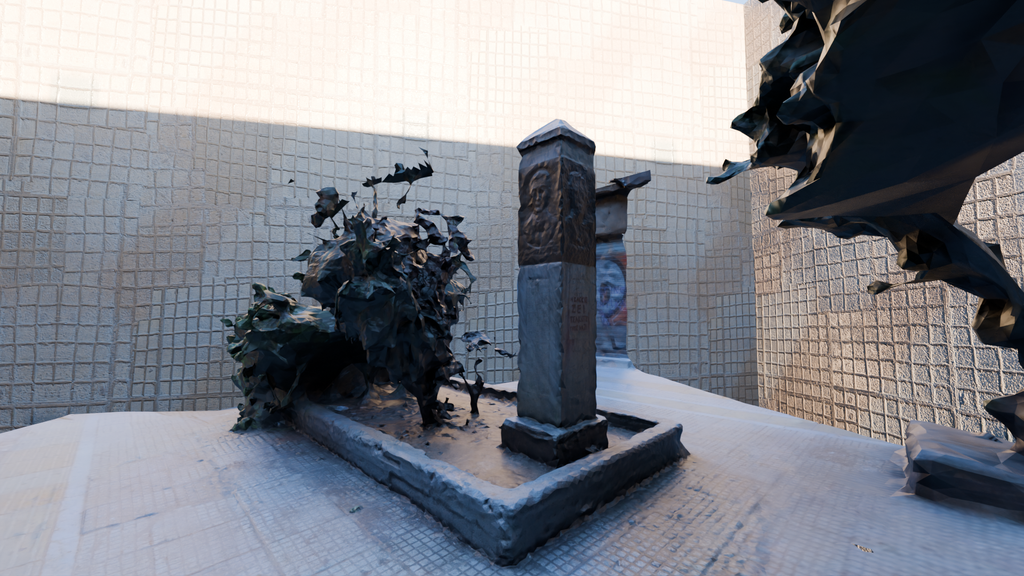
    3d scanned modell of monument put in a box of Athens typical street tiles.

    A few loosely connected observations:

    Third day in Athens. I have been doing a lot of walks, sound capture, 3D scans, reading, and exploring. One thing that strikes me when I am here after is how the city is divided into different areas. Naturally every city has it’s own divisions but the divisions in Athens are somehow very “flare-full”. The fact that you have Εξάρχεια (Exarchia, the anarchist neighborhood) next to Κολωνάκι (Kolonaki, the posh area) is probably the most obvious thing, but this “conflict” goes into the very DNA of the city. It is a city with a certain poetic charm that is in a constant state of negotiation. Fancy stores are covered in graffiti. A street vendor of snacks also sell books of serious historic merit because it is this person’s interest. Police guard the embassies close to the national park while smoking cigarettes and arguing about the latest football game (with their bulletproof vests sitting on the street because of the heat).

    In the context of Europe, Greece is the missing link to the Middle East and Muslim culture. Even when Alexander the great embraced Persian culture. Or during the Ottoman empire up until the migration crisis today. Greece is the most protruding (corrupted) embassy for European consciousness at the Mediterranean sea.

    Hospitality and friendliness to the “other” is stronger than in most European places I have visited. It’s the old myth about Balkan of family and friends distrusting the government. As a northern European this feels like the back of the moon. Maybe it is true, maybe it is not, but the story of cultures shifting like a gradient seem realistic. Similar myths exist about Irak or Afghanistan but in their cases they get a slightly more scary word of clans or brotherhoods.

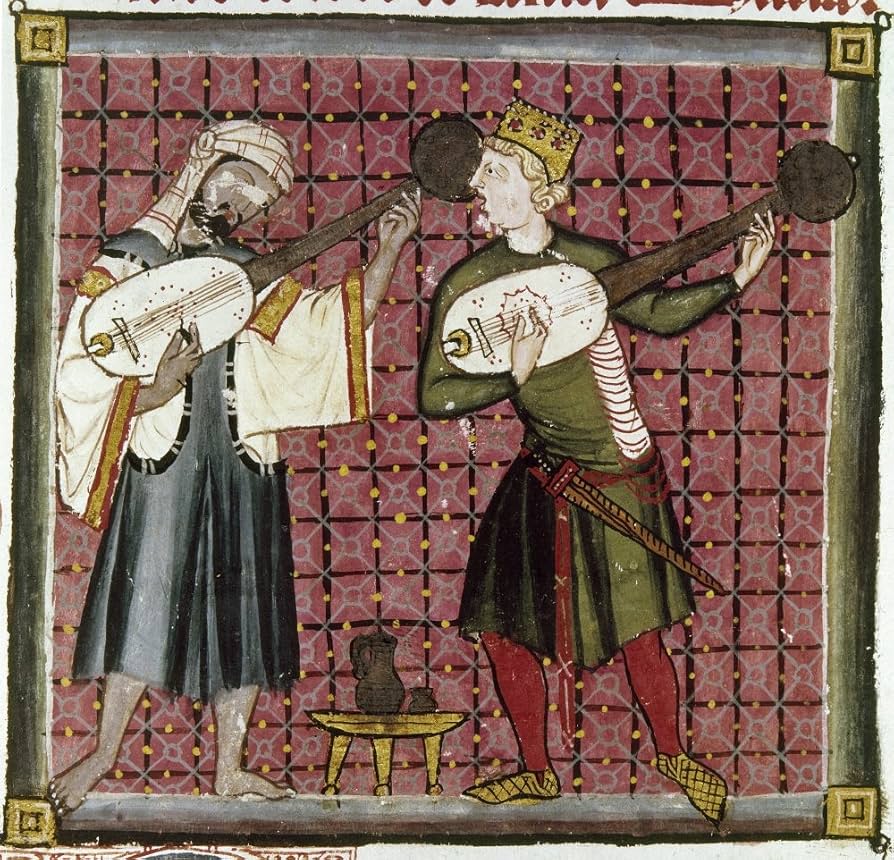
    “A physical manifestation of the shared European consciousness and its deep, undeniable connection to the Middle East. Long before modern political divides, this 13th-century miniature from the Cantigas de Santa Maria captures the living ‘missing link’: a European Christian courtier and a Middle Eastern Muslim musician sitting side-by-side, sharing the same space, the same aesthetic grid, and the same instrument. It stands as a visual reminder that what modern central powers often ostracize as ‘the other’ is, in reality, woven into the very DNA of our shared European heritage.”

    I have in general been interested in this connection of European consciousness and the connection with the Middle East. Probably because immigration from Turkey and Iran was part of my upbringing, and eventually Afghanistan, Syria, and Iraq post-9/11. Personally, I view a lot of these wars as a way to erase the past, or distance yourself from it. Of course the oil, minerals, geopolitical goals etc are the main motivation pragmatically. Still, this flogging of your heritage and how western culture have treated these parts of the world is something different. It has made certain actions possible, and certain thoughts impossible.

    It is a relative you can not stand anymore and you just want their inheritance, but you can’t stand them because of something a distant uncle pointed out.

    Cultural conflict spreads. Perhaps that is what has happened to Greece. A little bit too Μεσογειακή (Mediterranean), and also somewhat Persian from Μέγας Αλέξανδρος (Alexander the Great) maybe, for the tastes of Central European people. That is not a good mix in a world that is highly skeptical toward Middle Eastern culture.

    Following in the footsteps of the economic crisis of 2008. Greece became that relative in the family that the caught a bad rep from an other family member. Demands came from Central European countries that ended up sending Greece into the economic situation it now inhabits. Meanwhile, most other countries that struggled economically before the EU have improved their economic situation, while Greece keeps lagging behind.

    But Athens has always been in a state of collapse and renegotiation. Just as so many other places decorating the boarders of the Mediterranean sea. This temple of Europe, like Jerusalem to the Middle East, intrigues me and escapes simple answers.

    The first mention of the word Europe was in a Hymn to Apollo by Homeros:

    “Here I am minded to make a glorious temple, an oracle
    for men, who will ever bring me perfect hecatombs,
    both those who possess the rich Peloponnesus
    and those of Europe and the wave-washed islands,
    coming to seek counsel; and to them all I would
    deliver a decree that cannot fail, giving answers in my rich temple.”

    “Αγόρια που μιλάνε για το κινητό κάποιου”/”Boys talking about someone’s phone”

  • 08092026

    08092026

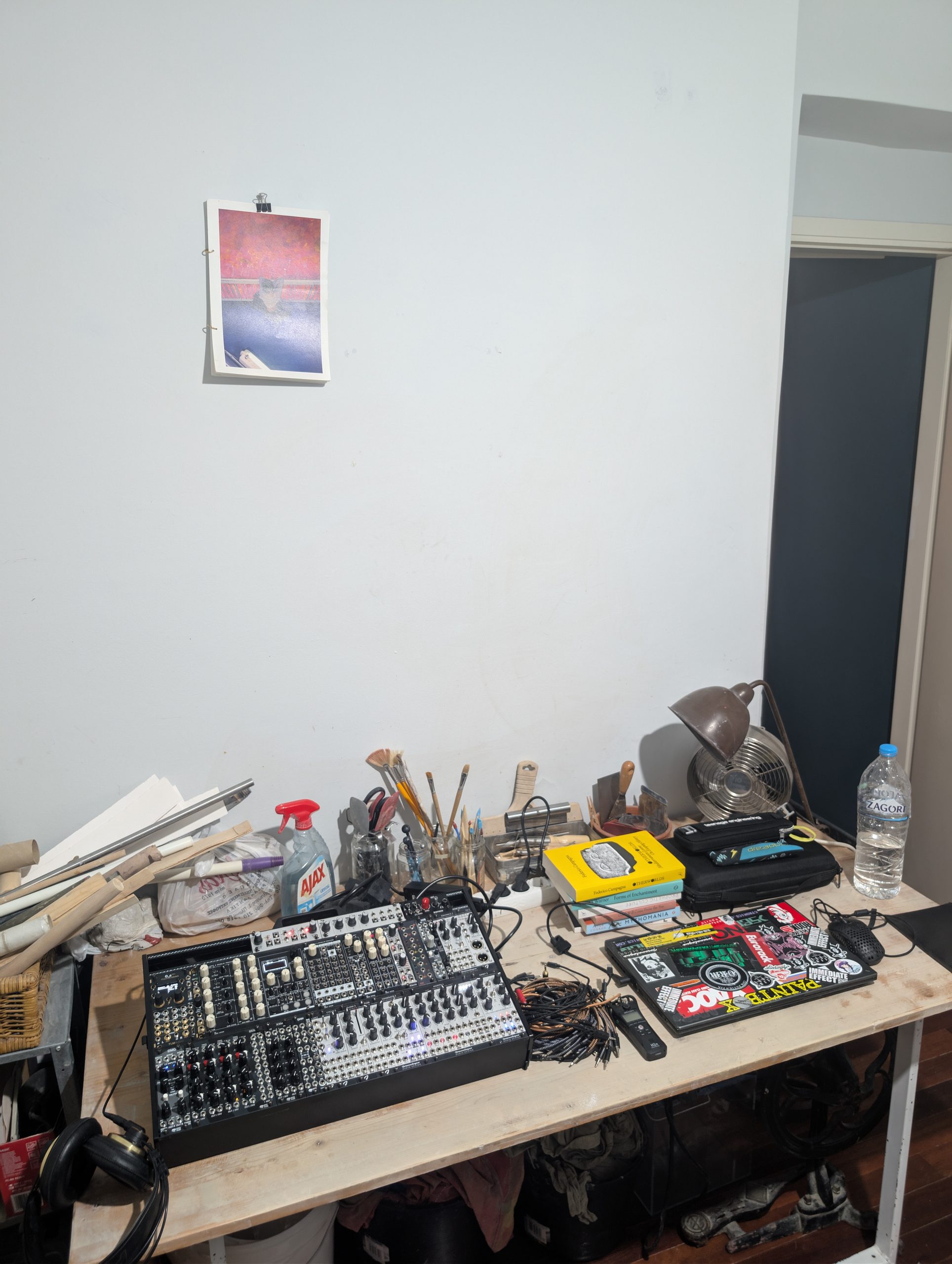
    Landed in my Athens studio that will be my home for the coming months (reach out if you are here! I am lonely!). I’m here on a grant from Helge Ax:son Johnson working with sound, 3d, drawing and other media to explore Athens as a source of imagination inspired by collapse/mutation and Europe as a fantasy world, whatever that means… Either way it will be a lot of exploring the nooks and corners of this city for information and inspiration, creatives and artsy nerds.

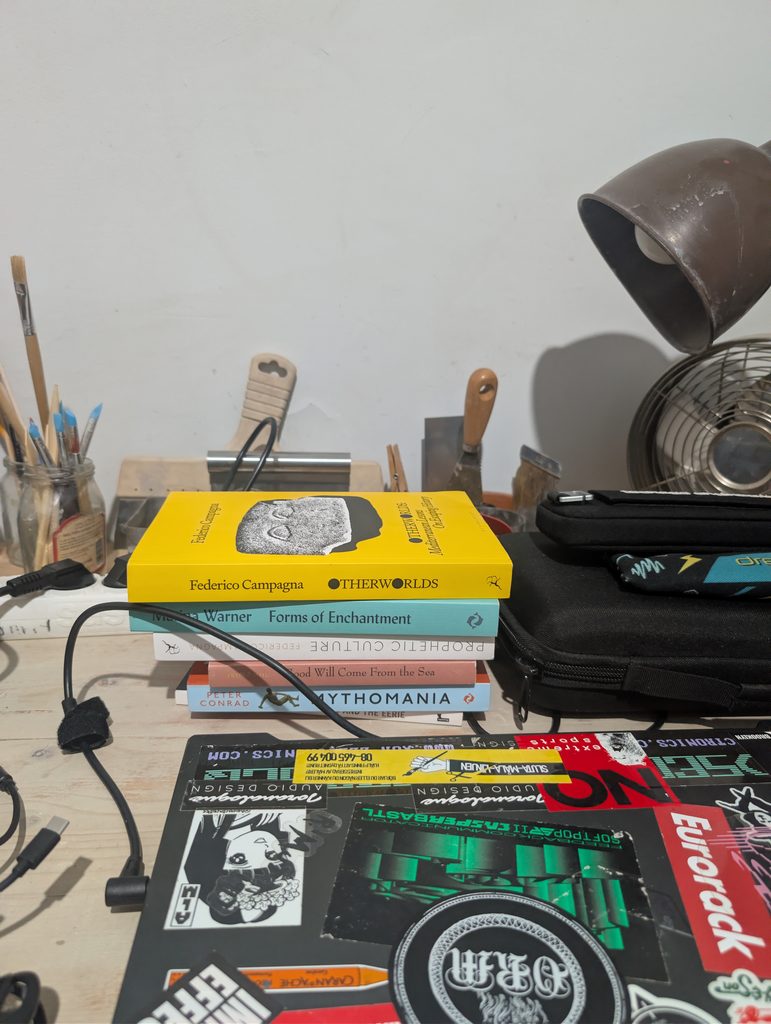
    As a guiding light I am working with the excellent book “Otherworlds” (Federico Campagna) that I recommend to everyone. It chronicles the Mediterranean relationship to myth, tale and imagination across the ages up until present day.

    Another great book, but in the genre of fiction, I am working with is “Good will come from the sea” (Christos Ikonomou) that covers an era of Greek history after the economic collapse of 2008. A beautiful depiction of when the promise of justice given by the contemporary west collapse. Specifically upon its own and, somehow, a cultural “us” turn into “them”.

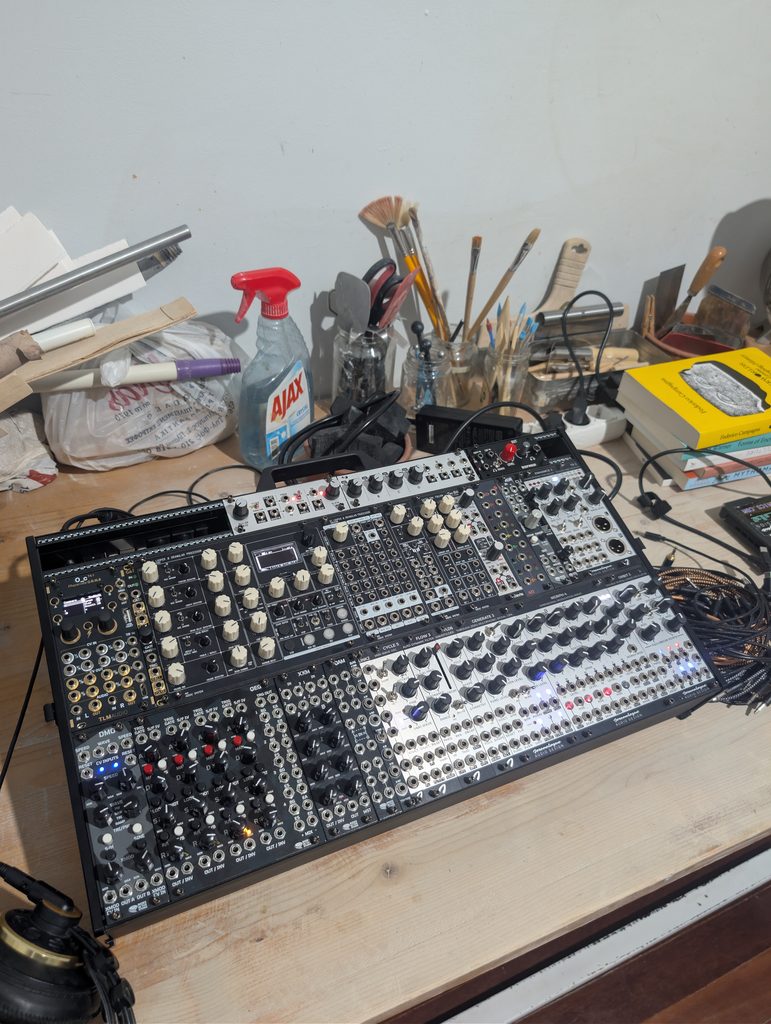
    Sound will be a major part of what I am doing here. The past years I have been drifting more and more into what sound is and how I can relate to it myself. I have taken this as an opportunity to continue this research with a bunch of small, fast, studies. Like sketches but with audio. For the most part I am recording sounds and working with granular synthesis using modular synths. Somewhat time consuming, highly unpractical and kind of impossible to listen to as music. I prefer to look at it as a way to work with sound that is more as a painting. Something listen to as a sound you hear walking down the street. A ambiance to itself or something like that. Buying food at Elvis Souvlaki today I recorded some ambiance I mangled through the modular synth that you can listen to here:

    Expect more continues updates from me while I am here since I would like to keep more active journaling what I am doing for my own sake.

  • Spring books

    Spring books

    Two fantastic books I have been reading lately. I have been a little bit fed up with literature for a couple of years but as always with books it’s about finding the right ones.

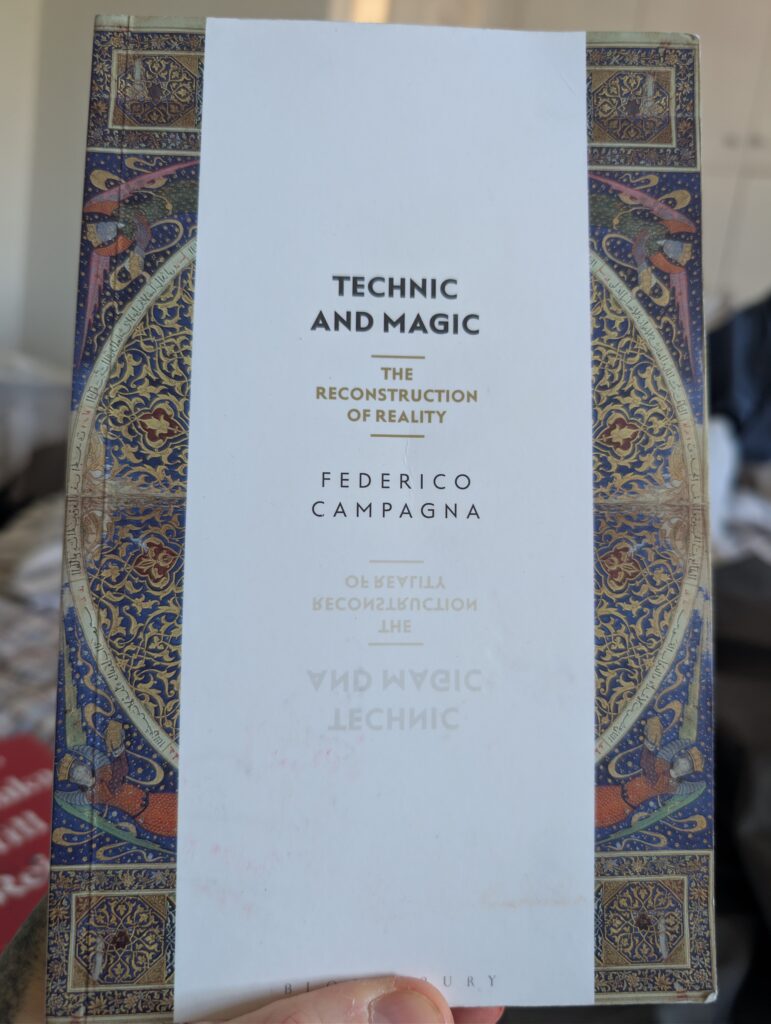
    Someone else can probably sum them up better but Technic and Magic is about the relationship in-between society as a control mechanism/reality definer (technic) and imagination of other realities as the way in which we move beyond rigid systems (magic).

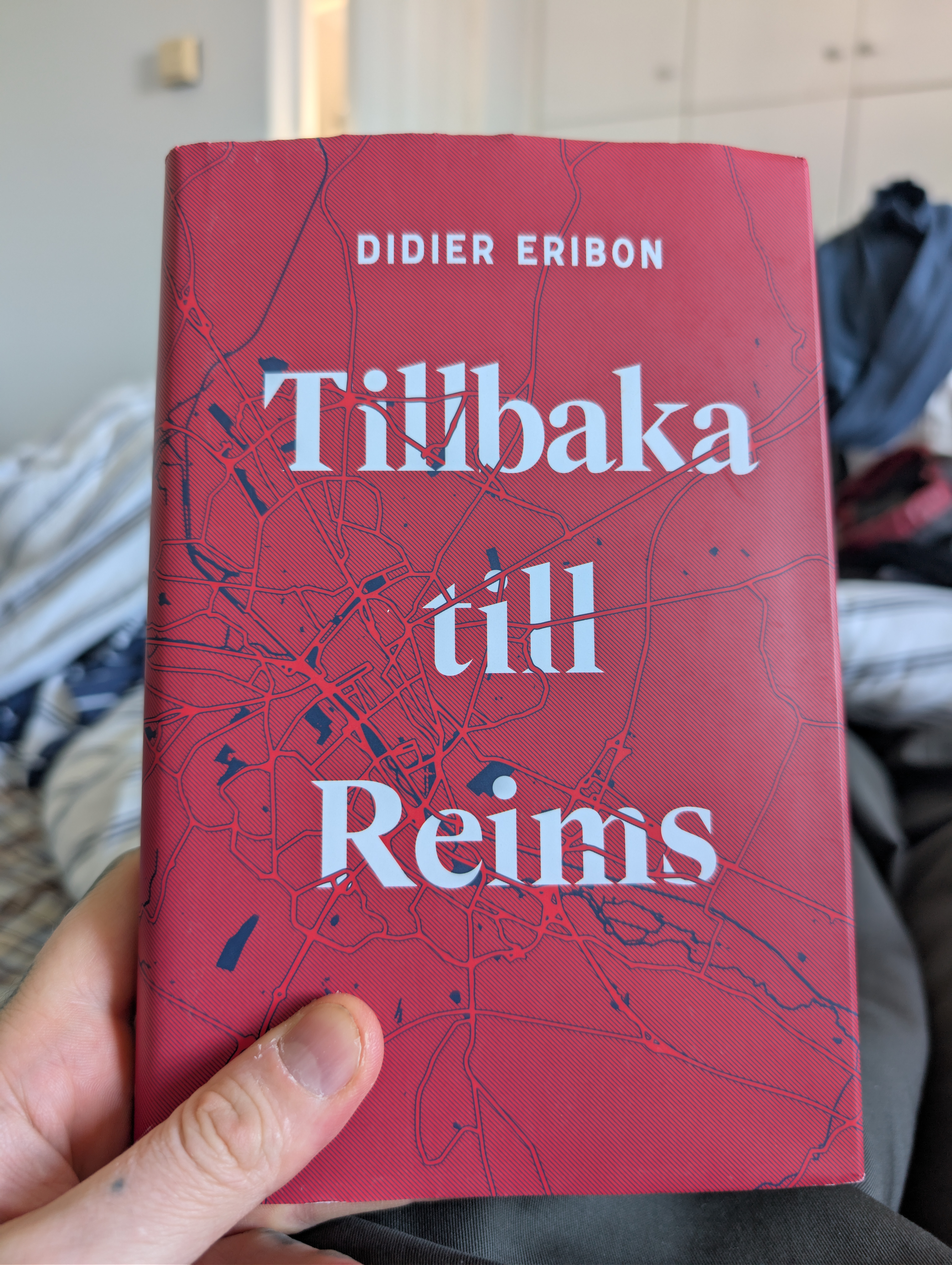
    Back to Reims is a beautiful description of class a  journey and at the same time a credible study of the racist right wing movements of the western world and how these are related to the abandonment of the working class.

    They have been invaluable inspiration in a time when the world is on fire and art in general is very commercialized and stale or flat and overtly political in a way that mostly feels forced and about positioning.

    There is still an abundance of artists that make fantastic work though. I feel like the biggest problem, for artists is the expectations on style and consistency. Something that inevitably paints you into a corner as an artist of repeating images that, once outplayed by zeitgeist, easily can be discarded and replaced.

    I have been on Instagram for 20 years almost until I stopped and it’s interesting to think back on all those artists that where all over instagram 10 years ago and now I remember almost none of them.

    I think an alternative for artists is to seek ways of expression within their own practice and let the glue that sticks all the work together be the concise path you follow. In my opinion this has been demonstrated especially well by female artists the past 50 years. I’m talking about artist like Camille Henrot, Sophie Calle, Louise Bourgeois, Ida Ekblad, Jana Euler etc

    Diverse practices shifting in themes, material and look while still maintaining a certain obtuse feel that reminds of the artist herself. In many ways making them irreplaceable.

    Not directly related to the books above but still something that revolves around a certain kind of topics connected to resistance, imagination, dealing with capitalism, individual/class freedom and art making.